
 By
By 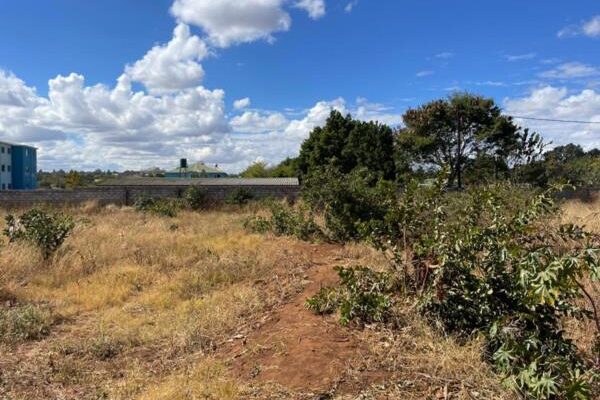
A defence witness has told the Economic and Financial Crimes Court that the President of Zambia holds absolute authority to compulsorily acquire land and to delegate allocation powers.
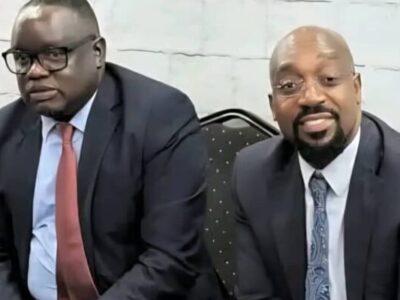
Frighton Sichone, a former Registrar of Lands and Commissioner of Lands, outlined the legal framework governing land administration in Zambia, clarifying the roles and powers of different government officials.
Sichone testified in the case involving Judge Muma, who is accused of abusing his authority during his tenure as Commissioner of Lands by allegedly facilitating the transfer of Zambia Army land to the Patriotic Front (PF) party.
He explained that the President retained what was internationally recognised as the power of eminent domain, allowing for the compulsory acquisition of private land under the Compulsory Acquisition Act, Chapter 189 of the Laws of Zambia.
“In matters of lease expiration, only the Registrar—not the Commissioner of Lands—has the legal mandate to consult leaseholders and determine whether expiration is appropriate,” said Sichone.
He added that the Commissioner of Lands cannot issue instructions to the Chief Registrar, as both function independently within the Ministry of Lands’ hierarchy.
“The Registrar reports to the Permanent Secretary, not to the Commissioner,” he clarified.
Sichone cited examples from his tenure, including a land application along Kafue Road during President Chiluba’s administration. In that instance, the Registrar refused to process a lease expiration due to ongoing developments on the land and instead recommended compulsory acquisition or valuation.
He further stated that while the Lands Act vested all land in the President, the authority to allocate land was delegated to the Commissioner of Lands through Statutory Instrument No. 7 of 1964 and Gazette Notice No. 1345 of 1975.
“There is no specific written procedure that must be followed when allocating land to eligible entities such as churches, NGOs or political parties—as long as they are registered with the Registrar of Societies or under the Land (Perpetual Succession) Act,” he said.
WARNING! All rights reserved. This material, and other digital content on this website, may not be reproduced, published, broadcast, rewritten or redistributed in whole or in part without prior express permission from ZAMBIA MONITOR.









Comments