
 By
By 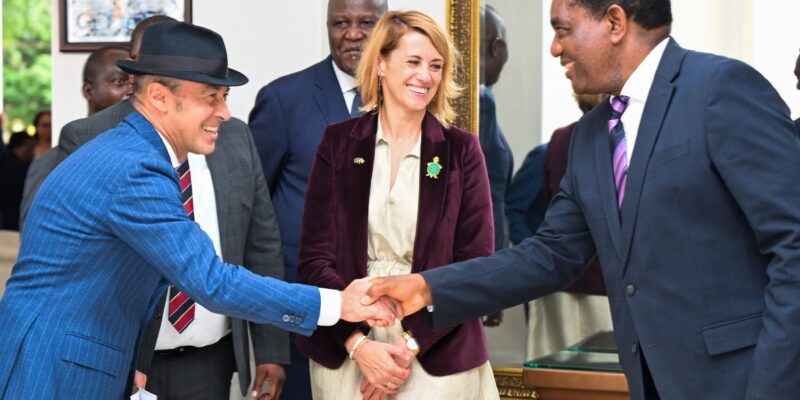
The European Union (EU) and Zambia have reaffirmed their commitment to a strong partnership centred on sustainable development, climate action and democratic governance.
EU Ambassador to Zambia, Karolin Starsiak, said a European delegation would observe the country’s upcoming elections, describing the move as part of the EU’s constructive engagement to support the democratic process.
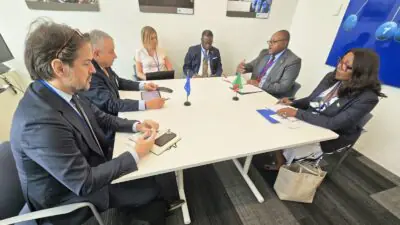
The assurances were made during a meeting held at State House on Monday, where the two sides discussed initiatives aimed at boosting environmental sustainability and economic growth.
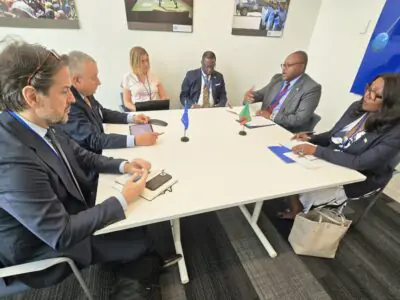
The dialogue, attended by Cabinet ministers and permanent secretaries, focused on strengthening EU–Zambia relations and addressing shared global challenges.
Starsiak underscored the need for a people-centred approach prioritising jobs, economic opportunities and improved living standards.
“The green transition was a key topic, with the EU committing to support Zambia’s ambition to build an environmentally sustainable economy,” she said.
She added that initiatives under the EU–Zambia partnership were designed to promote sustainable land use, protect biodiversity and advance climate-smart agriculture.
The two parties also discussed Zambia’s forthcoming elections, with the EU welcoming government’s invitation to deploy an election observation mission.
“An exploratory mission is currently conducting an assessment in Zambia to determine the deployment of an election observation mission,” Starsiak said.
She further noted that the EU’s Global Gateway initiative was scaling up engagement in support of sustainable growth through infrastructure investment, policy support, skills development and private-sector expansion.
Starsiak highlighted the Lobito Corridor as a flagship project with potential to transform regional connectivity and unlock new trade and investment opportunities for Zambia.
She said the EU was encouraged by rising European and international investor interest in Zambia, stressing the importance of a predictable business environment.
“Zambia’s economic development must go hand in hand with high environmental, social and governance standards, and accountability,” she said.
Starsiak added that the EU valued Zambia’s constructive role in regional integration and trade facilitation and looked forward to continued cooperation.
In his remarks, President Hakainde Hichilema emphasised Zambia’s commitment to global peace, security and stability, underscoring the importance of a rules-based international order.
He expressed concern over the erosion of that order, citing the ongoing conflict between Ukraine and Russia, and stressed that Zambia remained consistently anti-conflict.
“The unpredictability of the global environment affects Zambia’s ability to provide opportunities for its people,”Hichilema said.
He called for restoring the rules-based system, insisting it must serve all nations, not only smaller states.
The president also said Zambia was seeking support for long-awaited reforms to the United Nations Security Council, and was working alongside the African Union on related efforts.
Hichilema highlighted Zambia’s role in the C10 Committee, reiterating the country’s commitment to driving the reform agenda.
WARNING! All rights reserved. This material, and other digital content on this website, may not be reproduced, published, broadcast, rewritten or redistributed in whole or in part without prior express permission from ZAMBIA MONITOR.


Comments