
 By
By 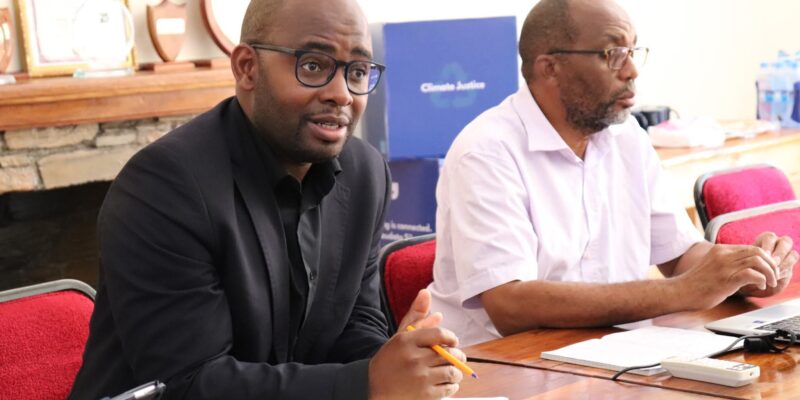
The Jesuit Centre for Theological Reflection has called on the National Assembly and the Executive to halt further enactment of non-urgent legislation.
Father Daniel Mutale, JCTR Executive Director, expressed serious concern about the volume, pace, and manner in which legislation was being enacted in the final weeks of the Thirteenth National Assembly.
In a statement issued in Lusaka on Saturday, Mutale also called on the President to exercise careful discernment before assenting to legislation passed under the conditions.
Mutale noted that 77 Bills have been introduced during the Fifth Session alone, and said this was an Executive issue because the National Assembly did not initiate legislation.
He cited Standing Orders 24(1) and (2), 27, 34, and 123, which had been suspended to enable the House to sit continuously until it adjourns sine die and to consider multiple stages of a Bill at a single sitting.
“Government Bills are prepared by line ministries, approved by the Cabinet, and introduced by the responsible minister. The Vice President, as Leader of Government Business, manages the scheduling of that business in the House,” Mutale said.
He said the presentation of 77 Bills in a single session, following four previous sessions of the same Assembly during which many of these Bills could have been introduced, was a product of executive choices, not parliamentary ones.
Mutale said Parliament’s decision to suspend its own Standing Orders did not occur in a vacuum and was a response to a legislative agenda that the Executive chose to compress into the final weeks before dissolution.
“Criticism that focuses solely on Parliament risks allowing the primary actor to escape accountability for a failure of planning that spans the entire life of the Thirteenth Assembly,” he said.
Mutale added that the Vice President, in the role of Leader of Government Business, bore a constitutional duty to ensure government’s legislative programme was managed consistently with Parliament’s capacity to exercise meaningful scrutiny.
He said Article 89 placed an affirmative obligation on the National Assembly to facilitate public participation in the legislative process, and that obligation could be reduced to a technical formality.
“Where dozens of Bills move through multiple stages at a single sitting, effective participation becomes practically impossible regardless of whether consultation mechanisms are nominally open,” he said.
Mutale cited the Constitutional Court ruling in _Munir Zulu & Mukandila v Attorney General_ (2025/CCZ/009), which confirmed that how legislation is made matters constitutionally, not merely as good practice.
“Suspending Standing Orders to manage genuine, time-limited emergencies is a legitimate parliamentary tool. Using that mechanism to clear a five-year legislative backlog in eight days is not,” Mutale said.
WARNING! All rights reserved. This material, and other digital content on this website, may not be reproduced, published, broadcast, rewritten or redistributed in whole or in part without prior express permission from ZAMBIA MONITOR




Comments