
 By
By 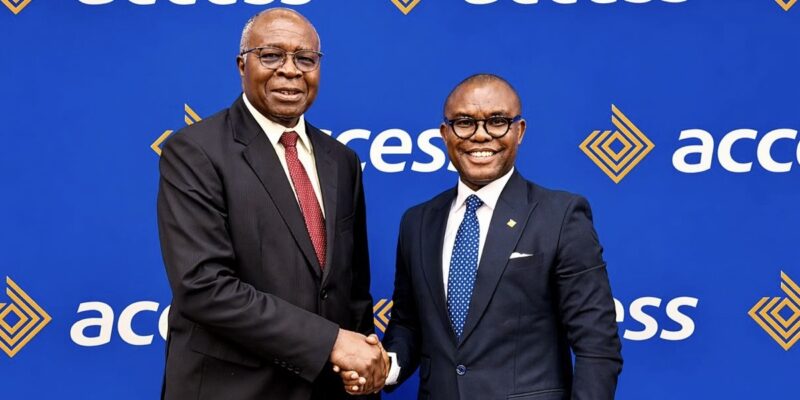
Zambia is entering 2026 with renewed macroeconomic stability and improving investor sentiment, according to Access Bank Zambia Managing Director, Dr. Iheanyi Nwogu, who says recent fiscal discipline is beginning to yield results in inflation control and exchange rate stability.
Speaking at the Ministry of Finance and National Planning Q1 2026 Economic Performance and Budget Outlook Townhall in Lusaka, Nwogu said the country’s economic outlook has improved, but warned that policy gains must now translate into real sector activity.
“It is a privilege to address you all this morning and to contribute to what is a timely and necessary conversation on Zambia’s economic performance,” he said, adding that “we stand at an important vantage point today, looking back at a first quarter that has set a constructive tone for 2026.”
Read more: Access Bank calls for bold, deliberate action to unlock opportunities for girls, women
He noted that early indicators point to improving conditions in the economy, including stabilising inflation and a stronger Kwacha.
“We have observed the direct impact of fiscal discipline in a more stable inflation environment and a Kwacha that is beginning to find its footing. These are encouraging developments and they are helping to restore investor confidence,” he said.
However, Nwogu stressed that economic transformation depended on execution and investment delivery rather than policy direction alone.
“The question now is how we translate this improving environment into real economic activity. Economic transformation requires more than policy direction. It requires timely deployment of capital and effective execution,” he said.
Nwogu outlined the institution’s financing role in key productive sectors, revealing that the bank provided over ZMW 3 billion in funding last year towards energy and agriculture.
“Last year, Access Bank supported Government priorities with over ZMW 3 billion in financing towards energy and agriculture. These investments directly supported Government debt-restructuring efforts and guaranteed the nation’s food security,” he said.
He added that support for small and medium enterprises (SMEs) remained central to the bank’s strategy, particularly through collateral-free lending.
“In the first quarter alone, we supported 147 SMEs with collateral-free loans totaling K12.2 million, helping to expand access to finance for businesses that would otherwise face structural barriers,” he said.
Nwogu also highlighted the bank’s involvement in government social protection programmes, confirming its role as sole sponsoring bank for Phase Two of the Cash for Work Programme, which targets about 1.3 million beneficiaries.
“In line with Government’s consistent emphasis on social protection, Access Bank was appointed the sole sponsor bank for Phase Two of the Cash for Work Programme,” he said.
He further disclosed that digital payment systems supporting the programme were now operational following successful testing.
On agriculture, Nwogu said the bank facilitated large-scale payments for farmers during the 2025/2026 crop marketing season.
“We supported large-scale disbursements on behalf of the Food Reserve Agency to a tune of ZMW 3 billion, reaching over 311,000 farmers,” he said.
He added that digital solutions were helping expand financial inclusion in rural areas.
“We developed and deployed a digital payment solution which was piloted with payments to over 1000 beneficiaries and has now been adopted by the Food Reserve Agency,” he said.
Looking ahead, Dr. Nwogu pointed to continued investment in strategic infrastructure, including the oil refinery project in Ndola, where the bank is acting as Mandated Lead Arranger for up to US$365 million in financing.
“Our role as Mandated Lead Arranger for up to US$365 million for the Ndola crude oil refinery project reflects our commitment to strengthening domestic energy capacity and supporting long-term industrial growth,” he said.
He also said the bank was positioning itself for climate-related financing through Green Climate Fund accreditation.
“Our progress toward Green Climate Fund accreditation positions us to participate in climate-linked financing, supporting sustainable infrastructure and long-term economic stability,” he said.
Nwogu urged continued policy consistency and stronger public–private collaboration to sustain growth.
“The progress we are seeing today is real. It provides a strong foundation for the work ahead,” he said. “Zambia now has a clear opportunity to move from stabilisation to sustained and inclusive growth.”
He added: “The focus must be on translating this progress into tangible outcomes such as jobs created, businesses expanded and improved livelihoods.”
“The task ahead is clear. It is to sustain growth and sustain its benefits throughout the economy,” he said.
WARNING! All rights reserved. This material, and other digital content on this website, may not be reproduced, published, broadcast, rewritten or redistributed in whole or in part without prior express permission from ZAMBIA MONITOR.







Comments