
 By
By 
Tanzania’s latest energy budget speech arrives at a time when East Africa is placing greater weight on infrastructure, industrialisation and economic integration. In that setting, the message from Dodoma feels clear: Tanzania wants to strengthen its place as one of the region’s key energy anchors by expanding power generation, widening transmission networks, deepening natural gas use, improving fuel resilience and accelerating access for households and businesses alike.
That makes the new budget important far beyond the chamber. Across East Africa, the pace of growth now depends increasingly on whether countries can build strong energy systems that support factories, transport, mining, farming, trade corridors and urban expansion. Tanzania’s latest priorities show a government working across all those layers at once.
The numbers alone tell a substantial story. By March 2026, installed generation capacity had risen to 4,522.54MW from 4,031.71MW a year earlier, an increase of 12.17 percent.
Transmission infrastructure had expanded to 8,500.38 kilometres from 7,809.67 kilometres, while distribution lines had grown to 240,229.56 kilometres from 200,266.25 kilometres.
Electricity access had climbed to 85.5 percent, while connectivity rose to 52.1 percent from 37.7 percent in 2020. Peak demand reached 2,199.06MW in February 2026, up 15.24 percent from a year earlier.

Hon. Salome Wycliffe Makamba Deputy Minister for Energy
Taken together, those figures show a country whose energy system is growing in breadth as well as depth. Generation is rising, the national grid is extending, and access is moving further into both rural and urban life. This wider buildout matters because strong economic growth depends on more than large power plants alone. It depends on the ability to move electricity efficiently across distance, stabilise supply and bring service closer to communities, industries and commercial centres.
A broader energy platform
The strongest signal from this year’s priorities lies in the breadth of the portfolio. The Julius Nyerere Hydropower Project remains central at 2,115MW, with all nine generating units continuing to operate according to demand.
Alongside that, the first 50MW phase of the 150MW Shinyanga Solar Power Project has already been completed and fed into the national grid, marking an important step in broadening the country’s generation mix. Work also continues at the 49.5MW Malagarasi Hydropower Project, where construction of the power station had reached 23.73 percent by March.

Dr James Peter Mataragio Permanent Secretary (Oil & Gas)
That mix matters in regional terms. East Africa’s growth path will be shaped by countries that can combine scale, diversity and reliability in their energy planning. Tanzania’s current trajectory shows attention to all three. Hydro remains a major pillar. Solar is beginning to take a more visible place. Natural gas continues to support both power generation and wider economic use. Together, these sources strengthen the country’s long-term capacity to support industrial growth and regional energy relevance.
Transmission investment deepens that picture. Construction of the 400kV Chalinze-Dodoma line, stretching 345 kilometres, had reached 74.13 percent. The 616.5-kilometre Iringa-Sumbawanga line through Mbeya and Tunduma stood at 77.06 percent. The 220kV Songea-Tunduru-Masasi-Mahumbika project continues to support the integration of Lindi and Mtwara into the national grid, while the Chalinze-Kinyerezi-Mkuranga line had reached 60.61 percent. The Ibadakuli substation project in Shinyanga stood at 48.8 percent, and implementation of the National Grid Stabilisation Project had reached 54 percent.
One of the clearest results of this expanding backbone can be seen in Katavi, which has now been connected to the national grid. That connection has strengthened supply in the region and reduced reliance on oil-fired generation, helping TANESCO save TZS 68.4 billion. It is a useful example of how grid expansion can deliver both stronger public service and better operating efficiency.
Powering local growth and regional relevance
The rural electrification agenda gives the budget wider social and economic force. The government’s direction is to ensure all 64,359 hamlets in mainland Tanzania receive electricity by 2030. A major project covering 9,009 hamlets is now under implementation and is expected to be completed within three years. Combined with other ongoing projects, that work could bring electricity service to 50,453 hamlets, equivalent to 78.4 percent of all hamlets in mainland Tanzania, by 2028.
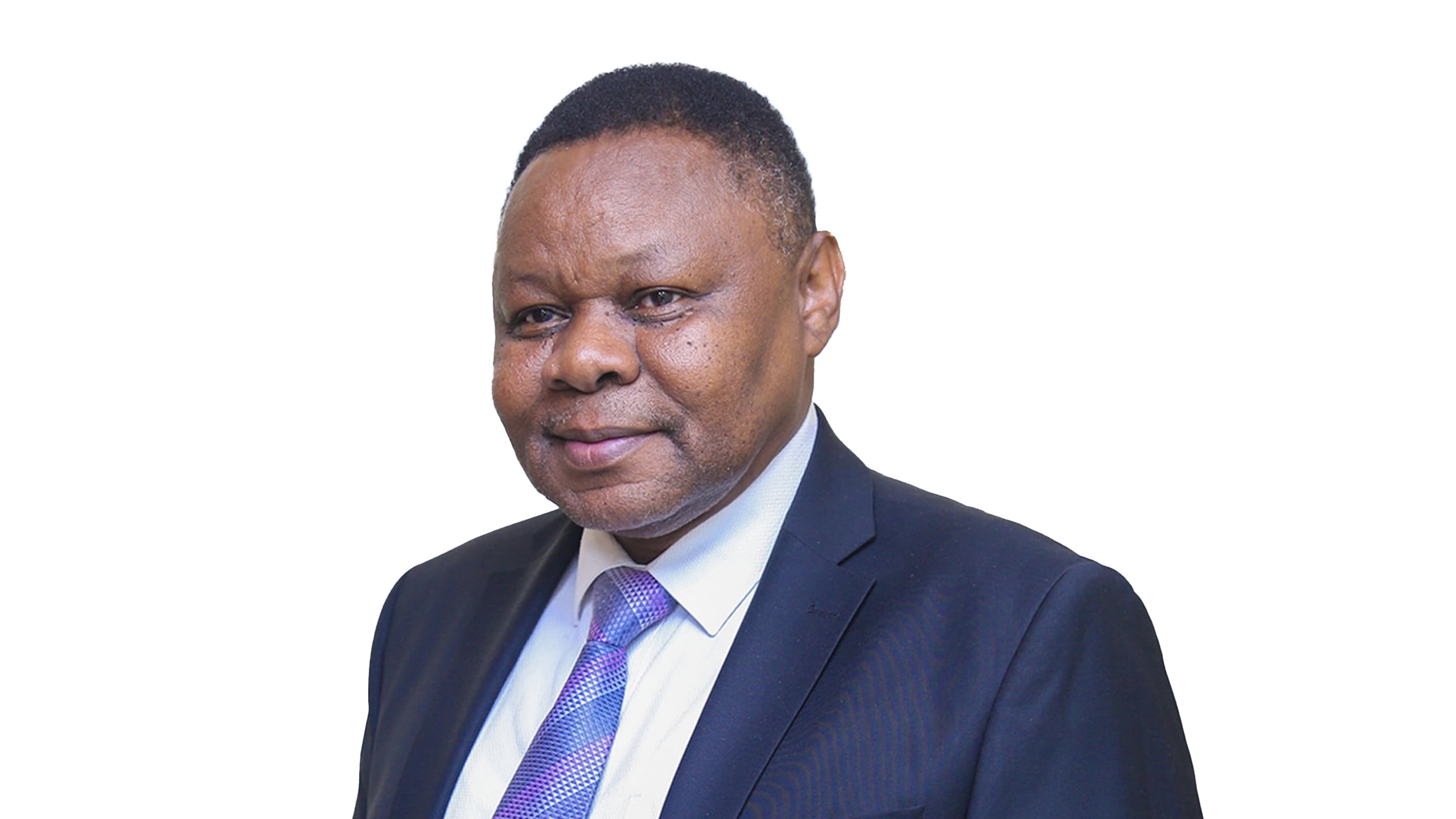
Eng Felchesmi Jossen Mramba Permanent (Electricty & Renewable Energy)
That matters because electricity in rural areas increasingly supports more than household lighting. The budget places clear emphasis on economic use: mining, agriculture, irrigation, industries, schools, water pumps and health centres. In practical terms, this means the energy agenda is also a productivity agenda.
There is also a focused effort to reach communities far from the main grid. Through REA, solar home systems are being distributed to 20,000 households on 143 small islands across the Indian Ocean, Lake Victoria and Lake Tanganyika. By March 2026, a total of 1,302 households had already been installed with those systems. That gives the national plan a valuable combination of grid expansion and decentralised service delivery.
Natural gas remains another major pillar of the country’s economic strategy. Production during the review period reached 41,530.94 million cubic feet from Songo Songo and Mnazi Bay. At the same time, preparations continue at Ntorya in the Ruvuma Block, where a 34.20-kilometre pipeline to Madimba is under construction and the Chikumbi-1 production well is being prepared. Initial output is expected at 40 to 60 million cubic feet per day, with room for expansion as development continues.
The LNG project also remains firmly on the national agenda, with commercial and fiscal areas already agreed in several respects by March 2026 and legal matters moving toward completion. Alongside that, natural gas is increasingly being positioned for practical domestic use. CNG stations have doubled to 18 from nine in April 2025, while 13 workshops are now handling vehicle gas-system installation. Mobile CNG stations are also planned for phased rollout, and mini-LNG arrangements are being prepared to extend gas use to areas beyond existing pipeline infrastructure.
From the grid to the kitchen
The clean cooking agenda brings another important layer to the picture. Use of clean cooking energy rose from 6.9 percent in 2021 to 28.6 percent in 2025, under a national strategy targeting 80 percent by 2034. That shift carries implications for public health, environmental protection and household welfare, and it shows the energy agenda reaching into daily life in a very direct way.
All of this sits inside a much larger budget framework. For 2026/27, the Ministry of Energy and its institutions are seeking approval for TZS 2.525 trillion, of which 97.5 percent is directed toward development projects. That allocation underlines the scale of the current buildout and the confidence being placed in energy infrastructure as a national growth platform.
For East Africa, the significance is easy to see. Tanzania is building an energy system designed to serve domestic development first, while also strengthening its long-term place in a region where power, gas, logistics and industrial capability will increasingly move together. The result is a budget that reads as both a national investment plan and a regional signal of growing strategic weight.
WARNING! All rights reserved. This material, and other digital content on this website, may not be reproduced, published, broadcast, rewritten or redistributed in whole or in part without prior express permission from ZAMBIA MONITOR.








Comments