
 By
By 
Stanbic Bank says Africa’s transport corridors will only deliver economic value if countries prioritize operational efficiency over infrastructure expansion, as rising regional trade places new pressure on supply chains.
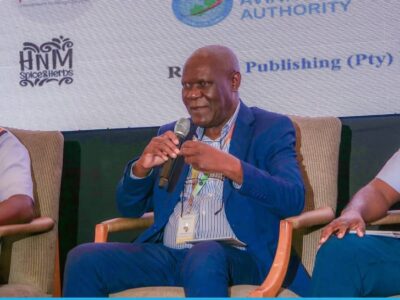
Speaking after the Land Linked Zambia 2026 conference, held under the theme “Beyond Borders: Shaping the Future of Africa’s Transport Corridors for Shared Prosperity,” Stanbic’s Head of Business and Commercial Banking, Chanda Mwila, said the regional debate had shifted from long-term construction plans to the immediate economics of execution.
“What has changed is not the recognition of corridors as critical assets, but the urgency around how they perform,” Mwila said. “The question is no longer what needs to be built, but how effectively existing systems translate activity into growth.”
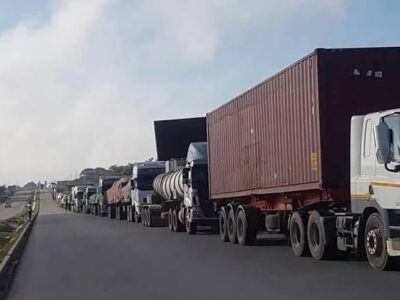
Mwila said Zambia’s efforts to strengthen its position as a landlinked trade hub—driven by rising mining exports, fuel flows and expanding regional commerce—were revealing serious inefficiencies across major routes.
Read more: Africa targets efficient transport corridors to drive trade growth —Report
“Every delay, every point of friction, has a cost,” she said, warning that logistical bottlenecks now directly constrain economic competitiveness.
She added that investors were increasingly evaluating corridor performance based on predictability and reliability rather than physical capacity alone.
“The ability to move goods consistently, manage timelines and reduce uncertainty is now central to how markets are assessed,” she said.
Stanbic said efficient financial systems were as critical as transport infrastructure, noting that payment delays, limited access to working capital and currency challenges could slow trade as much as border congestion. “The velocity of trade is directly linked to the velocity of capital,” Mwila said.
During the conference, Frank Tayali, Zambia’s Minister of Transport and Logistics, urged African countries to increase intra-continental trade. “Africa must trade more with itself before it trades with the rest of the world,” he said.
Tayali outlined ongoing infrastructure upgrades, including the rehabilitation of TAZARA, recapitalisation of Zambia Railways, the Kafue–Lion’s Den railway project with Zimbabwe, and expanded one-stop border posts at Kazungula, Chirundu, Nakonde and Mwami.
However, he cautioned that infrastructure alone would not transform Zambia into a regional hub without complementary investments in logistics centres, dry ports, agro-processing zones and industrial parks.
The bank reaffirmed its commitment to supporting the region’s trade systems through working capital solutions and cross-border payment services aligned with the African Continental Free Trade Area (AfCFTA).
The conference ended with a call for deeper regional coordination, harmonised regulations and joint investments to lower business costs and strengthen Africa’s position in global value chains.
WARNING! All rights reserved. This material, and other digital content on this website, may not be reproduced, published, broadcast, rewritten or redistributed in whole or in part without prior express permission from ZAMBIA MONITOR.








Comments