
 By
By 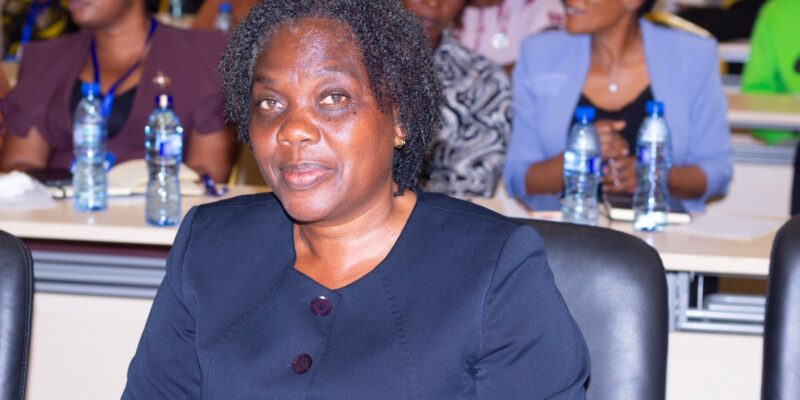
The Non-governmental Gender Organisations’ Coordinating Council (NGOCC) has called on the Government to provide a full, immediate, and transparent account of actions taken in response to out-going US Ambassador Michael Gonzales’ allegations of theft and diversion of public medical supplies.
NGOCC Board Chairperson, Beauty Katebe, raised concern over the recent public exchange between the Zambian Government and Gonzales, concerning matters of national importance.
Katebe affirmed Government’s position, as articulated by the Minister of Foreign Affairs and International Cooperation, Mulambo Haimbe, that Zambia was a sovereign State with established and respected diplomatic channels for engaging all cooperating partners.
She noted Government’s response to a statement by the outgoing US Envoy, which suggested that certain health-sector support may have been linked to negotiations involving Zambia’s critical mineral resources.
“These remarks have brought to public attention concerns about the use of aid as leverage in accessing national assets. We firmly uphold the principle of Zambian sovereignty and the protection of our national resources,” Katebe said.
She expressed concern over any arrangement that appeared to link essential health financing to the surrender or exploitation of Zambia’s natural wealth.
Katebe emphasized that international cooperation must be grounded in mutual respect and partnership, not conditionalities that undermined national autonomy or exert undue pressure on a sovereign people.
Katebe stated that Zambia must not be subjected to external interference in its legal, cultural, or policy frameworks.
“That said, NGOCC recognises that the concerns raised by the outgoing Envoy touch on long-standing issues that have been widely discussed but inadequately addressed,” she said.
Katebe said Gonzales’ remarks had revived serious allegations that demanded transparency and accountability from those entrusted with public office.
She stressed the need to ensure that the sovereignty was not invoked to shield corruption or neglect matters that endangered public health.
“Specifically, we demand that the Government provide a comprehensive public update on investigations into the alleged diversion and sale of state medical supplies, including any pharmacy networks implicated,” Katebe said.
She called on the government to ensure prompt prosecution and administrative action against all individuals involved, regardless of rank or position, and publicly communicate the outcomes.
Katebe wants the government to publicly outline and implement time-bound reforms to secure the medical supply chain, strengthening oversight, traceability, and internal controls.
“Uphold the Public Interest Disclosure (Whistleblower Protection) Act by safeguarding those who report corruption and prioritising action on the substance of credible allegations,” she demanded.
Katebe also called on citizens, civil society organisations, and especially women’s movements to use all lawful means to demand accountability, transparency, and integrity within the health sector and all public institutions.
On April 30, 2026, Gonzales delivered a strongly worded farewell speech accusing successive Zambian governments of corruption, aid dependency and failure to build sustainable systems despite decades of American support.
He warned that the U.S. could no longer justify large aid budgets without fundamental reforms.
Gonzales said American assistance had yielded major gains, including HIV epidemic control, a 20-year rise in life expectancy and significant reductions in malaria deaths. However, he argued systemic theft and weak governance had undermined those investments.
He added that the fragility of Zambia’s health system became clear when Washington paused health funding last year to conduct a review.
“Despite over US$7 billion in U.S. health assistance since 2000, that crumbling system revealed that while we thought we were building capacity, successive Zambian governments had not built systems,” he said.
He accused Zambian officials of diverting public funds “to their own pockets” while “letting the United States pay for healthcare.”
Meanwhile, Government later rejected Gonzales’ comments, describing them as inconsistent with diplomatic norms and a breach of the Vienna Convention on Diplomatic Relations.
The Government said the ambassador’s remarks were “deeply regrettable” and “undiplomatic,” arguing that they undermined mutual respect between sovereign states.
It accused Gonzales of violating Article 3 of the Convention, which outlines the functions of a diplomatic mission, and Article 41, which prohibited diplomats from interfering in the internal affairs of the host state.
WARNING! All rights reserved. This material, and other digital content on this website, may not be reproduced, published, broadcast, rewritten or redistributed in whole or in part without prior express permission from ZAMBIA MONITOR










Comments