
 By
By 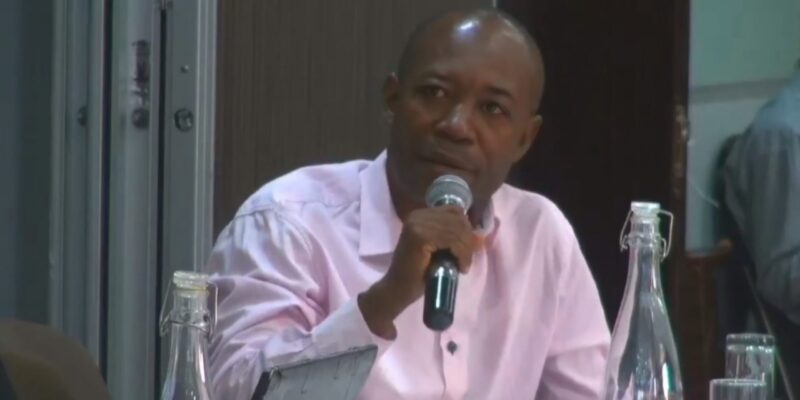
Advocates for Democratic Governance Foundation (ADEG) has reflected on the performance and legacy of Zambia’s 13th National Assembly as it stands dissolved by operation of the law on May 15 2026, describing it as a mixed legacy.
ADEG Executive Director Gideon Musonda said while the 13th National Assembly recorded several notable legislative and democratic achievements, its tenure was equally characterized by serious concerns relating to shrinking civic space.
According to a statement issued in Lusaka on Friday, Musonda said the Assembly was full of controversial legislative processes, weakened parliamentary oversight, and growing questions around constitutional adherence and inclusiveness in law-making.
“As such, the legacy of the 13th National Assembly remains mixed, reflecting both progressive reforms and significant democratic shortcomings that continue to concern many citizens and stakeholders,” he said.
On the positive side, Musonda said Parliament presided over several reforms with intent to contribute to Zambia’s democratic and human rights development.
He cited among the most notable achievements as the repeal of the offence of criminal defamation of the President, which for many years had been criticized as a law capable of suppressing freedom of expression, media freedoms, and democratic dissent.
Musonda also acknowledged Parliament’s historic decision to abolish the death penalty, a reform it said aligned Zambia with evolving international human rights standards and reaffirmed the country’s commitment to the protection of human dignity and the right to life.
“Further, the enactment of the Access to Information law remains one of the most progressive legislative achievements of the 13th National Assembly,” he said.
Musonda however, said despite the notable gains, it remained deeply concerned by several legislative and governance developments that unfolded during the tenure of the 13th National Assembly.
He said one major concern related to the enactment of cyber-related laws which clearly negated the gains, as many citizens, civil society organizations, media practitioners, and digital rights advocates viewed the laws as restrictive and potentially harmful to the enjoyment of civic freedoms and digital rights.
Musonda said concerns were consistently raised that some provisions within these laws could create an environment of surveillance, intimidation, fear, and self-censorship among citizens, journalists, whistleblowers, activists, and online users.
He also expressed concern over the manner in which certain legislative processes were handled, particularly rushed constitutional amendments and the unprecedented presentation or consideration of more than 70 Bills including the controversial Public Gathering Bill two weeks before dissolution of parliament.
Musonda said the processes surrounding these proposals attracted widespread criticism from civil society organizations, church bodies, opposition political parties, governance experts, and ordinary citizens who argued that the processes were rushed, inadequately consultative, and largely dismissive of public submissions and concerns.
Read More: Hichilema tasks electoral commission to deliver free, fair, peaceful polls in August
“We remain of the considered view that constitutional and governance reforms derive legitimacy not merely from parliamentary numerical strength, but from broad-based public participation, transparency, inclusiveness, and national consensus,” he said.
Musonda said another issue that continued to raise constitutional, legal, and ethical concerns was the conduct of some Members of Parliament who publicly defected to the ruling party while retaining their parliamentary seats.
He said such developments weakened public confidence in Parliament as an independent institution capable of effectively providing oversight and representing diverse public interests.
Musonda noted that concerns persisted regarding the gradual weakening of parliamentary oversight, particularly in instances where Parliament appeared unable to robustly hold the Executive accountable on matters of governance, constitutionalism, and human rights.
“As Zambia transitions into the next parliamentary cycle, ADEG calls upon future Parliaments to prioritize inclusiveness, accountability, constitutionalism, transparency, and genuine citizen participation in legislative and policy-making processes,” he said.
Musonda further urged all political actors, state institutions, civil society organizations, and citizens to continue safeguarding democratic governance, constitutional order, and civic freedoms as essential foundations for peace, development, justice, and national unity.
WARNING! All rights reserved. This material, and other digital content on this website, may not be reproduced, published, broadcast, rewritten or redistributed in whole or in part without prior express permission from ZAMBIA MONITOR.







Comments