
 By
By 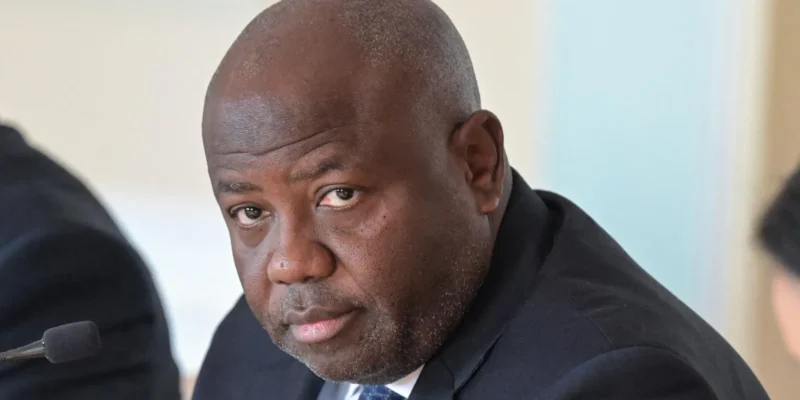
Equatorial Guinea’s government has resigned after failing to meet its objectives, Vice-President Teodoro Nguema Obiang Mangue said.
Obiang, who is also the son of President Teodoro Obiang Nguema Mbasogo, said the prime minister had presented the resignation of all members of the government because it had barely reached 10 percent of its targets.
The BBC reports that President Obiango did not specify the targets but a statement by the ruling party said the president had observed that the government fostered corruption and failed to diversify the economy.
President Obiang was the world’s longest-serving leader who has ruled the oil-rich West African country since 1979 with a strong grip, while naming family members to key government roles.
The president appointed the outgoing government in 2024, with Manuel Osa Nsue Nsua as prime minister.
On Tuesday, the vice-president said the resignation was in line with “the principle that responsibility in public management must be accompanied by results”.
Read More: US, Iran agree deal to end war, signing expected Friday in Switzerland
“The degree of execution achieved is clearly insufficient in relation to the expectations and commitments undertaken,” he posted on X.
In a statement on Facebook, the ruling Democratic Party of Equatorial Guinea (PDGE) said the president was dissatisfied with the management of the outgoing government. A new government was expected to be appointed.
The statement further cited the misuse of state resources for personal interests and stagnation in the implementation of development projects.
The president also noted that the government had not implemented policies to diversify the economy especially in the agricultural sector, which would cut reliance on imported goods that can be produced locally.
Equatorial Guinea’s economy was heavily reliant on petroleum, with oil and gas accounting for most of its exports and revenues.
In spite of its oil wealth, much of its 1.8m population has not benefitted, as poverty remains rampant. In recent years, the economy had been on a decline amid reduced production and demand for oil.
WARNING! All rights reserved. This material, and other digital content on this website, may not be reproduced, published, broadcast, rewritten or redistributed in whole or in part without prior express permission from ZAMBIA MONITOR.





Comments