
 By
By 
The Ministry of Finance and National Planning has called for a shift from annual tax adjustments to a stable and predictable tax regime to support long-term manufacturing investment as Government prepares the 2027-2029 Medium Term Budget Plan.
Ministry Permanent Secretary for Budget and Economic Affairs Mwaka Mukubesa said the country had made significant progress since the period of sovereign default, with improvements recorded across key macroeconomic indicators that directly impact the cost of doing business.
Speaking at the Zambia Association of Manufacturers (ZAM) Pre-Budget Breakfast Meeting, Mukubesa said the Government remained a committed partner to industry as Zambia moved to position itself as an industrialized, export-led economy.
Mukubesa noted that the engagement came at a critical time as preparations for the 2027 National Budget got underway, with focus on policies that will sustain jobs, wealth creation and economic resilience.
“Inflation has eased to 6.05 percent as of June 2026, firmly within the 6-8 percent target band. This provides a highly predictable domestic cost structure for raw material planning,” she stated.
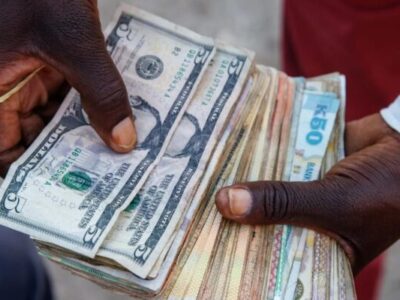
Mukubesa further highlighted that the exchange rate had strengthened and stabilized at around K18.30 per US dollar, giving manufacturers breathing room in planning for foreign exchange inputs, while GDP growth had averaged around 4.4 percent.
“Perhaps the most historic shift over the past years is the country’s exit from a default cycle. Following conclusive breakthroughs in restructuring the country’s external debt, major global agencies officially removed Zambia’s default status,” she said.
Mukubesa added that S&P upgraded Zambia’s long-term rating to CCC+ and Fitch upgraded the country to B- with a stable outlook, a development described as a powerful operational catalyst for manufacturers and an upgrade expected to lower commercial borrowing costs and improve access to long-term corporate capital.
“The sovereign upgrade means lower commercial borrowing costs as a higher sovereign credit rating lowers the perceived risk of the country allowing for access to cheaper international credit,” she stated.
On infrastructure, Mukubesa said the Government had leveraged private sector capital through Public Private Partnerships to unlock trade corridors, citing projects such as Chingola-Kasumbalesa Road, Lusaka-Ndola Dual Carriageway, Katete-Chanida Road, Mutanda-to-Jimbe Corridor, and upgrades at Kasumbalesa and Sakanya borders.
She noted that manufacturing’s contribution to the economy had also shown positive movement and accounted for an average of 8.8 percent of GDP at current prices from 2023 to 2025.
“True manufacturing investment requires a stable, predictable, and permanent tax regime. You cannot confidently plan factory expansions, long-term supply chains, or multi-million-dollar machinery investments on a tax code that shifts every twelve months,” Mukubesa said.
She assured that the Government would continue listening to industry concerns and working with ZAM to ensure that fiscal policy supports sustainable industrial growth and Zambia’s broader post-drought economic recovery.
WARNING! All rights reserved. This material, and other digital content on this website, may not be reproduced, published, broadcast, rewritten or redistributed in whole or in part without prior express permission from ZAMBIA MONITOR








Comments