
 By
By 
Illicit trade now accounts for an estimated 70 percent of Zambia’s alcohol market and 23.8percent of the tobacco market, the Zambia Association of Manufacturers (ZAM) has revealed, warning that unchecked smuggling is undermining revenue collection and compliant businesses.
ZAM Policy Committee Chairperson, Rosetta Chabala, said the surge in untaxed products was directly linked to repeated excise tax increases, which she argued were now producing diminishing returns for Government and hurting formal manufacturers.
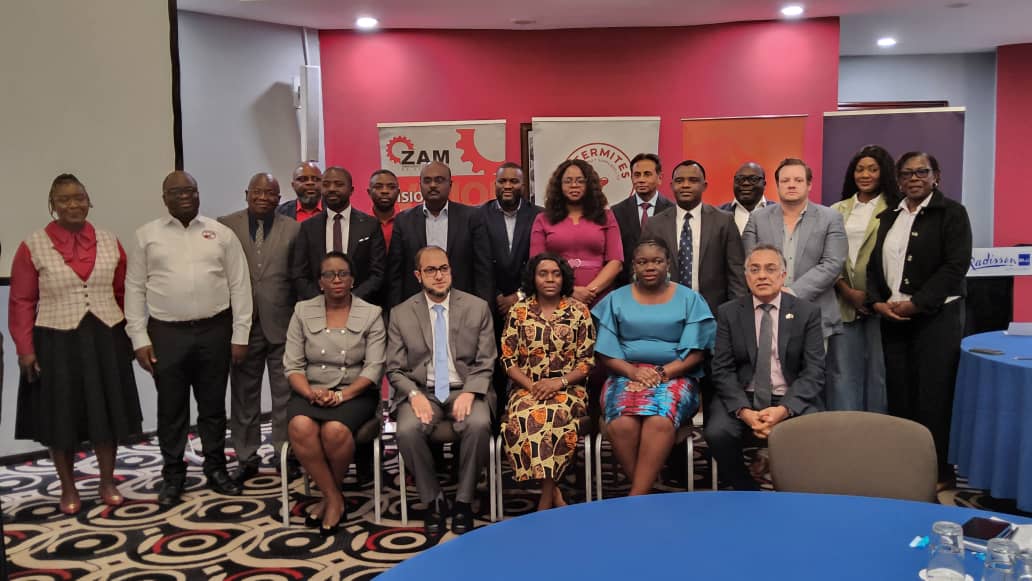
Chabala disclosed this during ZAM’s 2026 Pre-Budget Meeting held at Radisson Blu Hotel, Lusaka on Friday under the theme “From Stabilization to Growth: Manufacturing-Led Economic Transformation.”
She noted that while government’s need to mobilise domestic revenue from alcohol and tobacco was understood, policy must balance revenue goals with market realities to avoid incentivizing illegal trade.
“Evidence suggests that continually increasing excise taxes may now be producing diminishing returns. When consumers shift towards untaxed and unregulated products, compliant manufacturers lose market share, Government loses tax revenue, and the intended public health objectives are undermined,” Chabala said.
She added that illicit trade was not the only pressure point, but ZAM was also concerned over the reduction in duty relief on manufacturing inputs not produced locally.
Chabala stated that the change from 100 percent duty relief under Statutory Instrument No. 110 to 50 percent under Statutory Instrument No. 76 had significantly increased production costs for many manufacturers.
She claimed that according to ZAM member surveys, production costs had risen by between 20 and 35 percent as a result of the duty change.
Chabala said the new duty regime placed Zambian manufacturers at a competitive disadvantage compared to regional peers.
“When compared with regional competitors such as Rwanda and South Africa, where manufacturing inputs are largely imported duty-free, this places Zambian manufacturers at a competitive disadvantage, both domestically and in export markets,” she said.
Despite the challenges, Chabala acknowledged government’s progress on macroeconomic stability where Inflation had fallen from 24.6 percent in July 2021 to 6.8 percent by April 2026, while the debt-to-GDP ratio declined from 112.1 percent to 87.6 percent.
She also noted that gross international reserves grew from US$1.4 billion to a record US$6.5 billion.
Read More: Chewa traditional leaders ban cultivation of virginia tobacco, production of charcoals
“These achievements deserve recognition. They have required difficult decisions, discipline and perseverance, and as manufacturers, we acknowledge and commend Government for these hard-earned gains,” Chabala said.
She, however, stressed that stability should now be converted into growth, with manufacturing as the driver especially that the sector’s contribution to GDP had grown from 7.2 percent in 2020 to 9.3 percent in 2024, and remained at 8.7 percent in 2025.
“Yet lasting prosperity will come not merely from extracting minerals or harvesting crops, but from processing them, adding value to them, and creating quality jobs through manufacturing,” she said.
On policy engagement, Chabala said only about 30 percent of ZAM’s recommendations have been reflected in the national budget over the past three cycles. She called for a more structured feedback mechanism between the Ministry of Finance and the manufacturing sector.
She emphasized that a more structured feedback mechanism between the Ministry of Finance and the manufacturing sector would improve transparency, enhance mutual understanding, and help ensure that policy proposals were refined through continuous engagement rather than annual consultations alone.
Chabala also welcomed the development of the 2027–2031 Medium-Term Budget Plan, saying it offered an opportunity for greater policy certainty and predictability essential for long-term manufacturing investment.
WARNING! All rights reserved. This material, and other digital content on this website, may not be reproduced, published, broadcast, rewritten or redistributed in whole or in part without prior express permission from ZAMBIA MONITOR








Comments