
 By
By 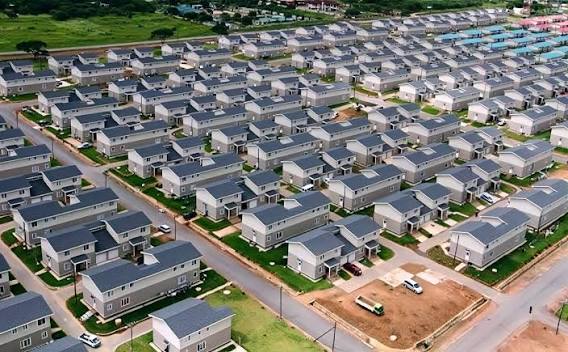
The Zambia Institute of Architects (ZIA) has raised alarm over the country’s housing sector, warning that most Zambians were constructing homes outside formal systems due to lack of finance and poor planning.
In its August – September 2026 President’s Corner statement, ZIA said the situation undermined government’s “Grow Zambia” agenda and risked creating unserviced, unsafe urban expansion.
ZIA President Musunka Silungwe said the built environment should be prioritized if Zambia was to triple its economy, but that current housing trends showed a disconnect between policy and reality on the ground.
He noted that agriculture, energy, tourism and mining growth will all require planned towns and infrastructure, but that most housing development was happening without professional input or financial support.
He quoted statistics showing that 92.3 percent of people doing extensions and 99.4 percent building new homes did so without formal housing finance.
Silungwe said this left the majority underserved, non-compliant, or forced to build illegally, making it impossible to deliver basic services like water, roads and electricity efficiently.
“The economic profile of Zambia cannot be uplifted without uplifting the majority of Zambians from living in unsanitary, unserviced, unplanned, or unsafe housing. We cannot plan to channel 10 million megawatts of electricity into ever-expanding, unplanned developments,” he stated.
Silungwe argued that growth should go hand in hand with comprehensive design and must engage citizens productively from the onset, rather than portraying them as a burden to planning.
He also called for greater use of locally produced building materials and local expertise to protect Zambia’s $4.6 billion foreign currency reserves while driving local economies.
“Key to this development is the use of locally available, natural, and locally produced building materials, and local expertise. Their use protects the much-needed foreign exchange as it is retained and does not bankrupt Zambia’s $4.6 billion foreign currency reserves, while also driving local economies,” he said.
To fix the financing gap, Silungwe proposed formalizing housing to unlock capital markets through bonds and other instruments, and using digital twins and AI for better city planning.
He cited data showing bank credit to the private sector in Zambia at only 12.46 percent of GDP, far below the 150percent to 210percent seen in major economies.
“There is something very wrong here. If this participation were any lower, it would be deemed insignificant to practically non-existent,” Silungwe said.
He stated that unless housing was planned and financed properly, Zambia risked undermining its economic goals.
Silungwe through the Institute pledged to engage government on reforms to formalize housing and integrate planning into all sectors under the Grow Zambia agenda.
“As we congratulate our Republican President on the re-election, let us remember: Zambia expects much more from us if we are to develop,” he said.
WARNING! All rights reserved. This material, and other digital content on this website, may not be reproduced, published, broadcast, rewritten or redistributed in whole or in part without prior express permission from ZAMBIA MONITOR.










Comments