
 By
By 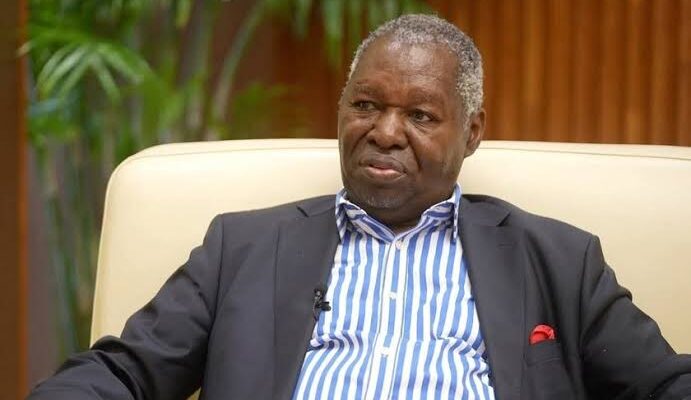
The Council of Elders of Zambia has proposed an eight-pillar national reconciliation and constitutional restoration process to address governance grievances arising from President Hakainde Hichilema’s 2021-2026 administration.
The proposal is contained in a statement titled Statement of Governance Grievances and National Concerns, authored by Dr. Mbita Chitala, director of the Zambia Research Foundation.
Chitala outlined what he described as key governance, constitutional, political, human rights and electoral concerns raised by opposition parties, civil society, professional bodies and religious organisations.
“The purpose is not to prejudge any individual, political party or institution, the purpose is to establish a factual framework within which patriots can promote national dialogue, truth and accountability and restoration of public confidence,” he said.
Chitala said the document distinguished between established or independently documented facts, allegations made by opposition parties, government explanations or denials, and matters requiring independent investigation or judicial determination.
“We have identified the issues that appear to divide our country and we have endeavoured to identify them and suggest ways and means of advancing the reconciliation challenge,” Chitala said.
Among the concerns cited were the arrests and prosecution of political opponents, which he said had raised questions about prosecutorial discretion and the protection of legitimate political criticism.
Chitala cited the 2024 conviction of Patriotic Front Secretary General Raphael Nakacinda for defaming the President, describing the conviction as “clearly ultra vires and unlawful” on the grounds that the offence had been repealed in 2022.
He also cited the alleged assassination of former Cabinet Minister Mutotwe Kafwaya, saying there could be no genuine national healing without accountability and calling for an independent commission of inquiry.
On the Aug. 13, 2026 general election, Chitala said opposition parties had challenged the integrity of the process, alleging irregularities in the conduct, counting, transmission and declaration of results.
He referred to a report by the Christian Churches Monitoring Group, which he said identified anomalies in the electoral process, including cases where presidential votes announced by the Electoral Commission of Zambia exceeded parliamentary votes by more than 248,670.
“We verily believe that had the election been conducted in accordance with the law, the declared result would have been different, variances of up to 800,000 votes require independent audit,” Chitala said.
Chitala also raised the closure of courts countrywide on Aug. 24, 2026, during the seven-day petition period under Article 103 following the ECZ’s declaration of election results on Aug. 17.
Read More: Court of Appeal Judge, Makungu, resigns
He described the court closures as perhaps the most urgent constitutional issue, while noting that Linda Kasonde and Brebner Changala had filed a petition electronically through Chief Justice Mumba Malila, who acknowledged receipt.
Chitala said police had described the court closures as an intelligence-led preventive measure.
He also questioned the role of security services, alleging that the army had entered ECZ totalling centres and raided the home of Brian Mundubile.
He said the principle should be evidence before accusation and accountability without political discrimination.
To address the divisions, Chitala proposed eight pillars, including political dialogue through an indaba, a review of political prisoners, a 2026 electoral fact-finding process, a constitutional justice review, security-sector neutrality, electoral reform, a national compact and a Government of National Unity to organise acceptable elections within two years.
“A genuine reconciliation process should not be understood as: ‘Forget everything and move on.’ The proper principle should be: Truth, justice, reconciliation, reform,” he said.
Chitala said Zambia’s democratic stability depended on citizens believing that elections could be trusted, courts could be accessed, judges could act independently and political disagreements could be resolved without violence.
WARNING! All rights reserved. This material, and other digital content on this website, may not be reproduced, published, broadcast, rewritten or redistributed in whole or in part without prior express permission from ZAMBIA MONITOR.





Comments