
 By
By 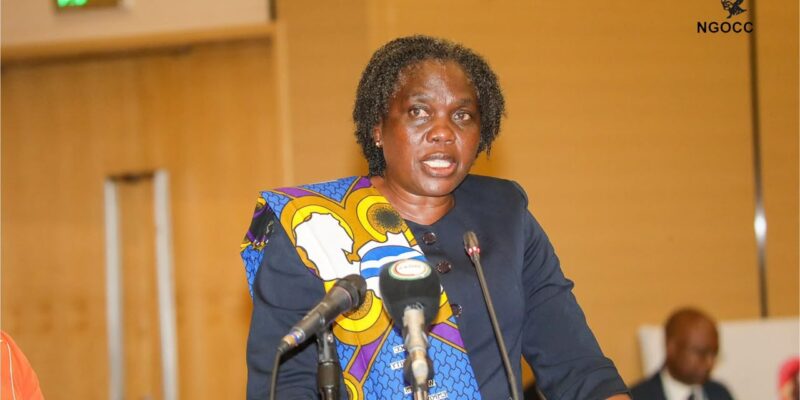
The Non-governmental Gender Organisations’ Coordinating Council (NGOCC) has urged President Hakainde Hichilema to announce the operationalisation and adequate resourcing of the long-overdue Gender Equity and Equality Commission in his address to Parliament on Friday.
Hichilema is expected to outline the government’s policy direction and priorities for 2026-2027 during the ceremonial opening of the First Session of the 14th National Assembly at Parliament Buildings in Lusaka on Oct. 9.
Board Chairperson, Beauty Katebe, said the organisation expected the address to provide a comprehensive focus on issues affecting citizens, particularly the challenges and opportunities facing women and girls.
She said while they recognised the ambition of the 10-10-5-3-3-1-1-1 Grow Zambia Agenda, economic growth would only be meaningful if women and girls shared in its benefits.
“Women produce much of Zambia’s food, yet remain locked out of land, finance, irrigation mechanisms and markets,” Katebe said.
She said the government’s target of producing 10 million tonnes of maize should be accompanied by secure land tenure and targeted input and extension support for women farmers.
“Growth in mining, tourism and beef exports must bring decent jobs, ownership and supply-chain opportunities for women,” she said.
Katebe said they expected the President to commit to gender-disaggregated targets under each pillar of the Grow Zambia Agenda.
She said the government should also fulfil UPND manifesto commitments to expand women’s economic opportunities, provide women-owned enterprises with preferential access to public procurement and increase the number of women in leadership.
“The new Parliament now has 63 female members, the highest number in the nation’s history, which calls for a stronger Gender Machinery,” she said.
On gender-based violence, Katebe said the President should outline measures to fulfil the government’s commitment to establish more fast-track courts for GBV cases and expand support services for survivors.
She said they also expected government to operationalise the Anti-GBV Fund provided for under the Anti-Gender-Based Violence Act No. 1 of 2011.
Katebe said NGOCC further expected government to outline measures to safeguard the gains made through free education, which she said had the potential to keep more girls in school.
Read More: AIPAC demands transparency over proposed Zambia-US health MoU
On energy security, she said seasonal climate forecasts pointing to potential El Niño-related drought risks made it critical for government to strengthen the country’s energy resilience.
“While efforts to expand power generation are welcome, it expects a clear and time-bound strategy to diversify energy sources, strengthen renewable energy investments and build resilience against climate-induced shortages,” she said.
Katebe said the strategy should also prioritise affordable off-grid energy solutions for rural women, who were often disproportionately affected by energy disruptions.
She said gender equality should remain a core pillar of the Grow Zambia Agenda and be embedded in policy, investment and decision-making.
“The success of the parliamentary term will be measured by how effectively growth advances rights, opportunities and empowerment of Zambians, with particular focus on women and girls,” Katebe said.
WARNING! All rights reserved. This material, and other digital content on this website, may not be reproduced, published, broadcast, rewritten or redistributed in whole or in part without prior express permission from ZAMBIA MONITOR.








Comments