
 By
By 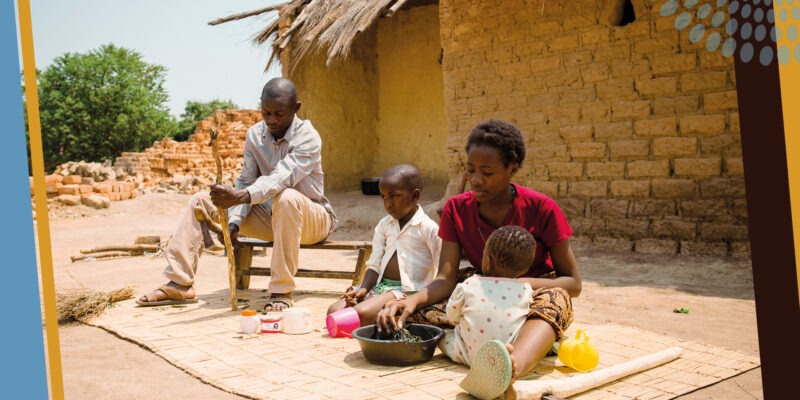
At least 20 girls are married every minute worldwide, equivalent to one girl every three seconds, with far-reaching consequences for their health, education and national economies, the United Nations Population Fund (UNFPA) has warned.
UNFPA Executive Director, Diene Keita, said another 40 girls would be married in the time it takes to read a statement, despite decades of efforts to curb the practice.
Keita issued the warning in a statement released in Lusaka to mark the International Day of the Girl Child, observed annually on October 11.
She said child marriage exposed millions of girls to serious health, social and economic risks, gender-based violence and reduced labour force participation, costing countries hundreds of billions of dollars annually.
“Every girl has dreams for her future – a future full of promise, shaped by her own vision, talents and choices. But for too many, child marriage cuts that future short. It ends her childhood and narrows the choices open to her as an adult,” Keita said.
She said the consequences extended to families and communities, as girls are often forced to leave school early and become mothers before they were physically and emotionally ready.
“Families and communities feel the effects too. Child marriage exposes millions of girls to serious health, social and economic risks, and gender-based violence,” Keita said.
Keita noted that many girls who became mothers during childhood were themselves married as children, when their bodies and minds were still developing.
“As children and adolescents, girls’ minds and bodies are still developing, and they face serious risks to their health and well-being if they become pregnant. Complications during pregnancy and childbirth are a leading cause of death for girls aged 15-19,” Keita said.
Read More: 2 juveniles killed, 2 injured in Luangwa road accident
She said child marriage was often driven by long-standing traditions, economic hardship and parents’ genuine desire to protect their daughters, adding that ending the practice required constructive engagement with communities.
“Lasting change comes not from judgement, but from listening to and working with families, communities, and religious and traditional leaders,” she said.
Keita said sustained efforts by UNFPA and its partners, working alongside communities, had slowed the prevalence of child marriage, although progress remained too slow.
She said the UNFPA-UNICEF Global Programme to End Child Marriage had supported more than 40 million girls at risk of or already experiencing child marriage over the past decade, helping them remain in school, access health services and make informed choices.
“Change is possible, because we know what works to end child marriage. We need to do more of it, with and for adolescent girls everywhere,” Keita said.
She said ending child marriage was a commitment made by all countries under the Sustainable Development Goals, but funding cuts and mounting crises were placing more girls at risk.
Keita warned that progress needed to accelerate at least 20-fold by 2030 to achieve the target.
She called on governments, communities and development partners to increase sustained investment in programmes that ensured every girl can access education, receive quality sexual and reproductive healthcare and enter adulthood empowered to shape her own future.
WARNING! All rights reserved. This material, and other digital content on this website, may not be reproduced, published, broadcast, rewritten or redistributed in whole or in part without prior express permission from ZAMBIA MONITOR.









Comments