
 By
By 
The International Monetary Fund (IMF) has reached a staff-level agreement with Zambia on a new 36-month, US$1.472 billion lending programme aimed at supporting balance of payments needs, budget financing and economic stability.
The proposed arrangement under the Extended Credit Facility (ECF), equivalent to 1.076 billion Special Drawing Rights (SDR), is subject to approval by the IMF Executive Board and implementation of agreed prior actions.
In a statement issued on Friday following a mission to Lusaka from September 29 to October 9, IMF mission Chief, Edward Gemayel, said the programme would support Zambia’s efforts to preserve macroeconomic stability, maintain debt sustainability and promote private-sector-led growth.
“The Zambian authorities and IMF staff have reached a staff-level agreement on economic policies and reforms that could underpin a new 36-month arrangement under the Extended Credit Facility,” Gemayel said.
He said the programme would also support efforts to build a more diversified and resilient economy.
Gemayel said Zambia would enter the proposed programme from a position of strength following the achievements recorded under its recently completed IMF-supported programme.
The IMF projects Zambia’s real gross domestic product to grow by 5.6% in 2026, supported by strong agricultural production, mining activity and exports.
Inflation declined to 6.1% in September, within the Bank of Zambia’s target range, while gross international reserves reached a record $6.1 billion.
Despite these gains, Gemayel said the fiscal position weakened in 2026 because of lower-than-projected revenue collections, including weaker value-added tax receipts and lower fuel taxes.
Government expenditure also increased significantly due to higher-than-budgeted spending by the Food Reserve Agency (FRA).
“The authorities are taking decisive corrective measures, including reversing temporary fuel-tax relief and scaling back non-priority capital spending, while avoiding the accumulation of new arrears,” he said.
Under the proposed programme, fiscal policy would focus on increasing domestic revenue, rebuilding financial buffers and safeguarding debt sustainability.
Gemayel said the authorities intended to gradually raise the primary fiscal surplus to 3% of GDP by 2029, beginning in 2027, through improved tax administration and compliance, stronger domestic revenue mobilisation and the rationalisation of tax exemptions.
These measures would be supported by a comprehensive Medium-Term Revenue Strategy.
“Reforms will also strengthen fiscal risk management, improve oversight of FRA operations, state-owned enterprises and public-private partnerships, and address domestic payment and VAT refund arrears, while protecting priority social and growth-enhancing spending,” Gemayel said.
He said the programme would also strengthen debt management and transparency through improved institutional capacity in the Debt Management Office.
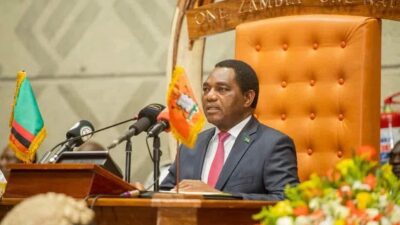
Read More: ‘My five years plan,’ Hichilema makes promises as 14th National Assembly declared open
On monetary policy, Gemayel said the normalisation process had begun following the decline in inflation to the central bank’s target range.
He said future monetary policy decisions should remain data-driven and focused on maintaining price stability.
The Bank of Zambia would also continue strengthening its monetary policy operational framework and improving the transmission of policy decisions through reforms to liquidity management, while exchange-rate flexibility would remain an important buffer against economic shocks.
Structural reforms under the proposed programme would focus on unlocking Zambia’s growth potential by promoting a more competitive, diversified and export-oriented private sector, building on the Government’s Grow Zambia Agenda.
“Reform priorities include strengthening governance and anti-corruption institutions, enhancing public financial management, increasing transparency in mining licensing and beneficial ownership, and restoring transparent and competitive access to the TAZAMA pipeline,” he said.
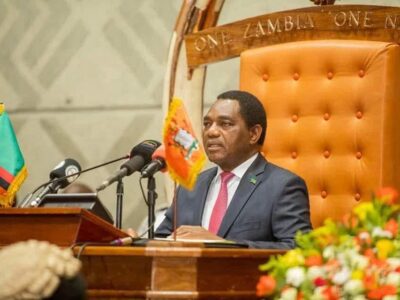
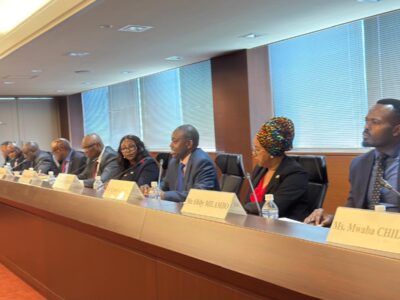
During the mission, the IMF team met President Hakainde Hichilema, Finance and National Planning Minister Situmbeko Musokotwane, Bank of Zambia Governor Denny Kalyalya, senior government officials and development partners.
The IMF noted that statements issued at the conclusion of staff missions contain preliminary findings and do not necessarily represent the views of its Executive Board.
WARNING! All rights reserved. This material, and other digital content on this website, may not be reproduced, published, broadcast, rewritten or redistributed in whole or in part without prior express permission from ZAMBIA MONITOR.




Comments