
 By
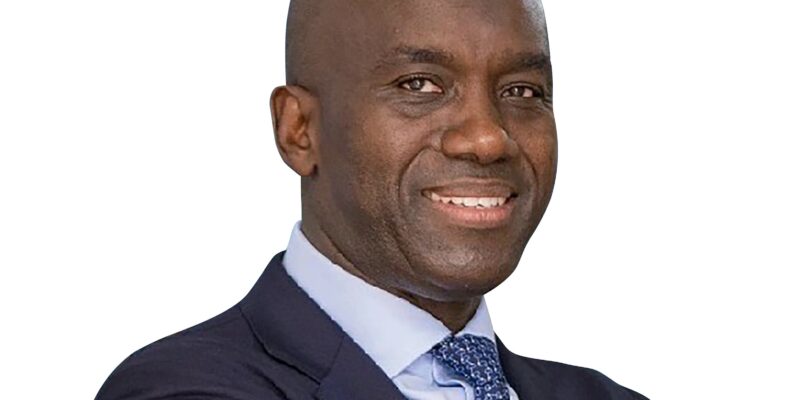
African countries need stronger compliance systems and better-aligned regulations to boost intra-African trade, improve access to international markets and help small businesses overcome cross-border trading barriers, Afreximbank Compliance Director Idrissa Diop has said.
Speaking to Zambia Monitor from Cairo, Egypt, ahead of the 2026 Afreximbank Compliance Forum in Gaborone, Botswana, Diop said compliance should be viewed as an enabler of trade rather than merely a regulatory obligation.
The forum, scheduled for November 16 to 18, will focus on leveraging compliance to promote African regulations that advance intra-African economic and trade integration.
Read more: Afreximbank, DBSA to commit about $10 million for Southern Africa projects
“This year’s forum is ‘Compliance, Better Trade: Leveraging Compliance to Promote African Regulations that Advance Intra-African Economic and Trade Integration’. We need to know how our African regulation works. If you are seated in Senegal wanting to trade with Zambia you better understand how tax Zambia works,” Diop said.
He said the forum would bring together traders, financial institutions and regulators to discuss compliance challenges and promote regulatory practices that support the African Continental Free Trade Area (AfCFTA).
Although Afreximbank cannot compel governments to change their laws, Diop said the discussions could influence how countries develop and adapt their regulatory frameworks to facilitate cross-border trade.
SMEs need better access to international banking.
Diop said small and medium-sized enterprises (SMEs) faced difficulties accessing international banking services, particularly when their local financial institutions lacked relationships with correspondent banks.
He said Afreximbank helped address these challenges by supporting financial institutions and facilitating payment channels that enabled businesses to participate in international trade.
Citing the example of a Zambian SME seeking to purchase goods from China, Diop said a business could struggle to complete an international transaction if its local bank lacked access to correspondent banking networks.
He said Afreximbank could work with the local bank and its customer to ensure that the necessary compliance requirements were met, allowing payments to be processed through appropriate banking channels.
The approach could help address de-risking, a practice in which international financial institutions restrict or terminate relationships with certain banks or markets because of perceived compliance risks.
“If we are not comfortable with the SME or they are not comfortable with the Zambian bank financial institution, that dollar will not come to that. They will block it because of compliance matters,” Diop said.
He said Afreximbank also encouraged African financial institutions to strengthen their compliance systems and adopt international best practices to improve their standing with correspondent banks.
According to Diop, the bank was bringing compliance technology providers to the forum to showcase systems that could help financial institutions strengthen sanctions screening, monitor money laundering and manage reputational risks.
Regulatory alignment critical to AfCFTA
Diop said differences in national regulations remained a challenge to deeper economic integration, adding that African countries needed to work towards more harmonised regulatory frameworks.
“Afreximbank cannot come in a country and change rules for alignment with the AfCFTA.
“We can just propose a platform where discussion is happening and ultimately every country is the one which has to decide about its own tempo to adopt AfCFTA,” Diop said.
He said regulatory alignment would require sustained engagement and decisions by individual governments, drawing a comparison with Europe’s economic integration, which developed over years of political discussions and negotiations.
Diop said the forum provided an opportunity for stakeholders to discuss how national regulations could better accommodate businesses trading across African borders.
Zambia can leverage regional initiatives
Turning to Southern Africa, Diop said Zambia could build on existing regional integration mechanisms to strengthen regulatory cooperation and expand its trade opportunities.
He cited the Southern African Development Community (SADC), the Common Market for Eastern and Southern Africa (COMESA) and the Eastern and Southern Africa Anti-Money Laundering Group (ESAAMLG) as platforms that could support regulatory alignment and strengthen compliance within the financial sector.
He said aligning anti-money laundering (AML) frameworks with international recommendations could help improve investor confidence.
“Every country today is coming with the goal to align with the AfCFTA recommendation and have a very strong AML regulation, which is going to entice investors to come in that country,” Diop said.
He also highlighted Afreximbank’s Pan-African Payment and Settlement System (PAPSS), which facilitated cross-border payments in local currencies across participating African markets.
Diop said the system could help businesses in Zambia transact with counterparts in West Africa and other parts of the continent, supporting regional trade and reducing some of the barriers associated with cross-border payments.
Diop calls for faster integration
Diop urged African policymakers, regulators and business leaders to accelerate efforts to deepen economic integration and advance the objectives of the AfCFTA.
“As an African banker, I am calling for more integration of our economy, boost of intra-African trade, and alignment with the objective of the AfCFTA,” he said.
He said business-friendly regulatory frameworks that maintained strong compliance standards could help attract investment, create jobs and expand economic opportunities for Africa’s young population.
Diop invited policymakers, trade specialists and compliance professionals to attend the three-day forum in Gaborone from November 16 to 18, where stakeholders would discuss ways to strengthen compliance and advance intra-African economic and trade integration.
WARNING! All rights reserved. This material, and other digital content on this website, may not be reproduced, published, broadcast, rewritten or redistributed in whole or in part without prior express permission from ZAMBIA MONITOR.








Comments