
 By
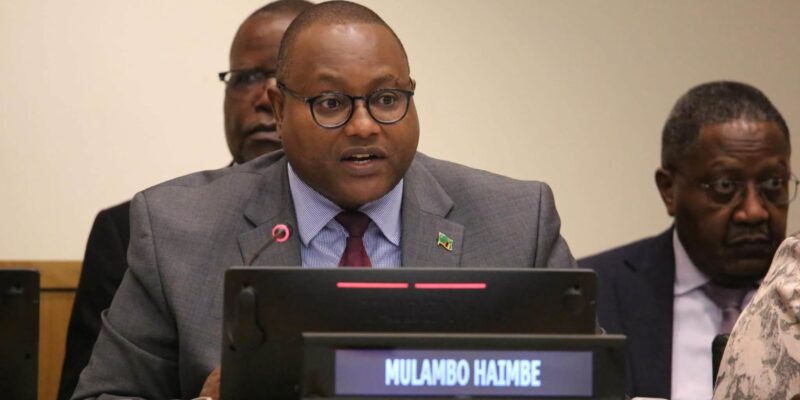
Zambia has invited Russian investors to participate in fertiliser production, irrigation technology and its planned 10,000-megawatt energy expansion as the country seeks to accelerate economic growth and strengthen domestic production.
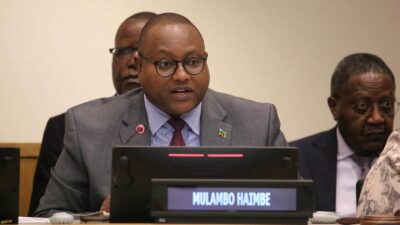
Minister of Foreign Affairs and International Cooperation, Mulambo Haimbe, said the investment opportunities formed part of the government’s Grow Zambia Agenda, which targets doubling the economy over the next five years.
Haimbe was speaking during the plenary session of the Third Russia-Africa Summit held in Moscow from October 28 to 29, 2026, where he represented President Hakainde Hichilema.
He said Zambia was seeking partnerships to strengthen food and energy security, expand agricultural production and develop local industries.
“Africa’s food and energy security are essential to drive healthy and productive human resources and industries,” Haimbe said.
He said Zambia was positioning itself as a regional food supplier, citing the country’s access to about 40 percent of Southern Africa’s water resources as an opportunity to expand agricultural production.
On mineral beneficiation, Haimbe said Zambia was seeking investment partnerships to support local processing of critical minerals rather than relying on the export of raw materials.
He cited the country’s target of producing three million metric tonnes of copper annually, alongside opportunities in cobalt, manganese and lithium.
Haimbe also called for investment in agro-processing and local mineral value chains to increase the domestic economic benefits from the country’s natural resources.
On regional trade, he said Zambia was promoting investment in transport infrastructure and regional value chains through the African Continental Free Trade Area (AfCFTA).
He identified the Lobito, Nacala and Walvis Bay corridors as important transport routes that could support regional trade and investment.
Read More: Zambia seeks global partnerships to boost investment, growth in tourism
Addressing climate change, Haimbe said Zambia contributed less than 0.01 percent of global emissions but continued to face significant climate-related challenges.
He cited the 2023/2024 drought, which affected more than nine million people, as an example of the country’s vulnerability to extreme weather events.
He called for greater investment in climate preparedness and anticipatory action rather than relying primarily on humanitarian responses after disasters occur.
Haimbe also highlighted opportunities for cooperation in artificial intelligence, saying technology transfer, digital infrastructure, skills development and AI systems capable of supporting African languages were important for the continent’s development.
He further called for reforms to the global financial architecture and the United Nations Security Council, while urging stronger cooperation between Africa and Russia in areas that could generate employment and support economic development.
WARNING! All rights reserved. This material, and other digital content on this website, may not be reproduced, published, broadcast, rewritten or redistributed in whole or in part without prior express permission from ZAMBIA MONITOR.



Comments