
 By

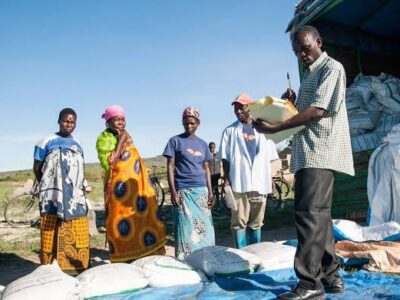
Zambia has allocated K22.7 billion to agriculture, fisheries and livestock development in the 2027 national budget as government seeks to boost production, attract private investment and position the sector as a major driver of export growth.
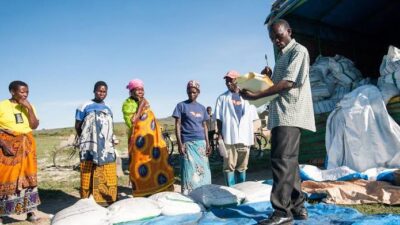
Of the allocation, K9.1 billion will go towards the Farmer Input Support Programme (FISP), while K100 million has been set aside for establishing beef compartments to support government’s ambition of generating US$1 billion annually from beef exports.
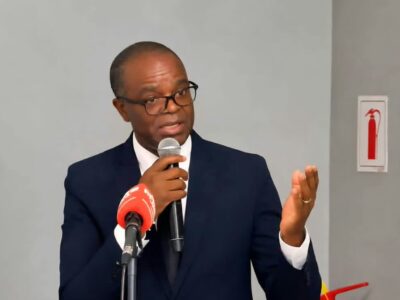
Presenting the 2027 budget in Parliament on Friday, Finance and National Planning Minister Situmbeko Musokotwane said eight targets under the Grow Zambia Agenda were directly linked to agriculture and livestock.
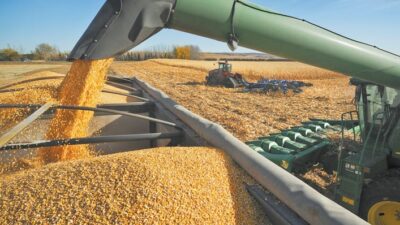
“Eight targets in the Grow Zambia Agenda relate to agriculture and livestock. The targets are 10 million tonnes of maize, three million tonnes of soya beans, one million tonnes each of wheat and sugar and US $1billion of beef exports,” Musokotwane said.
He added that achieving the targets would require the participation of farmers across all scales of production, from small-scale to large-scale commercial farmers.
To coordinate agricultural investment and improve the utilisation of farmland, government plans to establish a farm block development agency, building on the existing farm block development model.
Musokotwane said the agency would coordinate governance, infrastructure development, facilitate investment and promote productive utilisation of agricultural land.
“It will also be a special purpose vehicle that will engage with the private sector and coordinate investment,” he said.
Government also plans to review its agricultural land policy to promote productive utilisation of the country’s arable land, particularly in areas with access to water resources and supporting infrastructure such as roads, railways and electricity.
Musokotwane said government had identified the TAZARA and Lobito railway corridors as potential agricultural production zones for maize, wheat, soya beans, sugar and forestry.
Read More: Zambia seeks Japanese investment to drive copper value addition
“Investors are, however, free to choose other transport corridors like Nacala and the western corridors; establishing the necessary infrastructureRead More: Zambia seeks Japanese investment to drive copper value additionin the areas of interest; and selecting credible investors who have demonstrated capacity and interest to work with small-scale farmers and have export capability,” he stated.
Beyond farm block development, government intends to introduce targeted reforms aimed at transforming agriculture into a private sector-led, commercially viable, competitive and export-oriented sector.
Among the interventions is the establishment of six agricultural mechanisation centres in each district by 2031, in addition to the existing 125 centres.
Musokotwane said government would also accelerate investment in irrigation infrastructure, targeting at least 500,000 hectares by 2031 to support year-round agricultural production.
The programme will include harnessing existing water resources, including rivers, natural lakes and dams such as Mwomboshi and Kafulafuta.
Other measures include promoting high-yielding and climate-resilient seed varieties, strengthening agricultural extension services, improving access to affordable financing and expanding out-grower schemes for small-scale farmers.
Government also plans to introduce changes to the agricultural marketing framework to improve market access and financing for farmers.
“Government will develop implementation modalities, with the transition expected to commence in 2027.To improve agricultural marketing, Government will issue commencement orders for the Food Reserve Agency Act, 2026, the Agricultural Marketing Act, 2026, and the Agricultural Credit and Warehouse Receipts Act, 2026, accompanied by the necessary regulations and guidelines,” Musokotwane said.
In the fisheries subsector, government is targeting increased production through sustainable aquaculture, improved management of natural water bodies and investment in fish feed production.
Musokotwane said fish production was projected to reach 270,000 tonnes in 2026, rising to 300,000 tonnes in 2027.
“To facilitate further growth in the subsector over the medium-term, key interventions will include promoting productivity of aquaculture, regulating fishing activities, protectingbreeding stock and promoting responsible harvesting in our natural water bodies and facilitating investment in feed productionfor the subsector while improving genetics of our local fishspecies.”
WARNING! All rights reserved. This material, and other digital content on this website, may not be reproduced, published, broadcast, rewritten or redistributed in whole or in part without prior express permission from ZAMBIA MONITOR.






Comments