
 By
By 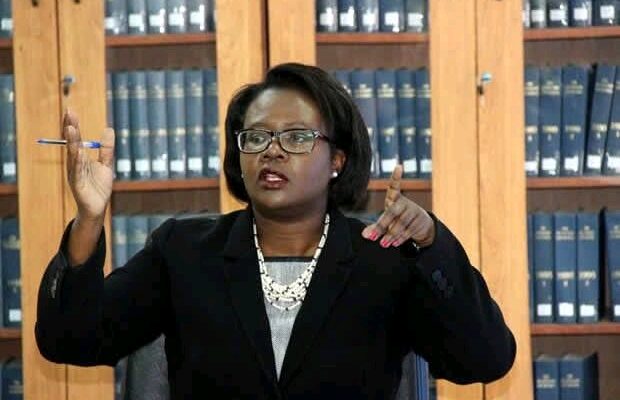
Chapter One Foundation and LCK Foundation have argued before the Constitutional Court that bilateral agreements between Zambia and the United States on health assistance and broader economic cooperation should be subjected to parliamentary scrutiny to ensure transparency and accountability.
The two organisations contend that the proposed Memorandum of Understanding (MoU) and Bilateral Compact qualify as international agreements under Article 63(2) of the Constitution and must receive prior approval from the National Assembly before implementation.
They further argued that implementing such agreements without parliamentary oversight would be unconstitutional.
During the hearing before a seven-member bench presided over by Justice Margaret Munalula, LCK Foundation Executive Director Linda Kasonda said Article 63(2) should be interpreted broadly to include bilateral arrangements, noting that the Constitution did not provide a narrow definition of an “international agreement.”
Kasonda argued that public participation was central to constitutional governance and that shielding negotiations from scrutiny undermined transparency and accountability.
She maintained that Section 2 of the Ratification of International Agreements Act unlawfully limited constitutional oversight and should be declared unconstitutional.
Kasonda further submitted that without access to the content of such agreements or parliamentary involvement, citizens were denied meaningful participation in decisions that bind the Republic.
Chapter One Foundation Executive Director, Josiah Kalala, argued that parliamentary approval was essential because international agreements bind the Republic beyond the tenure of any single administration.
He said oversight by the National Assembly strengthened accountability, separation of powers and public access to information.
However, Solicitor General, Marshal Muchende, urged the court to dismiss the petition, arguing that the MoU and Bilateral Compact had not yet been signed and remained at the negotiation stage.
Muchende submitted that correspondence from the Ministry of Health, including a letter from Permanent Secretary Dr Kennedy Lishimpi, shows that disclosure of the documents could undermine ongoing diplomatic negotiations between Zambia and the United States.
He argued that the matter was not ripe for determination because no concluded agreement existed that can be subjected to legal challenge or parliamentary approval.
Read More: Hichilema rejects Public Gatherings Bill, cites constitutional concerns
Muchende further submitted that Article 63(2) must be read together with the Ratification of International Agreements Act and relevant principles of international law, including the Vienna Convention on the Law of Treaties of 1969.
According to Muchende, the constitutional provision applies only to binding international agreements that require ratification.
He also argued that the Constitution vested executive authority in the President to negotiate international agreements under Article 92(2)(c), and that requiring public participation in all negotiations would undermine efficiency and diplomatic confidentiality.
Muchende maintained that confidentiality during negotiations was a standard feature of international relations intended to preserve trust between states.
He argued that the petition misinterpreted the law and urged the court to dismiss it at a preliminary stage.
The Constitutional Court is expected to deliver judgment in the matter on July 22, 2026.
WARNING! All rights reserved. This material, and other digital content on this website, may not be reproduced, published, broadcast, rewritten or redistributed in whole or in part without prior express permission from ZAMBIA MONITOR.









Comments