
 By
By 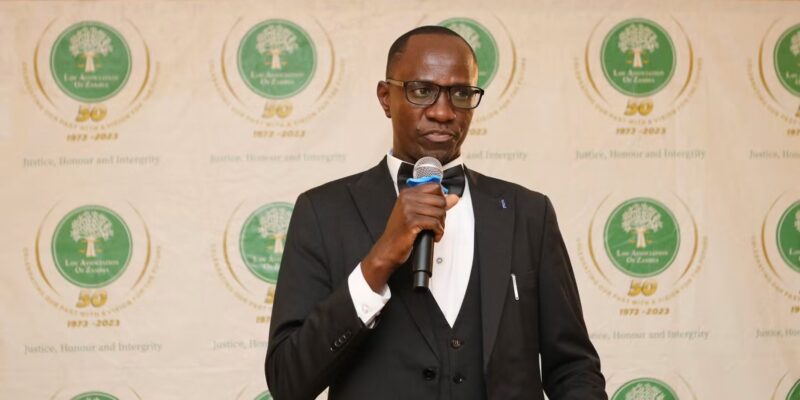
The Law Association of Zambia (LAZ) has called for a clear institutional framework for maintaining access to justice during emergencies, following the reopening of courts on Thursday, after a three-day closure.
LAZ president, Arnold Kaluba said the country should not again find itself in a situation where court premises were closed, legal deadlines continued to run, urgent rights required protection, and court users did not know where or how to seek relief.
Addressing a media briefing in Lusaka on Thursday, Kaluba noted that courts and registries across the country were closed from Monday, August 24, 2026 and re-opened today, Thursday, August 27, 2026.
Kaluba said the interruption affected litigants, legal practitioners and members of the public who relied on courts for urgent remedies.
“LAZ therefore calls upon the Judiciary to develop and communicate formal contingency arrangements for future disruptions,” he stated.
Kaluba said the three-day closure exposed gaps in how the justice system responded to emergencies and left many court users without guidance.
“These should provide, at a minimum, for mechanisms for urgent applications and alternative filing arrangements where physical access is unavailable,” he said.
Kaluba added that access to justice was too important to be treated as an administrative matter and must be protected even during periods of disruption.
He said LAZ engaged the Judiciary over the past days to seek clarity on the reasons for the closure, its scope and duration, and the measures put in place for urgent matters.
“Regrettably, we have not received the meaningful and comprehensive explanation that the circumstances required,” Kaluba stated.
He outlined the possible impact, citing accused persons who may have needed bail, survivors of gender-based violence who may have required protection orders, and litigants with statutory deadlines.
“No person should lose a right, remedy or opportunity to be heard because the institution through which that right had to be exercised was inaccessible,” Kaluba said.
Read More: Mo Ibrahim raises dust over Zambia polls, cautions Hichilema against stifling democracy
He acknowledged that genuine security concerns might require restrictions, but said the response should be proportionate because security cannot become a blanket justification for leaving people without a meaningful avenue to approach the courts.
Kaluba said if physical closure of court premises was necessary, there should be alternative arrangements for urgent matters and essential filings.
“LAZ stands ready to engage constructively with the Judiciary and stakeholders to ensure the issues are addressed in the public interest, and reaffirms its commitment to defend the rule of law and independence of the Judiciary,” he said.
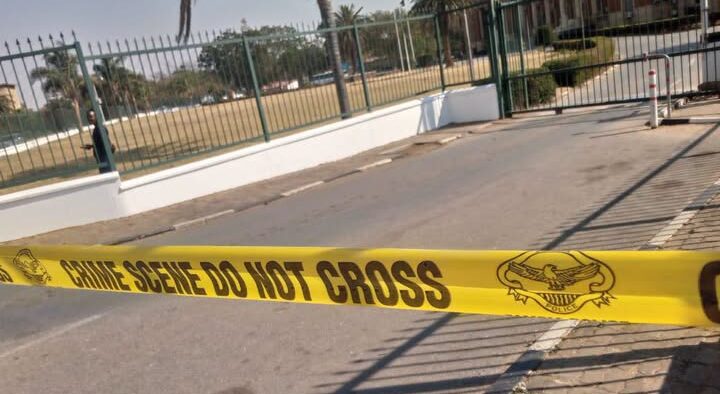
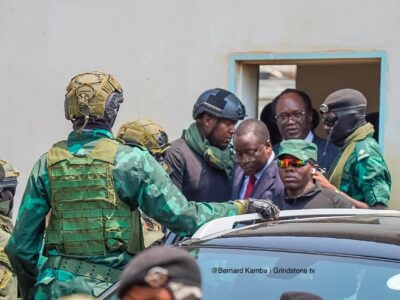
The High Court and Supreme Court complex, which also houses the Constitutional Court, were barricaded with yellow “crime scene” tape and closed amid heightened security on the final day for opposition presidential candidate, Brian Mundubile, to file a petition challenging President Hakainde Hichilema’s victory in the Aug. 13 election.
The Ministry of Home Affairs and Internal Security and National Prosecution Authority (NPA) premises were also closed, with security personnel deployed around the institutions.
Mundubile, the Tonse Pamodzi Alliance presidential candidate, was expected to file his petition on August 24, the deadline for challenging the presidential election results.
Security personnel and an armoured police vehicle were also deployed at the Lusaka High Court premises, with the entrance cordoned off.
A notice issued over the closure stated that, for security reasons, all members of staff had been advised not to report for work, with further guidance to be issued once the situation is contained.
Zambian authorities later defended the closure of courts as it faced growing criticisms by civil society groups over its action.
Responding through the Police Service, the authorities said they were conducting security risk assessments at selected key government premises across the country in collaboration with other law enforcement and security agencies.
Inspector General of Police Graphel Musamba said the assessments targeted institutions under the Ministry of Justice, Ministry of Home Affairs and Internal Security, the National Prosecution Authority, the Attorney General’s Chambers, and other selected government departments.
“The operations are intelligence-led and preventive, aimed at safeguarding Government institutions, public officers, and members of the public accessing these premises,” Musamba said.
WARNING! All rights reserved. This material, and other digital content on this website, may not be reproduced, published, broadcast, rewritten or redistributed in whole or in part without prior express permission from ZAMBIA MONITOR.




Comments