
 By
By 
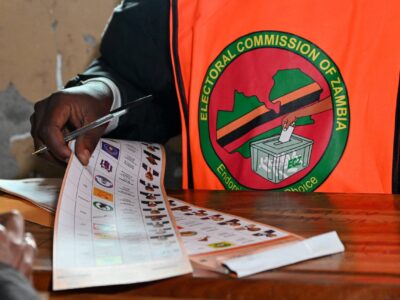
Following the 13 August 2026 General Elections, Zambia is once again entering the familiar territory of election petitions.
Several losing opposition candidates have already approached the courts challenging the results declared by the Electoral Commission of Zambia.
More strikingly, more than 20 UPND candidates have also reportedly filed petitions, demonstrating that election petitions are not exclusively an opposition phenomenon.
Whether one belongs to the ruling party or the opposition, every candidate who believes that an election was improperly conducted has a legitimate right to seek judicial redress.
But this latest wave of petitions raises a much bigger question about Zambia’s electoral jurisprudence: what exactly do petitioners expect the courts to do?
Since the Constitution was amended in 2016 and the electoral framework was substantially revised through the Electoral Process Act No. 35 of 2016, the courts have had numerous opportunities to consider challenges to parliamentary elections.
Yet, to my recollection, only two parliamentary elections have ultimately been nullified following petitions by losing candidates under this post-2016 framework.
Numerous other elections have been challenged, and some were initially nullified by the High Court, only for those decisions to be overturned on appeal.
This record should make everyone pause.
It is not necessarily evidence that elections have been perfect. Nor is it evidence that the courts have failed. It may instead demonstrate something much more fundamental: the law makes it deliberately difficult to nullify an election.
That difficulty is not accidental. It reflects an important constitutional principle. An election belongs, ultimately, to the voters. Courts must therefore be extremely careful before overturning the result of an election and effectively telling thousands of citizens that their collective choice must be disregarded and a fresh election held.
The courts are not supposed to conduct a fresh election through the petition process.
The 2026 petitions and the temptation of political arithmetic
There is, however, another dimension to the current petitions which cannot be ignored.
Political parties naturally want numbers in Parliament. The ruling party wants a stronger majority because a strong parliamentary majority makes governance easier.
Opposition parties want more seats because more seats provide greater capacity to scrutinise government, influence legislation and potentially block or amend government proposals.
There is nothing inherently wrong with this. Indeed, a functioning democracy requires both sides.
A Parliament consisting of a ruling party, opposition parties and independent members can produce healthier democratic debate. Legislation can be scrutinised, negotiated and improved.
Government proposals can be challenged. Opposition members can offer alternative approaches. Independent members can exercise their judgment on individual issues.
The objective, therefore, should not be to engineer a Parliament overwhelmingly controlled by one political formation simply because doing so makes governing easier.
Parliamentary numbers must be the consequence of the people’s votes, not the product of judicial convenience.
This is why the courts must approach the 2026 petitions with particular care.
Every petitioner deserves to be heard. Every credible allegation of electoral malpractice must be examined. But the remedy sought i.e. nullification of an election, must be granted only where the law permits it.
Have petitioners understood the difficulty of their task?
This raises an uncomfortable question. If political parties and candidates have participated in previous election petitions and have seen how the courts have interpreted the Electoral Process Act, they know that when judges apply the law strictly and follow established precedent, it is extraordinarily difficult to nullify an election in Zambia.
So what are petitioners expecting this time?
Are they presenting substantially stronger evidence than their predecessors?
Have they identified a different legal basis for challenging the results?
Or are some assuming that judges will somehow depart from established law and precedent and use judicial discretion or convenience to produce a different political outcome?
That is the question that must be asked – not because petitioners should be denied their day in court, but because the courts cannot become instruments for correcting political arithmetic merely because a political party would prefer a different composition of Parliament.
A ruling party cannot legitimately seek to increase its parliamentary numbers through judicial intervention where the evidence and law do not justify overturning elections.
Neither can opposition parties expect courts to manufacture additional seats for them simply because they believe the country would benefit from a stronger opposition.
The proper composition of Parliament must emerge from the ballot box, subject only to lawful judicial correction where an election has been demonstrated to be fundamentally defective.
The lesson from post-2016 election jurisprudence
The experience since 2016 is instructive.
The 2016 elections generated a substantial number of parliamentary petitions. Some elections were initially nullified by the High Court, but several of those decisions were subsequently reversed on appeal.
The 2021 elections produced another significant wave of petitions, with several High Court decisions again being overturned on appeal.
The ultimate number of successful petitions has therefore been remarkably small when compared with the number of elections challenged.
This should inform the expectations surrounding the 2026 petitions.
It is perfectly legitimate to file a petition. It is perfectly legitimate to allege violence, bribery, intimidation, vote buying, irregularities, corruption, manipulation or other electoral misconduct. But an allegation is not proof, and proof of some wrongdoing does not automatically mean that an election must be nullified.
That distinction is essential. The law sets a high threshold
The Electoral Process Act does not make the nullification of an election automatic merely because some irregularity or malpractice has been established.
The statutory framework requires the petitioner to satisfy demanding conditions before the drastic remedy of nullification can follow.
At the heart of the jurisprudence is the question of whether the alleged malpractice was sufficiently serious and widespread, and whether it affected the ability of the electorate to freely choose its preferred candidate.
There is also an important question of attribution.
It is not enough in every case to demonstrate that somebody committed an unlawful act during an election.
The petitioner must establish the legally relevant connection between the malpractice and the candidate or the candidate’s official agent where the statute requires such attribution.
Misconduct by an unrelated individual, political supporter or other person cannot automatically be transferred to a candidate simply because that person supported the candidate.
This is one of the most important safeguards against the arbitrary nullification of elections.
Not every wrongdoing voids an election
This is where public understanding of election petitions sometimes becomes confused.
Suppose an election involved an unlawful act at one polling station. That does not necessarily mean the entire constituency election was invalid.
Suppose a person committed an offence somewhere in the constituency. That does not automatically mean that the winning candidate’s election must be overturned.
Suppose an election official made an administrative mistake. That does not necessarily mean that the voters’ choice must be discarded.
The court must determine the legal significance of the wrongdoing.
For an election to be nullified, the petitioner must satisfy the statutory requirements. In substance, this means establishing who committed the malpractice, the legally required connection to the candidate or official agent, the extent or widespread nature of the malpractice, and its effect on the electorate’s ability to choose freely.
This is why an election can survive even where wrongdoing has been proved.
That may appear counterintuitive to the public, but it is an essential feature of the law.
The judicial question is not simply: “Was there wrongdoing?”
It is: “has the petitioner proved the statutory circumstances that justify the extraordinary remedy of overturning the people’s declared choice?”
Those are two very different questions.
Precedent matters
There is another principle that must guide the 2026 petitions: precedent.
Judges are not prohibited from developing the law. Indeed, constitutional adjudication necessarily requires courts to interpret changing circumstances and legislation.
But departure from established precedent must have a principled legal foundation.
It should not occur merely because the political circumstances of 2026 are different from those of 2016 or 2021. Nor should a court adopt a new interpretation simply because that interpretation produces a parliamentary configuration that appears more convenient for governance.
The danger of judgments of convenience is that they undermine predictability.
If the same evidence and same statutory provisions can produce radically different outcomes depending upon whether the petitioner belongs to the opposition or ruling party, public confidence in the judiciary will inevitably suffer.
The law cannot have one meaning when a UPND candidate is the petitioner and another meaning when an opposition candidate is the petitioner.
Justice must be politically blind. The colour of the petitioner must not matter
This is perhaps the most important principle for the courts as they begin hearing the 2026 petitions.
A judge should not see a UPND petitioner and think “ruling party.”
A judge should not see an opposition petitioner and think “opposition.”
A judge should not see an independent candidate and think “outsider.”
The identity, political colour, popularity, wealth, influence or parliamentary ambitions of the petitioner should have no bearing whatsoever on the interpretation of the law.
When judges open their eyes to the identity or political colour of the parties before them, it becomes possible, consciously or unconsciously, to arrive at judgments of convenience.
But when the law remains blind to the colour, height, political affiliation or status of the petitioner, and judges determine the dispute exclusively according to the Constitution, the Electoral Process Act, the evidence and established precedent, the outcome becomes much less susceptible to political manipulation.
This does not mean that judges should blindly follow precedent where precedent is plainly wrong. It means that any departure must be justified by law, not by political circumstances.
*Parliament and councils must reflect the voters*
The ultimate consequence of these petitions extends beyond the individual candidates.
The composition of Parliament and Councils matter.
Zambia needs a Parliament and Councils in which the ruling party is able to govern, but where opposition parties and independent members are also present and able to scrutinise government. Democracy is not strengthened by making parliamentary control artificially easier for one political party.
Nor is democracy strengthened by artificially increasing opposition numbers through judicial intervention.
A healthy Parliament and council is one in which numbers are determined by voters and where members are then required to negotiate, debate and compromise in the national interest.
The passage of laws should not depend merely on which party has the largest number of seats. It should depend on whether proposed laws are good for Zambia.
That is why parliamentary numbers should never become a reason for a court to stretch the law.
The courts must resist judgments of convenience
The 2026 election petitions therefore present the Zambian judiciary with an important test.
The courts must resist the temptation, whether explicit or subconscious, to consider what parliamentary or council configuration would be more convenient for the country.
It is not the function of the judiciary to decide whether Zambia would be better governed by a larger UPND majority, a stronger opposition or more independent members.
Read More: U.S congressman calls for due process, transparency in Zambia’s post-election disputes
That decision belongs to the electorate.
The function of the courts is narrower and more important: to determine whether the election complied with the Constitution and electoral law and whether the petitioner has established the legal grounds necessary to disturb the declared result.
If the petitioner proves the case, the court must have the courage to nullify the election, regardless of the political consequences.
But if the petitioner fails to meet the statutory threshold, the court must equally have the courage to dismiss the petition, regardless of the political consequences.
It is also important to distinguish the parliamentary petitions from the presidential election.
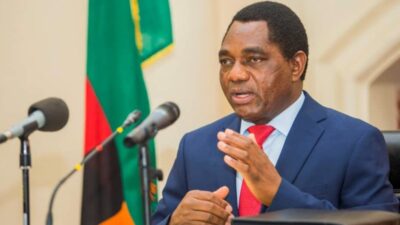
President Hakainde Hichilema resoundingly won the 13 August 2026 presidential election, receiving 2,965,326 votes, representing 60.49 percent of the valid votes, according to the official declaration by the Electoral Commission of Zambia.
His closest challenger received 1,856,217 votes, giving President Hichilema a margin of more than 1.1 million votes.
The Consortium of Civil Society Organisations that conducted a Parallel Vote Tabulation and deployed monitors across the country also independently confirmed that President Hichilema had won the election by a clear majority.
While the Consortium’s PVT estimate was 57.9 percent rather than the ECZ’s 60.49 percent, the statistical exercise nevertheless confirmed the fundamental outcome: Hichilema had secured well above the constitutional threshold and had decisively defeated his nearest competitor.
Indeed, even if a petition had been brought challenging the presidential result, the scale of the victory would have presented an exceptionally difficult legal case for nullification.
A petitioner would not merely have to identify an irregularity or even prove that some malpractice occurred; the petitioner would have to satisfy the constitutional and statutory requirements necessary to overturn a presidential election in which the declared winner had secured more than three-fifths of the valid vote and had won by more than one million votes.
The courts cannot nullify an election simply because irregularities existed; they must determine whether the proven irregularities meet the legal threshold for invalidating the election.
The overwhelming margin does not make a presidential election immune from judicial scrutiny, but it illustrates why the law and evidence, not political expectations, must remain the foundation of any petition.
In such circumstances, the question cannot simply be whether something went wrong somewhere; it must be whether the petitioner can legally demonstrate that the alleged wrongdoing was of such a nature and extent that the constitutional choice of the electorate should be discarded.
That is judicial independence.
Conclusion:
Blind justice is the only legitimate justice. The 2026 election petitions should therefore not become a contest between political parties over which side can persuade the courts to produce a more favourable Parliament or Councils.
They should be a contest between evidence and allegation, law and convenience, precedent and expediency.
When judges look at the identity and political colour of petitioners, there is always a danger that judgments of convenience will emerge.
But when judges close their eyes to the political identity of the parties and determine cases strictly according to the law, evidence and established precedent, the outcome becomes predictable.
And under the present legal framework, that predictability leads to an important conclusion: it is difficult to nullify an election in Zambia.
It is difficult not because the courts are protecting politicians. It is difficult because the law itself places a high threshold on anyone seeking to overturn the declared choice of the electorate.
Even where some wrongdoing has been proved, that alone may not be enough.
The petitioner must establish the legally required involvement or attribution to the candidate or official agent, demonstrate the required extent or widespread nature of the malpractice, and satisfy the court that the malpractice was such that the majority of voters were unable to freely elect the candidate of their choice.
That is a deliberately demanding test.
And perhaps it should remain so.
For democracy is not served by nullifying elections merely because wrongdoing occurred. Nor is it served by preserving elections where the law has been demonstrably violated to such an extent that the people’s choice has been compromised.
The courts must therefore do neither what the ruling party wants nor what the opposition wants. They must do what the law requires.
If that results in the ruling party retaining its seats, so be it.
If it results in opposition parties gaining seats, so be it.
If it results in independent candidates winning, so be it.
The judiciary must not decide who deserves the seats. The voters already did that. The courts should only determine whether the law provides a sufficient basis for taking those seats away.
And if judges remain blind to political colour, partisan interest and parliamentary arithmetic, Zambia’s election petitions may finally serve their proper constitutional purpose: not as a second election, but as a mechanism for protecting the integrity of the first.
_(The author was a co-researcher on the study, “Electoral Justice in Zambia: Resolving Disputes from the 2016 Elections and the Emerging Jurisprudence.” He is also a regular litigant in constitutional matters before the courts.)
WARNING! All rights reserved. This material, and other digital content on this website, may not be reproduced, published, broadcast, rewritten or redistributed in whole or in part without prior express permission from ZAMBIA MONITOR.










Comments