
 By
By 
Government has signed an agreement with the Livestock Services Cooperative Society (LSCS) aimed at transforming livestock production and strengthening animal health systems across Zambia, with particular focus on high-potential districts such as Namwala and Mazabuka in Southern Province.
Fisheries and Livestock Minister, Peter Kapala, said the agreement marked a major milestone in government’s efforts to modernise the livestock industry and improve service delivery for farmers.
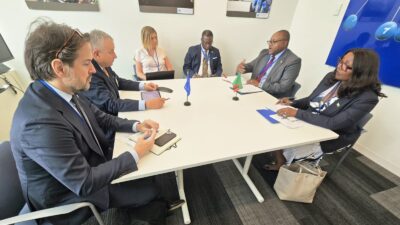
Acting Permanent Secretary, Fredrick Mwila. signed on behalf of the Government, while LSCS General Manager Rene Lourens signed for the cooperative.
Kapala said the partnership underscored a shared commitment to building a productive, resilient, and sustainable livestock sector that supports millions of livelihoods.
He explained that the collaboration would prioritise the operationalisation of the Namwala Artificial Insemination (AI) Satellite Station, which will make improved breeding technologies more accessible to farmers in surrounding communities.
He added that new laboratories in Chitongo and Namwala would significantly boost disease surveillance by enabling faster diagnosis and response to livestock illnesses—an intervention he said was crucial in safeguarding national animal health.
Kapala further highlighted that linking the Namwala AI centre with the Mazabuka Liquid Nitrogen Facility would create an efficient cold-chain system essential for storing and distributing breeding materials.
This integrated model, he said, would enhance coordination, reduce operational costs, and ensure uninterrupted access to high-quality livestock services.
The Minister also revealed that the partnership included the development of standard operating procedures and the training of technical personnel to ensure sustainability of the new innovations.
Kapala reaffirmed Government’s commitment to meeting its national targets, including raising the national cattle population to 7.4 million by 2027 and building a US$1 billion beef export industry by 2031.
Read More: Govt suspends livestock imports from South Africa over outbreak of foot and mouth disease
He said the agreement represented a strong assurance to smallholder farmers that livestock production would be supported as a profitable and viable enterprise capable of lifting household incomes and stimulating broader economic growth.
Meanwhile, Lourens welcomed the partnership, describing it as a progressive step that strengthened public–private cooperation.
He said LSCS was fully committed to helping the country achieve the presidential targets of expanding cattle numbers and entering the regional beef export market.
Lourens noted that artificial insemination was a critical intervention that will increase productivity and directly benefit farmers.
He expressed gratitude to the Minister for his leadership and to the Ministry’s technical teams for their dedication, which he said had been instrumental in bringing the initiative to fruition.
WARNING! All rights reserved. This material, and other digital content on this website, may not be reproduced, published, broadcast, rewritten or redistributed in whole or in part without prior express permission from ZAMBIA MONITOR.









Comments