
 By
By 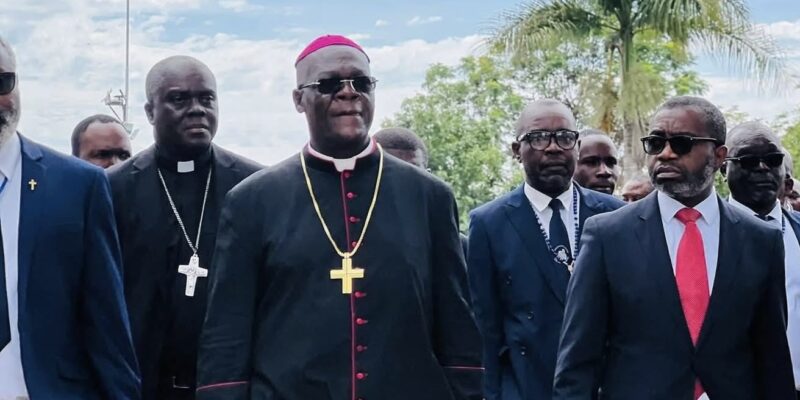
What began as a solemn act of worship at the Cathedral of the Child Jesus quickly unfolded into a charged public spectacle as Lusaka Archdiocese Archbishop Dr. Alick Banda presented himself before the Drug Enforcement Commission (DEC) on Monday morning.
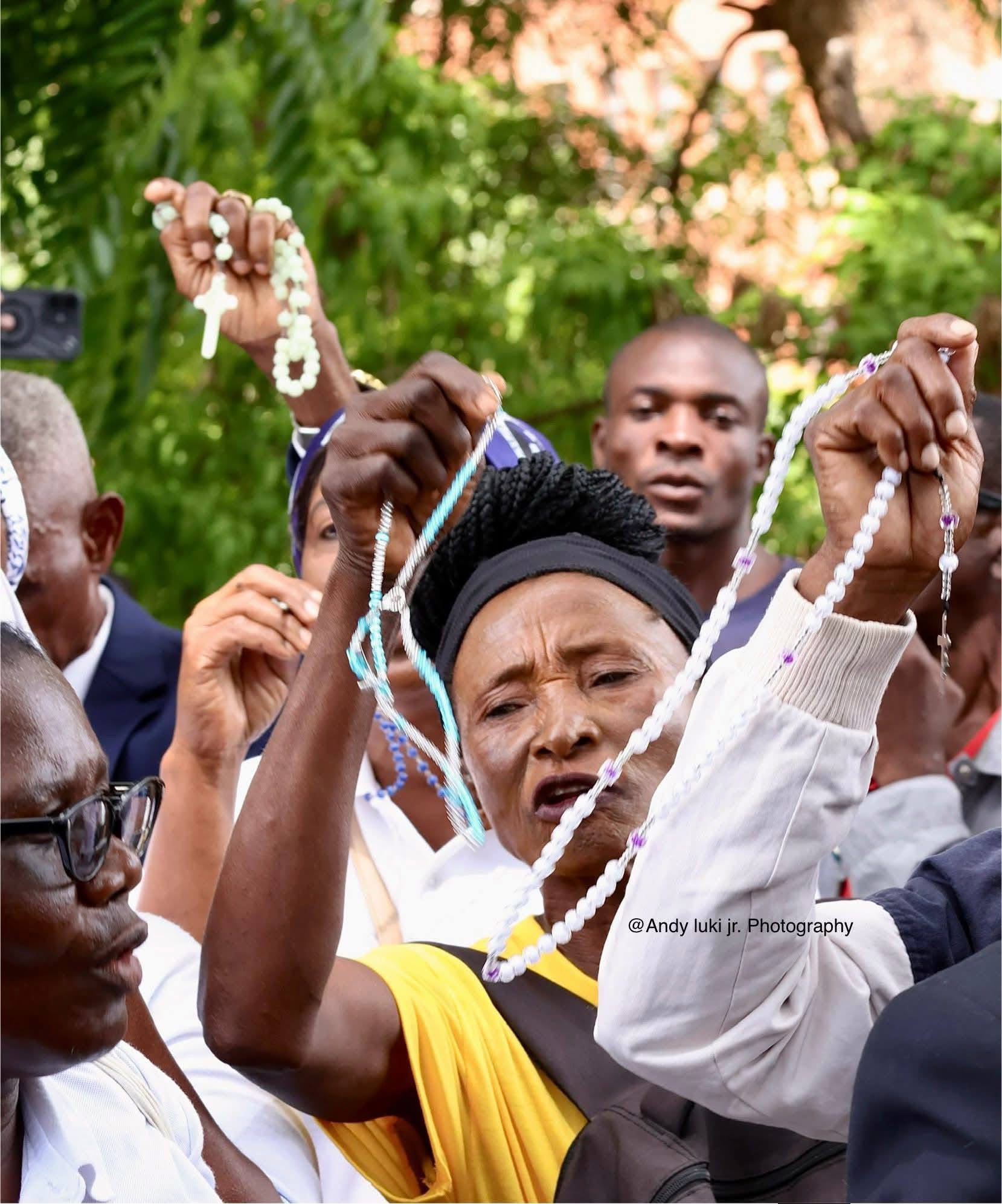
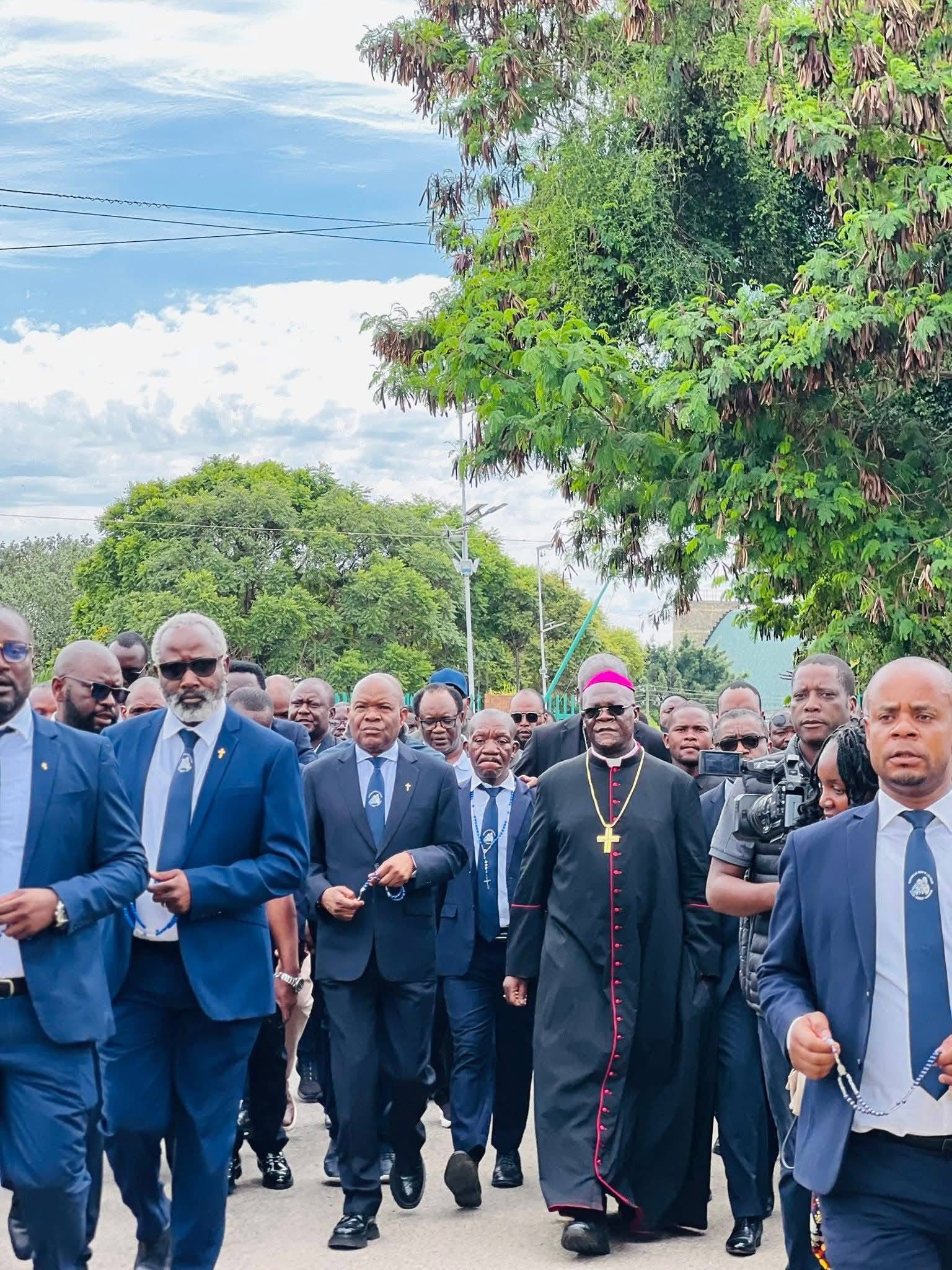
Following a solidarity Mass, Archbishop Banda led hundreds of Catholic faithful, Law Association of Zambia representatives and political figures on a prayerful procession from the Cathedral at Pope Square to the DEC headquarters in Lusaka. Clutching rosaries, worshippers recited Catholic prayers and sang hymns as they walked, transforming the city streets into a moving altar of faith, protest and symbolism.
The Archbishop was not alone. Opposition political leaders, lawyers and sympathisers from across the political divide joined the procession, blurring the line between religious solidarity and political mobilisation. Among those present were leaders from the Patriotic Front (PF), Socialist Party, Green Party and the Democratic Union Party, alongside senior legal practitioners and members of the Catholic laity.
As the group approached the DEC offices, they were met by a heavy police presence. Officers blocked the procession from entering the premises, triggering a tense standoff.
Undeterred, the faithful knelt and continued praying aloud, invoking the Hail Mary and the Lord’s Prayer, their voices rising above police instructions to disperse.
When officers reportedly ordered the crowd to leave “in the name of the President,” some worshippers responded defiantly, questioning where they were expected to go while continuing with their prayers. The moment underscored a growing tension between state authority and public expressions of faith, played out under the glare of cameras and public scrutiny.
Inside the DEC, Archbishop Banda was being questioned over a Zambia Revenue Authority (ZRA) Toyota Hilux allegedly received as a gift during the Patriotic Front administration. The interview lasted close to an hour.
Outside, legal and political manoeuvring continued. State Counsel Sakwiba Sikota and Makebi Zulu were seen negotiating access to join the Archbishop’s legal team. Ultimately, Dr. Banda was represented by State Counsel John Sangwa, Jonas Zimba and accompanied by three Catholic priests.
Police later dispersed a separate group of opposition cadres who attempted to force their way into the DEC premises, reportedly demanding to sit in during the Archbishop’s interview. The situation was brought under control without the use of force, and no injuries were reported.
When Archbishop Banda emerged from the DEC offices, he and his lawyers declined to comment, choosing silence over spectacle. He then walked back to the Cathedral with his supporters, again accompanied by prayers and hymns.
Earlier in the day, Lusaka Archdiocese Vicar General Father Andrew Simpasa had assured congregants during Mass that Archbishop Banda would “dutifully and faithfully” report to the DEC, framing the appearance as an act of obedience to both church teaching and civic duty.
The solidarity followed a directive issued on Saturday, January 3, 2026, by the Catholic Archdiocese of Lusaka, instructing all priests in the metropolitan area to read a message from the Zambia Conference of Catholic Bishops (ZCCB) during Sunday Masses. The message, delivered on the Solemnity of the Epiphany of the Lord, called for unity and prayer for Archbishop Banda.
Among the opposition figures who escorted the Archbishop to the DEC were Socialist Party President Dr. Fred M’membe, PF presidential hopefuls Makebi Zulu, Brian Mundubile and Chishimba Kambwili, former PF Secretary-General Davies Mwila, Given Lubinda and PF Deputy Secretary-General Mumbi Phiri.
Beyond the immediate legal questions, the events at the DEC reflected deeper national undercurrents — about the relationship between church and state, the politicisation of accountability institutions, and the power of religious symbolism in moments of political tension.
For many observers, Monday’s events were not just about a vehicle or an investigation, but about authority, conscience and the contested space between faith and the state in Zambia’s evolving democracy.
Picture credit: Andy Luki jr
WARNING! All rights reserved. This material, and other digital content on this website, may not be reproduced, published, broadcast, rewritten or redistributed in whole or in part without prior express permission from ZAMBIA MONITOR.





Comments