
 By
By 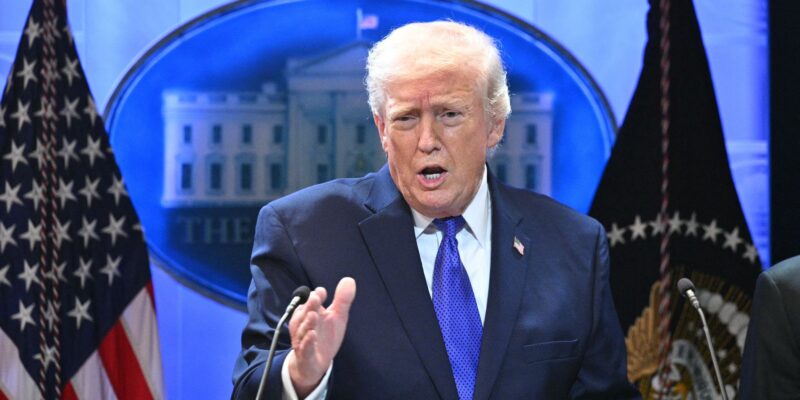
Donald Trump has announced a new 10% global tariff to replace duties struck down by the Supreme Court of the United States, criticising the ruling as “terrible” and accusing the justices who rejected his trade policy of being “fools”.
The president unveiled the new tariff shortly after the court outlawed most of the global duties his administration introduced last year.
In a 6–3 decision, the court ruled that Trump had exceeded his presidential authority, according to a report by the BBC.
The ruling marks a major victory for businesses and US states that challenged the tariffs, potentially paving the way for billions of dollars in refunds and creating renewed uncertainty in global trade.
Speaking at the White House on Friday, Trump said refunds would not come easily, predicting lengthy court battles.
He also pledged to rely on other legal instruments to reintroduce tariffs, arguing that such measures promote investment and manufacturing in the United States.
“We have alternatives — great alternatives and we’ll be a lot stronger for it,” he said.
The case centred on import taxes Trump announced last year on goods from nearly every country. The tariffs initially targeted Mexico, Canada and China before expanding sharply to dozens of other trade partners on what the president dubbed “Liberation Day” last April.
Read More: Strike leaves passengers stranded at Kenya’s main airport
The administration invoked the International Emergency Economic Powers Act, which allows the president to “regulate” trade during a national emergency.
But the move provoked backlash globally and domestically, as firms faced abrupt tax increases on imports and economists warned of rising consumer prices.
Lawyers for the suing states and small businesses argued that the 1977 law never mentioned tariffs and that Congress did not intend to transfer its taxing authority or give the president an “open-ended power to junk” existing trade agreements.
In his majority opinion, John Roberts, a conservative, sided with that argument.
“When Congress has delegated its tariff powers, it has done so in explicit terms and subject to strict limits,” he wrote.
“Had Congress intended to convey the distinct and extraordinary power to impose tariffs, it would have done so expressly, as it consistently has in other tariff statutes.”
WARNING! All rights reserved. This material, and other digital content on this website, may not be reproduced, published, broadcast, rewritten or redistributed in whole or in part without prior express permission from ZAMBIA MONITOR.









Comments