
 By
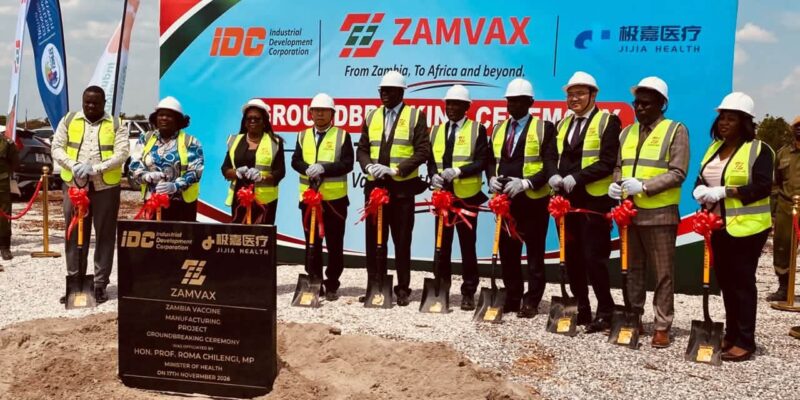
Zambia has begun construction of its first cholera vaccine manufacturing facility, in a move aimed at strengthening local pharmaceutical production, improving health security and reducing reliance on imported vaccines.
The facility, to be operated under ZAMVAX Limited, is being developed through a partnership between the Industrial Development Corporation (IDC) and China’s Jijia International Medical Technology Company Limited.
Speaking during the groundbreaking ceremony in Lusaka on Tuesday, Health Minister Roma Chilengi said the project marked a major milestone in Zambia’s efforts to achieve vaccine self-sufficiency, drawing lessons from the COVID-19 pandemic.
Chilengi said the pandemic had exposed Africa’s vulnerability, as countries without local manufacturing capacity struggled to access life-saving vaccines and other medical supplies.
Read more: Zambia cholera cases hit 3,099 as outbreak spreads to 27 districts
“Coming from the famous COVID-19 experience, it was clear to much of Africa and the global community that commodity sovereignty is not an option if you want to achieve public health security,” he said.
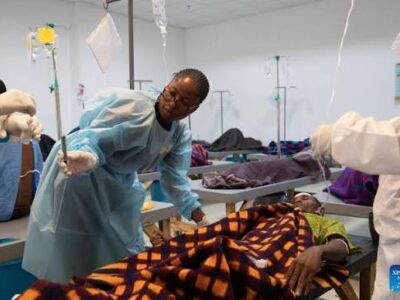
He noted that Zambia continued to experience recurring cholera outbreaks despite the availability of effective vaccines, highlighting the need for local production to improve access and save lives.
“We observed first-hand how countries with their own vaccines were able to attend to their people in the midst of death happening day by day, and yet there is a preventive vaccine that can save lives,” Chilengi said.
He said ZAMVAX would help transform Zambia from a consumer of imported vaccines into a producer capable of meeting domestic and regional demand.
“As a professor of vaccinology myself, I can tell you that nothing pleases me more than to see work in the vaccine space that gets us to a place where we can manufacture vaccines in Zambia,” he said.
The first phase of the project will focus on filling, finishing, packaging and quality control of oral cholera vaccines using imported bulk vaccine ingredients, with an annual production target of up to 20 million doses.
Under the joint venture, IDC will hold a 60 percent stake in ZAMVAX, while Jijia International Medical Technology Company Limited will own the remaining 40 percent.
Beyond vaccine production, the project is expected to facilitate technology transfer, create skilled jobs and expand Zambia’s pharmaceutical manufacturing industry, while strengthening the country’s preparedness for future disease outbreaks.
WARNING! All rights reserved. This material, and other digital content on this website, may not be reproduced, published, broadcast, rewritten or redistributed in whole or in part without prior express permission from ZAMBIA MONITOR.










Comments