
 By
By 
Zambian authorities on Monday defended the closure of courts as it faced growing criticisms by civil society groups over its action.
Responding through the Police Service, the authorities said they were conducting security risk assessments at selected key government premises across the country in collaboration with other law enforcement and security agencies.
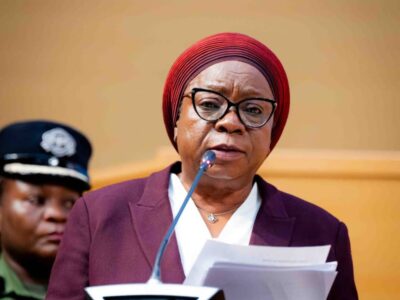
Inspector General of Police Graphel Musamba said the assessments targeted institutions under the Ministry of Justice, Ministry of Home Affairs and Internal Security, the National Prosecution Authority, the Attorney General’s Chambers, and other selected government departments.
Musamba made the announcement in a press statement issued in Lusaka on Monday amid heightened post-election tensions and the closure of courts.
“The operations are intelligence-led and preventive, aimed at safeguarding Government institutions, public officers, and members of the public accessing these premises,” Musamba said.
Earlier, the Law Association of Zambia had called for the immediate restoration of access to courts following the closure of superior courts in Lusaka and the deployment of heavily armed military personnel around court premises.
LAZ president, Arnold Kaluba, expressed concern over the shutdown, which occurred without a formal public explanation on the reasons, scope, or duration of the closure.
Kaluba said the association had seen an unsigned memorandum dated August 24, 2026 addressed to Judiciary staff directing the closure of courts.
He, however, said no further official information had been provided to legal practitioners, litigants or the public at the time of the statement.
Kaluba confirmed that some court premises had been sealed off with tape marked “Crime Scene,” raising further questions about the legal basis for the measures and the handling of urgent judicial matters.
“The closure has occurred in the absence, at the time of issuing this statement, of a formal public explanation setting out the reasons for the closure, its geographical scope, its expected duration and the arrangements in place to ensure continued access to justice,” he stated.
Similary, Transparency International Zambia (TIZ) observed with concern the closure of the country’s courts on the final day for filing presidential election petitions.
Executive Director Maurice Nyambe stated that the unsigned memorandum directing staff not to report for work on grounds of “security concerns” was troubling given the post-election period.
Nyambe added that the decision blocks an aggrieved presidential candidate from exercising his constitutional right to challenge the election results.
He observed that the timing of the administrative directive appears to disregard the harm occasioned to that candidate’s access to justice.
“At a time of political tension, the State should be encouraging political actors to seek judicial redress rather than creating obstacles. The vague justification of “security concerns” constitutes an obstruction of access to justice, Nyambe stated.
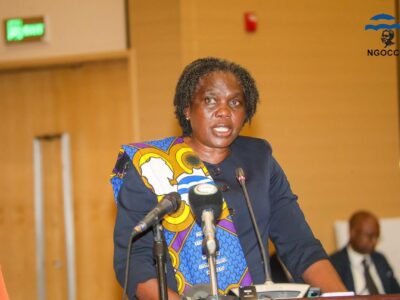
The Non-governmental Gender Organisations’ Coordinating Council (NGOCC) also expressed concern with the closure of court premises across the country by the Judiciary of Zambia.
NGOCC Board Chairperson Beauty Katebe said the wanton, unprecedented and unexplained action had rendered the Court of law inaccessible to members of the public, with no timeline given for their reopening.
“The timing of this closure has conveniently coincided with the constitutionally mandated seven-day window within which an aggrieved candidate may file a presidential election petition,” Katebe stated.
She stated that if this pattern persisted, post-election and erodes public trust, threatening to turn what should be a season of national healing into one that further jeopardises the unity Zambia has long cherished.
In his statement, Musamba stated that the exercise sought to identify and address potential security vulnerabilities and prevent threats to public safety and the functioning of government institutions.
He further clarified that the assessments were not targeted at any individuals or groups, but were part of broader measures to strengthen protection at critical state facilities.
“The Zambia Police Service wishes to clarify that the exercise is not directed at any individuals or group. It is part of ongoing security measures to strengthen protection at critical Government premises and ensure the safety of persons and property,” he said.
Musamba added the operations were being conducted professionally and lawfully in coordination with security and law enforcement agencies.
WARNING! All rights reserved. This material, and other digital content on this website, may not be reproduced, published, broadcast, rewritten or redistributed in whole or in part without prior express permission from ZAMBIA MONITOR.








Comments