
 By
By 
Zambia’s greatest information-war vulnerability is not an electorate waiting to be manipulated, but an opaque political system through which external interests can acquire credible local messengers and institutional protection.
Angola’s conviction of two Russian nationals on terrorism and espionage charges, allegations the defendants denied, is more than a domestic legal development. It signals that concerns about foreign influence are moving from policy debate into prosecution, while also raising questions about evidence, due process and the possible use of national-security law in contested political environments.
For years, Africa’s debates on disinformation and foreign interference remained confined to reports and conferences. Luanda has shifted that terrain into enforcement, where allegations face prosecutors and courts. For Zambia, approaching its general election on 13 August 2026, the implications are immediate: influence networks thrive when foreign interests embed within domestic power and no longer appear foreign.
Hardship is a condition, not an explanation.
Zambia enters the election cycle under considerable economic and social pressure. Rising living costs have eroded household purchasing power, limited economic opportunities have intensified frustration among young people, and electricity shortages have constrained businesses and daily life. The country’s recovery also remains tied to debt restructuring and international financial arrangements.
These pressures will shape the election. They provide material for opposition criticism, government messaging, populist appeals and competing explanations of Zambia’s economic condition, but hardship does not automatically produce susceptibility to foreign influence.
Josiah Kalala of Chapter One Foundation cautions against drawing such a direct line.
“Zambia’s economic pressures and growing disillusionment among young people do not, by themselves, necessarily translate into greater susceptibility to direct foreign influence,” he says. “Most foreign actors have limited direct engagement with ordinary Zambians.”
The greater danger, Kalala argues, emerges when external interests acquire access to actors already close to political power. “The greater risk arises where foreign interests gain access to, fund, or otherwise influence political parties, candidates, influential individuals and other actors with proximity to political power, or undermine institutions supposed to safeguard the interests of Zambians.”
Economic frustration may make divisive or misleading narratives more resonant, but resonance is not the same as origin. Nor is public anger evidence of foreign manipulation. The more plausible chain of influence is indirect: an external interest provides money, relationships, strategic assistance or narratives; domestic actors translate and amplify them; and citizens encounter the resulting message as an apparently local contribution to political debate.
The question, therefore, is not merely whether foreign actors can communicate with Zambian voters. It is whether Zambia can identify the domestic networks through which foreign interests acquire political access and legitimacy.
When foreign influence speaks with a local voice
This analysis does not allege that any named Zambian party, candidate or organisation is currently acting on behalf of a foreign power. It identifies structural vulnerabilities created by opaque political financing, weak disclosure and selective enforcement, conditions that can be exploited by domestic or external interests. Information warfare is often imagined as an army of bots, anonymous accounts and crude propaganda manufactured in a distant capital. These instruments matter, but they represent only the visible edge of a more complex architecture. Influence can travel through campaign financing, consultancies, commercial relationships, media partnerships, politically connected organisations and individuals with access to decision-makers. A message does not have to appear foreign to advance a foreign interest. Its effectiveness may depend precisely on its delivery by a familiar and trusted Zambian voice.
A coordinated narrative might originate abroad, move through an opaque intermediary and then be promoted by local political figures or commentators. Domestic actors might also align voluntarily with an external power because the relationship serves their own political or commercial ambitions.
This is why political transparency must be understood as part of national information security.
Zambia cannot adequately assess foreign influence without knowing who finances political activity, who pays for major political messages and what interests are represented by organisations and businesses operating close to power. The vulnerability is not simply technological. It is institutional.
The politics of selective vigilance
Detecting sophisticated influence operations requires digital expertise and cooperation across institutions, yet, as Kalala warns, “Zambia does not currently have sufficient institutional capacity or demonstrated political will to detect and respond effectively to sophisticated foreign information operations.” The problem deepens when influence operates through insiders. “Institutions may be more willing to investigate perceived threats from political opponents than influence directed at or exercised through those within the establishment”. Sovereignty demands impartial enforcement; selective scrutiny reduces information security to partisan control.
Follow the money
Debates on information warfare often fixate on content, truthfulness of posts, authenticity of accounts, or algorithmic amplification, yet content is the endpoint of hidden financial structures. Zambian civil society has long demanded stronger asset‑declaration rules and campaign‑finance legislation to reveal who funds political actors and whether foreign money shapes elections. Progress remains limited: Kalala argues that politicians across Zambia’s polarised political divide have shown little appetite for reforms that would expose their financial interests and networks. Transparency must extend beyond parties to individuals, consultancies, businesses, and media initiatives. Political finance is inseparable from information infrastructure; disclosure is essential to safeguard sovereignty.
Copper invites attention, and competition.
Zambia’s position as one of Africa’s leading copper producers places it at the heart of global supply‑chain rivalries essential to electrification and renewable energy. China, the United States, the European Union, Russia and other powers pursue investment, trade, diplomacy and security ties. Much of this engagement is legitimate and potentially beneficial, although opacity can create political and institutional risks. The distinction lies in transparency: open investment under Zambian law differs from covert financing or hidden political support. Elections will unfold amid debates on mining, debt and energy, where danger arises if legitimate discourse is distorted by undisclosed or externally supported influence.
The danger of an information vacuum
Zambia’s diplomacy reflects the pragmatism expected of a strategically important mineral-producing state. Participation in Russia–Africa forums and engagement with alternative financial arrangements form part of that landscape; they are not, by themselves, evidence of improper influence.
Opacity, however, creates vulnerability. Reports of Alabuga-linked recruitment across Africa have raised serious questions about how employment programmes are promoted, who recruits participants and whether governments adequately scrutinise the arrangements.
Where governments and institutions fail to provide timely, verifiable information, speculation fills the space. Some claims may be substantiated; others may be exaggerated or deliberately amplified. During an election, that uncertainty can be exploited by political actors seeking to attach unverified allegations to genuine public anxieties. The remedy is not state control of the narrative. It is disclosure, independent scrutiny and credible public information.
Protecting sovereignty without criminalising dissent
Electoral manipulation need not alter vote counts. Coordinated campaigns can distort perceptions, suppress turnout, inflame tensions and erode trust in institutions. The greater danger arises when grievances over unemployment, electricity, debt or corruption are appropriated by actors with undisclosed interests. Zambia’s task is to distinguish authentic democratic expression from covert manipulation. “The answer, in my view, cannot be broader censorship, vague offences or greater state control over political speech,” Kalala warns. Poorly defined laws risk weaponisation against journalists, civil society and opponents. Sovereignty must protect democratic agency, not suppress it.
Transparency is the first line of defence.
Zambia’s response should begin with comprehensive political-party and campaign-finance legislation. Significant donors should be disclosed, while foreign funding connected to political activity should face credible and independent oversight.
Disclosure obligations should extend, where appropriate, to organisations, consultancies and commercial interests that finance or coordinate political communication. Asset-declaration rules must also be strengthened, made accessible and enforced.
Electoral, regulatory and law-enforcement institutions need the technical capacity to investigate political advertising, coordinated networks and cross-border financial flows, but the law must apply equally to government, opposition and politically connected private interests.
Independent fact-checking, media literacy and public-interest research should be supported, while journalists, researchers and whistle-blowers require stronger protection. They are often the first to expose hidden financing, coordinated influence and institutional failure.
The objective must be to reveal manipulation, not suppress disagreement.
The real sovereignty test.
Zambia’s central vulnerability is not a population waiting passively to be manipulated. It is an opaque political environment in which external interests may gain influence through domestic actors, concealed financial relationships and institutions that enforce the law selectively.
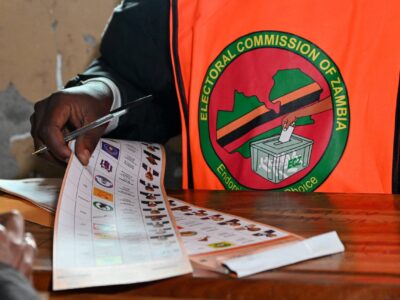
The integrity of the 2026 election will therefore depend on more than polling stations, ballots and counting procedures. It will also depend on whether citizens can discover who finances political messages, whose interests those messages serve and whether institutions can investigate interference regardless of its beneficiary.
Information sovereignty is not achieved by policing political thought. It rests on transparent financing, independent institutions, resilient media and consistent application of the law.
Zambia’s democratic security will depend not on silencing contested narratives, but on exposing the power and money behind them.
Wellington Muzengeza is an independent journalist and political-risk analyst specialising in African digital sovereignty, strategic infrastructure and critical minerals. He is a Research Fellow at the Africa Centre for Critical Minerals and Energy Transition, founder of Built Africa, and author of The Informal State.
WARNING! All rights reserved. This material, and other digital content on this website, may not be reproduced, published, broadcast, rewritten or redistributed in whole or in part without prior express permission from ZAMBIA MONITOR.








Comments