
 By
By 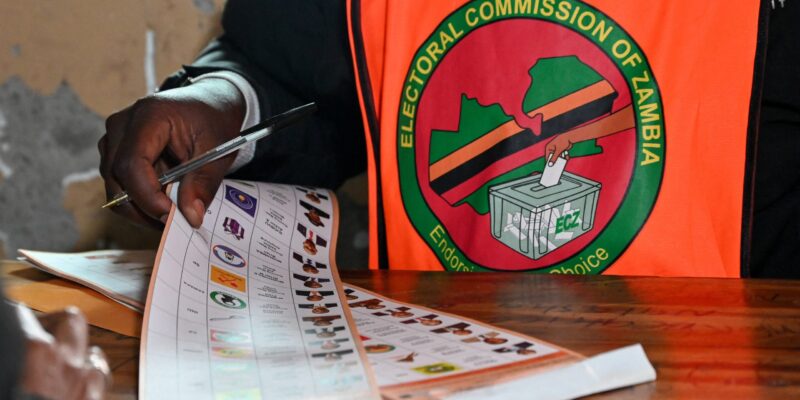
A storm is judged not only by how hard it rains, but by what it leaves behind.
The past ten days have reshaped the landscape of the electoral process in Zambia. In comparison to previous elections, the 2026 polls have been the most controversial and undoubtedly one of the most scrutinized, not because of the outcome of the votes cast but due to the manner in which the elections were conducted.
In order to have a clear picture of the gravity of the events that have unfolded, we ought to ask ourselves a simple question: was the 2026 general election conducted in accordance with the stipulated rules and regulations that govern the electoral procedure?
The answer to this question may be different from one individual to the other based on the political party one chooses to support. However, the legitimacy of the electoral process isn’t about political affiliation, it is about safeguarding the exercise of the citizens constitutional rights and ensuring that the general will of the pubic is reflected in the outcome of the votes cast.
Article 229 (2) of the Constitution of Zambia (Amendment) Act No. 2 of 2016 establishes the Electoral Commission’s constitutional responsibility for elections. The Electoral Commission of Zambia Act further provides that the Commission shall “direct, supervise and control elections in a fair and impartial manner”.
The Electoral Process (General) Regulations, 2016, Regulation 45, deals with persons permitted to enter and remain in a polling station. The regulation expressly limits who may be inside the polling station. It includes polling staff, candidates, polling agents, accredited observers and monitors, voters for the purpose of voting and persons authorized in writing by the Chief Electoral Officer.
In light of the aforementioned legislation, the question that begs an answer is not necessarily “what happened at the polling stations” but rather “were the events that occurred at the polling stations within the confines of the law?”.
These laws were intended to give the electoral process firm ground on which to stand. Yet, elections, like storms, are ultimately judged not only by what happens during the downpour, but by what they leave behind.
As the political storm begins to settle, the mud on the electoral ground becomes harder to ignore. Reports from various polling stations alleging interference, demands for GEN 20 forms and attempts to gain control of ballot boxes compel us to examine whether the conduct of those involved respected the boundaries established for the poll. If the law was the ground beneath the election, then every footprint left upon that ground deserves scrutiny.
It is common practice not only in Zambia but around the world for General Elections to be observed by non-partisan civic organizations to ensure transparency and accountability during the electoral process.
The concerns raised by the Christian Churches Monitoring Group (CCMG) and the European Union Election Observation Mission point to a troubling gap between the vote cast at polling stations and the results ultimately reported by the electoral authorities. CCMG’s Parallel Voter Tabulation identified 30 constituencies where official turnout exceeded its statistically estimated range by more than 10%, with the discrepancy accompanied by unusually higher UPND vote figures. In Lusangazi Central, for instance, CCMG estimated at 44%, compared with an official 66.4%, while the voting pattern also shifted sharply in favour of UPND.
CCMG further found discrepancies between polling-station records and tally-center figures, including increases of 113 and 170 UPND votes at two polling stations in Kalomo Central. These findings sit alongside the European Union mission’s broader concerns about an uneven electoral playing field, late legal changes, biased state media, campaign-related violence, procedural uncertainty and the need for greater transparency in the tabulation of results.
The EU called for polling-station results to be made public, reminding us that the legitimacy of an election rests not merely on the act of voting, but on the transparency and traceability of every vote from the polling station to the final declaration.
Even after the ballots had been counted, the election did not immediately yield certainty. In constituencies such as Matero, Kwacha and Kasama North, delays and disputes over the declaration of results left voters waiting for an answer that, in a democracy, should never feel like a favour from those entrusted with counting their votes.
The law demands more than the mere production of a winner; it demands a process capable of demonstrating that the declared result is the honest expression of the people’s will. For across Africa, our democratic ambition goes beyond changing who occupies the seat of power; the desired outcome is centered around building institutions strong enough to ensure that power remains answerable to the people from whom it derives. And perhaps this is what remains when the noise of an election finally subsides.
The mud after the storm gathers in the places where explanations were delayed, where figures were disputed and where a lack of transparency gave way to suspicion. Therefore, we should not mistake the passing of the storm for the disappearance of the mud.
A mature African democracy must have the courage to confront what the storm leaves behind and not to bury it beneath political convenience, but to clear the ground upon which public trust, constitutionalism and the dignity of the African voter can once again stand.
Zambia has weathered political storms before, yet our history remains one of peace, unity and democratic resilience. That heritage is not owned by any political party or government; it belongs to every Zambian. As we walk through the mud this storm has left behind, let us demand accountability without hatred, seek justice without revenge, and disagree without forgetting our shared identity. Zambia First must be more than a slogan, it must mean putting the nation above faction, the Constitution above convenience, and the common good above political interest. We may disagree on who should lead us, but we must never lose sight of the Zambia we are building together.
The storm has passed, now we must walk together in love and unity, while holding leaders accountable for their decisions and actions in accordance with the law.
Loson Mumba Jr holds a Bachelor of Laws (L.L.B) and focuses on Constitutional Law, Commercial Law and Criminal law.
WARNING! All rights reserved. This material, and other digital content on this website, may not be reproduced, published, broadcast, rewritten or redistributed in whole or in part without prior express permission from ZAMBIA MONITOR.





Comments