
 By
By 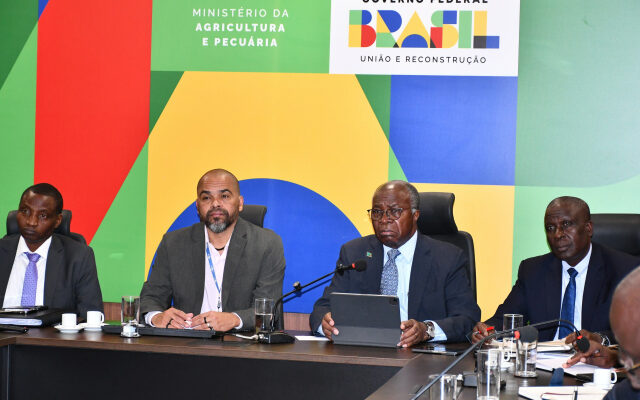
In a move to catalyze economic growth, Finance and National Planning Minister, Situmbeko Musokotwane, has reached out to Brazilian investors and financial institutions, inviting them to partake in the groundbreaking Lobito Corridor Railway Development.
Speaking during a high-level investment engagement in Brazil, Musokotwane emphasized the progress achieved thus far, showcasing Zambia’s eagerness for collaboration with Brazilian partners.
His message resonated with a hopeful tone, underlining the potential for mutual benefit and growth.
“The Lobito Corridor represents more than just a rail and road network; it is a pivotal link connecting the resource-rich Democratic Republic of Congo and Zambia to the Atlantic Port of Lobito in Angola.
“This corridor serves as a beacon of opportunity, promising to act as a catalyst for trade while enhancing logistics efficiency and fostering regional integration across Southern and Central Africa,” he said.
Musokotwane painted a vivid picture of a future where this corridor not only facilitates transportation but also played a crucial role in unlocking agricultural, mining, and industrial potential, poised to reshape the economic landscape of the region.
Read more: Musokotwane leads delegation to Brazil in search of partnerships in agriculture sector
At an engaging session with Banco Nacional Do Desenvolvimento (BNDES), supported by the Brazilian Ministry of Agriculture, Livestock and Food Supply, Musokotwane outlined a comprehensive roadmap for Brazilian investors.
He urged them to consider involvement in various aspects of the Lobito Corridor, particularly in railway development and operations.
Inviting them to participate in construction, maintenance, and management, he emphasized the necessity of efficient goods transportation between Zambia, Angola, and beyond.
Furthermore, with over 43 million hectares of arable land waiting to be explored, he encouraged Brazilian firms to invest in farming and agro-processing ventures, highlighting the vast agricultural potential that the region holds.
In his pursuit of a collaborative framework, Musokotwane proposed a model of equity participation in the Lobito Corridor Railway Development structure.
He called on Brazilian Development Financial Institutions, such as BNDES, to join in providing both concessional and commercial financing.
Caesar Dos Santos, representing the Brazilian Ministry of Agriculture, expressed appreciation for the constructive dialogue that transpired between the Zambian delegation and Brazilian institutions.
He stressed the importance of fostering public and private sector collaboration to advance the Lobito Corridor initiative.
“The way forward involves both government and private sector participation,” he asserted, signaling Brazil’s readiness to delve deeper into this promising partnership.
Echoing the sentiments of his colleagues, Zambia’s Minister of Agriculture, Reuben Phiri, lauded the attractive financing options presented by Brazilian entities.
He reaffirmed that the Lobito Corridor remained a high priority for investment and joint ventures, expressing a fervent desire for Brazil to take an active role in its financing and construction. Phiri underscored the significance of agriculture, urging Brazilian firms to explore joint venture opportunities that could greatly enhance productivity along the corridor and beyond.
Henrique De Acevedo Avila, representing BNDES, acknowledged the fruitful discussions and engagements with other developmental partners.
He emphasized that BNDES stood prepared to support Brazilian companies investing in Zambia, especially those operating along the Lobito Corridor.
WARNING! All rights reserved. This material, and other digital content on this website, may not be reproduced, published, broadcast, rewritten or redistributed in whole or in part without prior express permission from ZAMBIA MONITOR.









Comments