
 By
By 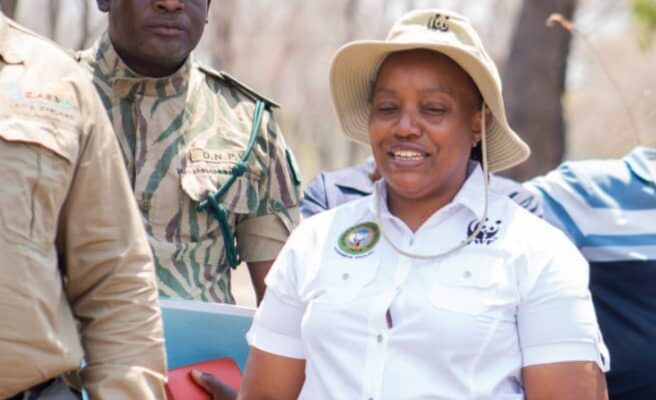
The Climate Adaptation and Protected Areas (CAPA) Initiative, in partnership with the Department of National Parks and Wildlife (DNPW) and key conservation partners, has launched the translocation of 222 animals into Sioma Ngwezi National Park.
The translocated animals included 50 zebras, 72 wildebeests, and 100 impalas, according to Nalucha Ziba, Country Director of World Wide Fund for Nature (WWF) Zambia.
In a joint statement issued in Lusaka on Tuesday, Ziba described the effort as a significant milestone in restoring wildlife populations in Sioma Ngwezi and enhancing the park’s ecological balance.
“This translocation is one of the key activities of the three-year CAPA Initiative, supported by Global Affairs Canada (GAC) and implemented by the International Institute for Sustainable Development (IISD), the Wildlife Conservation Society (WCS), and WWF,” she said.
Ziba emphasized that the initiative promotes natural solutions that strengthen climate resilience while protecting biodiversity in and around protected areas and critical landscapes.
“The translocation is not only about moving animals; it is about strengthening the long-term health of the Kavango Zambezi Transfrontier Conservation Area (KAZA TFCA),” Ziba said.
By reintroducing these species into Sioma Ngwezi National Park, the CAPA Initiative aims to restore the integrity of this key ecosystem and reduce human-wildlife conflict.
Ziba explained that insufficient wildlife populations or unsuitable conditions in national parks can drive animals into nearby communities in search of food and water.
“Restoring Sioma Ngwezi into a thriving habitat through nature-based solutions helps wildlife remain in their natural home, while protecting communities and their livelihoods,” she said.
Read More: Veterinary association urges ban on caged wild animals at public shows
Alec Crawford, Director of Nature for Resilience at IISD, noted that the CAPA Initiative operated in four landscapes: the Kavango Zambezi (KAZA) Landscape, the Virunga Landscape, Belize, and Fiji.
He added that the initiative has collaborated with communities on river and stream restoration, forest restoration, and desilting lagoons across Zambia, Zimbabwe, and Angola.
Dominic Chiinda, Director of DNPW, described Sioma Ngwezi National Park as “a golden egg in Zambia” and a testament to the country’s rich ecological heritage. He said the translocation further enhanced the park’s biodiversity.
“It is the duty of the DNPW, as stewards of the national park, to ensure that it flourishes,” Chiinda said.
Central to the CAPA Initiative is a commitment to gender-responsive and inclusive nature-based solutions, ensuring that women, youth, and marginalized groups play an active role in conservation.
WARNING! All rights reserved. This material, and other digital content on this website, may not be reproduced, published, broadcast, rewritten or redistributed in whole or in part without prior express permission from ZAMBIA MONITOR.








Comments