
 By
By 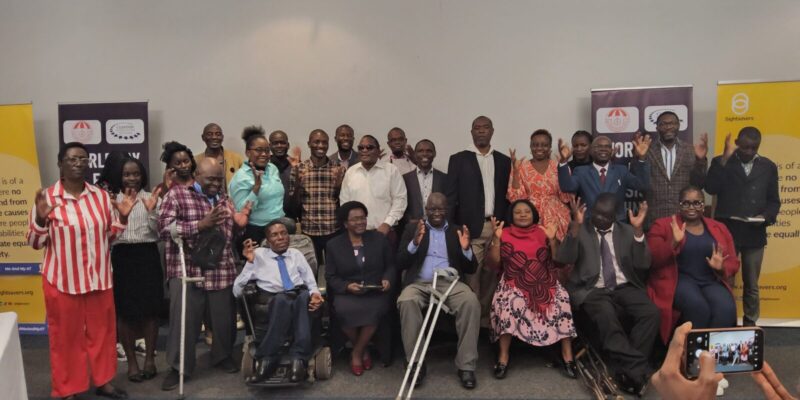
The Zambia Federation of Disability Organisations (ZAFOD) has raised concern over the country’s failure to meet its constitutional and international obligations to ensure inclusive electoral participation for persons with disabilities.
In a statement issued in Lusaka on Friday, ZAFOD Federal Director, Justine Bbakali, said that 14 years after the Sela Brotherton judgment, Zambia still fell short of its commitments to persons with disabilities.
Bbakali called on the Electoral Commission of Zambia (ECZ) to take immediate and measurable action ahead of the 2026 general elections to improve accessibility in all electoral processes.
He stressed that persons with disabilities must be meaningfully included, noting that “inclusive democracy was not aspirational but it was a legal and moral imperative.”
Bbakali urged both the ECZ and government to treat accessibility as a cornerstone of electoral integrity rather than an afterthought.
“We welcome the incremental progress that the ECZ has made to improve the accessibility of elections, with notable improvements during this process to increase the number of persons with disabilities serving as voter registration staff and presence of trained staff on disability inclusion,” he said.
However, he noted that preliminary accessibility audit findings reveal persistent and widespread barriers that continue to hinder full participation in voter registration.
He said these barriers constituted violations of Zambia’s legal obligations under domestic law and international mandates, including the UN Convention on the Rights of Persons with Disabilities (UNCRPD).
“This neglect echoes the Sela Brotherton judgement in 2011 which unequivocally condemned such institutional failures and demanded urgent, uncompromising action to uphold accessibility and equality,” Bbakali stated.
He added that despite previous commitments to enhance accessibility, many registration centres remain structurally and operationally inaccessible.
ZAFOD observers reported that only 38 percent of monitored centres had ramps, and fewer than 20 percent of these met recommended handrail standards.
Meanwhile, 49 percent required navigating stairs, and 74 percent lacked any form of ramp or handrail support.
Entrances were often narrow, stepped, or lacked clear space for wheelchair users, with issues consistent with those observed in previous election cycles.
Bbakali said that while the inclusion of persons with disabilities as voter registration staff was commendable, fewer than 5 percent of centres had officers with disabilities, reflecting broader underrepresentation.
“Although 68 percent of centers monitored reported having staff trained to support persons with disabilities, in most cases this was limited to just one or two individuals per center,” he said.
He added that some centres allowed persons with disabilities to move to the front of the queue, but the practice was inconsistently applied.
Bbakali also urged the ECZ to revise its data collection tools to capture the full spectrum of disability in line with the Washington Group Short Set and UNCRPD principles.
Read More: Group decries low access to assistive technologies for persons with disabilities (Video)
“The organization has consistently recommended comprehensive disaggregation of all disability types to inform inclusive electoral planning and resource allocation,” he said.
He expressed concern that the ECZ had not publicly released an accessibility and inclusion action plan or budget for the 2025 voter registration exercise, saying the gap undermines transparency and accountability.
Bbakali said that without a clear framework, civil society could not provide timely feedback or monitor the ECZ’s commitments to disability inclusion, leaving stakeholders excluded from meaningful participation.
“We therefore strongly urge the ECZ to hold stakeholder consultations and publish a comprehensive accessibility and inclusion strategy complete with budgetary allocations well ahead of the 2026 general elections,” he said.
Bbakali stated that the continued inaccessibility of electoral processes was “not merely a policy gap, it is a breach of constitutional and international obligations.”
WARNING! All rights reserved. This material, and other digital content on this website, may not be reproduced, published, broadcast, rewritten or redistributed in whole or in part without prior express permission from ZAMBIA MONITOR.




Comments