
 By
By 
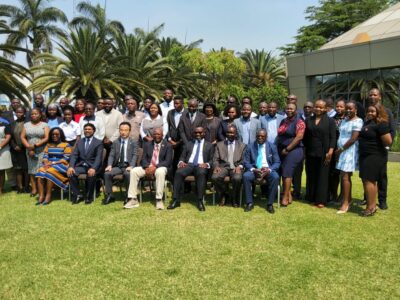
Zambia is preparing to enter a new phase of industrial transformation as government and stakeholders begin developing a successor to the National Local Content Strategy (NLCS), a move the United Nations has described as a turning point for the country’s economic future.
Dr. Olayinka Bandele, Chief of Inclusive Industrialisation at the United Nations Economic Commission for Africa (UNECA) Sub‑regional Office for Southern Africa, said the forthcoming strategy signalled a fundamental shift from extractive, resource-based growth toward value-driven and competitive industrialisation.
Speaking during a consultative meeting in Lusaka on Tuesday, Bandele said the new strategy would reposition local content as a catalyst for competitiveness, value addition and job creation.
Read more: Africa faces $120 billion infrastructure gap amid rising climate threat, UNECA says
“The development of the successor NLCS represents more than a routine policy update. We are transitioning from passive resource utilisation to proactive industrialisation, where local content drives value addition, competitiveness and job creation,” she said.
Zambia’s manufacturing sector currently contributes only 8–10 percent of GDP, despite attracting more than US$12.2 billion in investment and generating over 68,000 jobs since 2021.
Bandele pointed to new investments by United Capital Fertilizer, Nitrogen Chemicals of Zambia, and the Trade Kings Group, as well as new entrants in steel and processing industries, as signals of momentum that must now be integrated into domestic value chains.
She singled out the pharmaceutical sector as a priority, noting that Zambia imported more than 90 percent of its medical supplies, despite a domestic market valued at up to US$400 million.
Ministry of Commerce, Trade and Industry Permanent Secretary for Investment and Industrialisation, Crucivia Hichikumba, said the new strategy would build on Zambia’s natural resource base to expand domestic manufacturing and stimulate value addition.

Hichikumba noted that Zambia’s abundant resources positioned the country to move decisively away from raw material exports toward processed, higher-value products.
He emphasized that increased use of locally produced goods and services was central to the country’s industrialisation agenda.
Hichikumba said the previous national local content strategy expired in 2022, prompting the need for a more inclusive, updated framework aligned with the Zambia National Industrial Policy.
“This is a national document that cuts across priority sectors such as manufacturing, agriculture, mining, and tourism,” he said. “It is important that the new strategy remains inclusive and fosters value addition through utilisation of local resources.”
Zambia Chamber of Commerce and Industry (ZACCI) Board Trustee, Paul Chisunka, said stronger domestic participation remained essential, noting that manufacturing activity is still limited while more than 60 percent of citizens live in poverty.
He said the mining sector, despite attracting significant investment, still records local supplier participation rates below 15 percent—representing a major opportunity for local content expansion.
WARNING! All rights reserved. This material, and other digital content on this website, may not be reproduced, published, broadcast, rewritten or redistributed in whole or in part without prior express permission from ZAMBIA MONITOR.









Comments