
 By
By 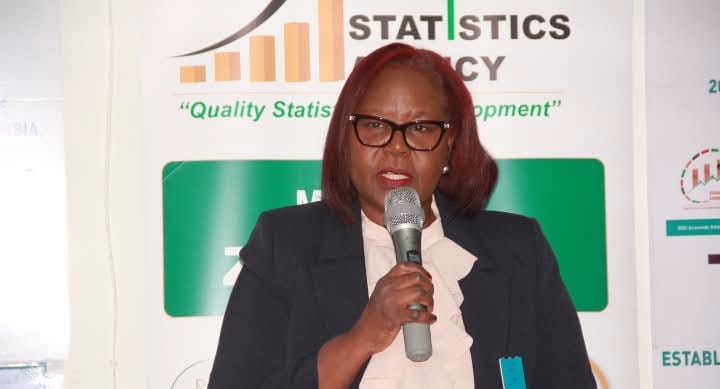
Zambia’s ongoing Gross Domestic Product (GDP) rebasing exercise is expected to provide a more accurate picture of the country’s economic performance, strengthen policymaking and enhance investor confidence by capturing structural changes that have reshaped the economy over the past 15 years.
Zambia Statistics Agency (ZamStats) Statistician General, Sheila Mudenda, said the exercise would update the country’s GDP estimates from the current 2010 base year to 2023, enabling economic data to better reflect developments across key sectors.
Speaking during the GDP Rebasing Information, Education and Communication Forum held on the sidelines of the 60th Zambia International Trade Fair in Ndola on Sunday, Mudenda said GDP remains the principal measure of economic performance and plays a critical role in national budgeting, fiscal and monetary policy, investment promotion, debt sustainability analysis and development planning.
She said Zambia’s economy had changed significantly since 2010, driven by expansion in mining, construction, financial services, information and communication technology, the digital economy and private sector activity.
“The economy has undergone significant transformation since 2010, with notable growth in mining, construction, financial services, information and communication technology, the digital economy and increased private sector activity,” Mudenda said.
Read more: Zambia Q4 2025 GDP growth reportedly slows sharply to 1.6% as key sectors weaken
She explained that ZamStats selected 2023 as the new base year because it represented a relatively stable economic period and was supported by comprehensive benchmark data needed for compiling national accounts.
According to Mudenda, the rebasing exercise will improve the accuracy, relevance and international comparability of Zambia’s economic statistics.
She, however, stressed that GDP rebasing did not generate new wealth or economic activity.
“Any changes in GDP resulting from the rebasing exercise should be interpreted as improvements in statistical measurement rather than an overnight increase or decrease in economic activity,” she said.
Mudenda said the exercise would result in more accurate estimates of economic output, improved sectoral data, stronger evidence for policymaking, enhanced macroeconomic analysis, better monitoring of development programmes, increased investor confidence and improved assessment of debt sustainability and productivity.
Earlier, Ministry of Finance and National Planning Director of Human Resource and Administration, Nalituba Mwale, said the rebasing exercise was essential to ensure Zambia’s economic statistics accurately reflected the realities of a modern and evolving economy.
Mwale said growth in mining, information and communication technology, financial services, tourism, construction, logistics and renewable energy had significantly altered the structure of the economy, making it necessary to update the country’s statistical benchmarks.
She said the revised GDP estimates would provide policymakers, investors, businesses and development partners with a more accurate understanding of Zambia’s economic performance and structural transformation.
WARNING! All rights reserved. This material, and other digital content on this website, may not be reproduced, published, broadcast, rewritten or redistributed in whole or in part without prior express permission from ZAMBIA MONITOR.




Comments