
 By
By 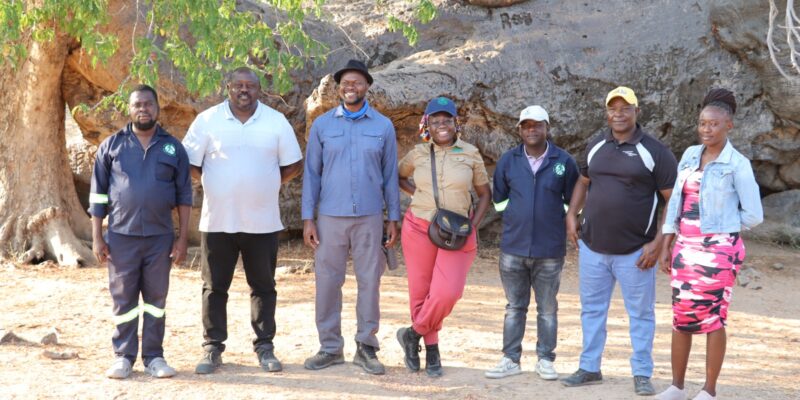
The National Heritage Conservation Commission has commenced a new phase of archaeological excavations at Ingombe Ilede National Monument in Siavonga District, in partnership with the University of York under the Zambezi Project.
The project aims to update the interpretation of one of Zambia’s most significant archaeological landscapes and to better understand its role in regional trade and early settlement.
According to a statement issued in Lusaka on Friday, NHCC Director Conservation Services , Macmillan Mudenda, visited the internally recognised heritage site to assess the work being carried out at the location that served as a trade centre as far back as the 13th century.
Mudenda said the ongoing excavations were uncovering deeper and more complex archaeological deposits than previously documented.
NHCC Conservation Officer for History, Victor Syatyoka, said the exercise marked a key milestone for archaeological knowledge on the ancient settlement.
“The work currently underway is critical in helping us move beyond established narratives and develop a more nuanced understanding of Ingombe Ilede,” Syatyoka said.
He stated that the data emerging from the deposits would allow the Commission to update the interpretation of the site in a way that was both scientifically grounded and more reflective of its true historical complexity.
Syatyoka explained that while Ingombe Ilede had long been recognised as an important pre-colonial trade centre with links across the Zambezi Valley and beyond, the current research was revealing new evidence that would refine and in some cases redefine the site’s historical interpretation.
He said the findings were expected to significantly enrich existing historical narratives and strengthen Ingombe Ilede’s position as a heritage asset of both national and regional significance.
Syatyoka also reaffirmed the NHCC’s commitment to translating research into improved site interpretation, public education and sustainable heritage tourism.
“We remain committed to translating the research findings into improved site interpretation, public education and sustainable heritage tourism development, ensuring that Ingombe Ilede continues to connect present and future generations with Zambia’s rich cultural heritage,” he stated.
Read More: NHCC laments damage to Ngombe Ilede heritage site by local authority
The collaboration with the University of York is being undertaken through the Zambezi Project, a major archaeological initiative funded by the European Research Council Advanced Grant.
University of York Professor of Archaeology, Professor Stephanie Wynne-Jones, said the excavations would broaden understanding of communities that occupied the area before the 15th Century.
“This site is the only place that we can start to understand that society. When the Portuguese started trading along the Zambezi, they did not reach Ingombe Ilede, so the histories they wrote cannot tell us about what was happening before they arrived,” Wynne-Jones said.
The project is also building local capacity with six students from the University of Zambia participating and receiving practical training in archaeological methods, excavation techniques and heritage documentation.
Speaking on behalf of the students, George Zimba, a third-year Bachelor of Education student and President of the UNZA Historical and Archaeological Association, welcomed the opportunity.
“The fieldwork has provided students with invaluable practical experience, including working in excavation trenches and using modern archaeological equipment,” Zimba said.
WARNING! All rights reserved. This material, and other digital content on this website, may not be reproduced, published, broadcast, rewritten or redistributed in whole or in part without prior express permission from ZAMBIA MONITOR.










Comments