
 By
By 
Lawyer Linda Kasonde has told the Constitutional Court that the establishment of the Technical Committee, the public consultation process and the parliamentary procedure that culminated in the enactment of Constitution Amendment Act No. 13 of 2025 failed to meet constitutional standards.
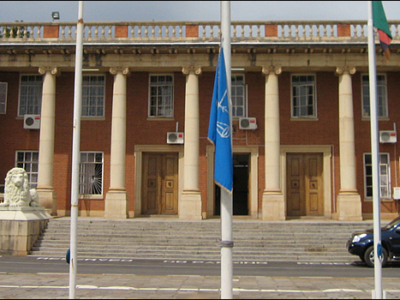
The submissions were made before a full bench of nine Constitutional Court judges chaired by Court President Professor Margaret Munalula, who reserved judgment to a date to be communicated.
Representing LCK Foundation Limited, Kasonde argued that the petition does not challenge the Constitution itself but rather the process through which the constitutional amendments were introduced and enacted.
She submitted that constitutional amendments require strict adherence to constitutional principles, including transparency, inclusiveness and meaningful public participation.
Kasonde told the court that the process leading to the enactment of Constitution Amendment Act No. 13 of 2025, commonly referred to as Bill No. 7 during its legislative stage, was executive-driven rather than people-centred, and that the consultations undertaken were inadequate in both scope and reach.
She further contended that the defects in the process persisted after the Bill was introduced in Parliament, arguing that the suspension of Standing Orders curtailed adequate scrutiny and debate.
According to the petitioners, compliance with Article 79 of the Constitution cannot validate an amendment process that allegedly failed to comply with other constitutional safeguards.
Kasonde also relied on the Constitutional Court’s decision in the Munir Zulu case, arguing that the court had previously recognised the importance of genuine public participation in constitutional reform.
However, Attorney General Mulilo Kabesha urged the court to dismiss the petition, arguing that it is founded on a misconception of constitutional law.
Kabesha submitted that the Constitutional Court has no jurisdiction to determine the validity of the Constitution itself, as Article 1 establishes the Constitution as the supreme law of Zambia.
He argued that Parliament complied with the procedure prescribed under Article 79 by gazetting the Bill, debating it and passing it with the constitutionally required two-thirds majority.
Kabesha further submitted that once a constitutional amendment is enacted in accordance with the Constitution, it becomes an integral part of the supreme law and cannot be treated as separate from it.
He also argued that the petitioners had previously challenged the amendment process but later discontinued those proceedings before returning to court with the present petition.
Kabesha cautioned that declaring Constitution Amendment Act No. 13 of 2025 unconstitutional would create legal uncertainty, particularly with the August 13 general election approaching and electoral preparations already underway.
Solicitor General Marshal Muchende supported the State’s position, submitting that Constitution Amendment Act No. 13 of 2025 has become an inseparable part of the 1991 Constitution, just like previous constitutional amendments.
The Constitutional Court reserved judgment to a date to be communicated.
WARNING! All rights reserved. This material, and other digital content on this website, may not be reproduced, published, broadcast, rewritten or redistributed in whole or in part without prior express permission from ZAMBIA MONITOR.








Comments