
 By
By 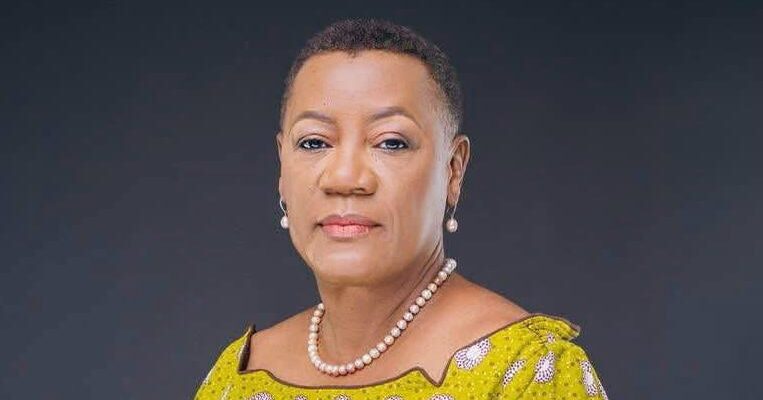
There are moments in the life of a nation when politics must become quiet enough for conscience to speak.
For me, the death of Mutotwe Kafwaya is such a moment.
I write not merely as a political leader, nor as President of the New Heritage Party and part of the Tonse Pamodzi Alliance, but as a Zambian citizen deeply disturbed by what has unfolded in the aftermath of our elections.
I do not pretend to know everything that happened in Kabulonga on 14 August 2026. None of us should. That is precisely the problem.
A former Member of Parliament and former Cabinet minister is dead following a security operation at the residence of presidential candidate Brian Mundubile. Eleven people have reportedly been detained in connection with allegations of an armed conspiracy. The Government has presented one account of events. Mr Mundubile and others have presented another.
Somewhere between those competing accounts lies the truth.
And the truth is not owned by Government. It is not owned by the opposition.
It belongs to Zambia.
A Widow’s Questions Should Never Become Political Questions
Perhaps the most painful part of this story is what has been reported about Mrs Dinis Ng’andu Kafwaya, the wife of the deceased.
In media statements attributed to her, she spoke of repeatedly calling her husband’s phone, hearing it ring, but receiving no answer. She appealed to the State for information and reportedly said that she had not been able to establish where her husband was. She spoke not as a politician but as a wife and mother, saying that the uncertainty was affecting her and her children.
Read more: National security, not a justification to dump constitutional rights, Kaluba warns govt
One sentence attributed to her should haunt us:
“The children are affected. I am affected.”
That should have been enough to stop politics in its tracks.
Before we ask which political party Kafwaya belonged to, we should ask how his family was treated.
Before we ask what weapons were allegedly recovered, we should ask why a wife was reportedly left appealing publicly to the State to help her establish the whereabouts of her husband.
Before we argue about treason, militia and insurrection, we should ask the most elementary question:
Where was the man?
There is another detail that deserves careful examination. In the initial statement attributed to the Secretary to the Cabinet concerning the operation, Kafwaya’s name was reportedly not mentioned among those publicly identified at that stage. Yet his family was, according to media reports, already desperately trying to establish his whereabouts.
If that chronology is accurate, it raises an obvious question:
Why was the State’s public account of those apprehended or involved not immediately reconciled with a family’s inability to locate one of its members?
I do not put that question forward as proof of wrongdoing.
I put it forward because a family should not have to become an investigative institution simply to discover whether its husband, father and son is alive, detained, injured or dead.
Two Narratives Cannot Both Be the Whole Truth
The State says a Joint Task Force acted on intelligence relating to an alleged illegal military training operation and militia activity, and that officers encountered gunfire.
Mr Mundubile has publicly disputed that account and described an armed operation at his residence in which Kafwaya was shot.
These accounts are materially different.
They cannot both be accepted uncritically.
If there was an exchange of gunfire, there should be a forensic reconstruction establishing who fired, from where, with which weapon and under what circumstances.
If Kafwaya was deliberately shot at close range, that too should be capable of forensic demonstration.
There should be ballistic evidence.
There should be medical evidence.
There should be photographs of the scene.
There should be a chain of custody for every firearm recovered.
There should be independent pathology.
There should be statements from every material witness.
There should be no room for political interpretation where science can provide an answer.
If the State is right, let the evidence vindicate it.
If the State is wrong, let the evidence expose that.
Why should anyone who believes in the truth object to such an investigation?
The Extraordinary Timing
The timing is equally difficult to ignore.
We have heard that the security services had been monitoring some of the individuals involved for a considerable period, with officials referring to intelligence dating back to 2023.
If that is correct, then another question inevitably follows.
Why did the operation culminate immediately after polling?
The country had just completed a national election.
The operation occurred at the home of a presidential candidate.
The opposition was beginning to consider whether the electoral result would be challenged.
A former Cabinet minister died.
Opposition figures were detained.
Again, I do not claim that this sequence proves coordination.
It does not.
But neither should citizens be told that asking about the sequence is somehow irresponsible.
Coincidence is possible. Political calculation is possible. Operational necessity is possible.
Only evidence can distinguish between them.
And if the State has that evidence, then it should show it.
The K7.3 Million and the Missing Evidential Bridge
There is also the reported recovery of K7.3 million which has featured in the security narrative.
If that recovery was the starting point of the investigation that ultimately led to Kabulonga, the public deserves to understand the connection.
Whose money was it?
Where did it come from?
Who possessed it?
Was anyone charged?
What evidence connects it to the alleged militia?
How does a cash recovery become evidence of an armed conspiracy?
A large amount of money may certainly justify investigation.
But suspicion is not treason.
A number mentioned at a press briefing is not an evidential chain.
Show us the bridge between the money and the alleged conspiracy.
Weapons Are Serious, But Weapons Do Not Speak for Themselves
If illegal military firearms and ammunition were recovered, I have no difficulty saying that this is a serious national security matter.
The State has a legitimate duty to prevent armed insurrection.
But the discovery of weapons does not automatically prove who intended to use them, for what purpose, or whether every person named by the State was connected to them.
That is what courts are for.
Where were the weapons found?
Who controlled those premises?
Who had access to them?
What are their serial numbers?
Were they registered?
What fingerprints or DNA were recovered?
What ballistic evidence exists?
Are any of the recovered weapons connected to the death of Kafwaya?
What evidence establishes that the alleged weapons formed part of an organised plan to overthrow constitutional government?
These are not questions against the State.
They are questions in defence of the State’s credibility.
The Dead Cannot Answer for Themselves
There is something particularly troubling about publicly associating a dead man with allegations that he will never have an opportunity to contest.
Kafwaya has not stood trial.
He cannot instruct counsel.
He cannot cross-examine witnesses.
He cannot produce documents.
He cannot explain what happened.
He cannot defend his reputation.
If evidence existed against him, it should be subjected to the same scrutiny that evidence against any other citizen would receive.
If the evidence does not exist, then his name should not be allowed to become a convenient political label.
There is a simple principle that should guide us:
A grave is not a courtroom.
A dead man cannot be convicted by press conference.
When the President Himself Warned Against Military Operations
There is another statement from the President that cannot simply be placed in the archive and forgotten.
President Hakainde Hichilema has publicly warned against individuals undertaking military operations outside the lawful structures of the State and against activities capable of destabilising the country. That principle is entirely correct. No private citizen, political party or political faction has the constitutional authority to establish itself as an alternative military command.
But precisely because the principle is so important, it raises a question that the Government itself must answer.
What distinguishes an unlawful private military operation from a lawful security operation conducted by the State, and who independently determines that distinction?
The answer cannot simply be: because Government says so.
A constitutional democracy operates on a more demanding principle. The State possesses the legitimate monopoly of coercive force, but that monopoly is not a licence for unreviewable force. It is a responsibility exercised within law, subject to constitutional limitations, judicial scrutiny and institutional accountability.
This becomes particularly important when an alleged security operation takes place at the residence of a presidential candidate immediately after an election, results in the death of a former Cabinet minister, and is followed by treason-related charges against political associates.
The President’s warning therefore creates an uncomfortable symmetry.
If private individuals were genuinely conducting military operations designed to destabilise Zambia, the State was right to intervene.
But if the State itself conducts an extraordinary military or security operation against political actors, the State must be equally prepared to demonstrate the legal authority, evidential basis and proportionality of that operation.
One cannot condemn the private militarisation of politics while allowing the State’s own exercise of coercive power to become politically opaque.
That is not an accusation.
It is a constitutional question.
Dissent Is Not Destabilisation
There is an even deeper danger here.
A functioning democracy must distinguish between dissent and insurrection.
A citizen who criticises the President is not destabilising the Republic merely because the criticism is fierce.
A political party that disputes an election result is not attempting to overthrow the State merely because it refuses to accept the announced outcome.
A presidential candidate who challenges an electoral result is exercising a political and, where provided by law, judicial right.
The moment dissent is routinely described as destabilisation, the vocabulary of democracy begins to change.
The question becomes not “Is the criticism true?” but “Is the critic loyal?”
That is a dangerous transformation.
Political parties exist precisely because citizens are permitted to disagree about the direction of the country. The State should therefore be extremely careful before allowing political disagreement to become securitised.
And this is where reports of political parties being restricted, opposition figures being arrested during nomination or campaign activities, and subsequent post-election detentions require careful examination. The issue is not whether every arrest was unlawful. Some may have been entirely justified.
The issue is whether the law has been applied consistently across the political spectrum.
Because a democracy does not become less democratic merely because the Government has a good reason for one arrest.
It becomes less democratic when citizens begin to believe that the reason depends upon who is being arrested.
The Most Dangerous Sentence in Politics
There is a sentence that governments throughout history have found extraordinarily useful:
“We are only protecting the country.”
Sometimes they are.
Sometimes they are not.
That is why constitutional systems do not ask citizens simply to trust the intentions of those exercising power. They create institutions capable of testing those intentions against evidence.
If there was an armed conspiracy, prove it.
If there was an insurrectionary plan, expose the evidence.
If there were military weapons, produce the forensic chain.
If the detainees committed treason, let the prosecution establish it in court.
If Kafwaya died as a consequence of an exchange of gunfire, establish that through independent forensic evidence.
And if the security operation was entirely lawful, proportionate and necessary, the State should welcome the opportunity to have that conclusion independently confirmed.
The uncomfortable truth is that an innocent State has more to gain from an independent investigation than a suspicious State has to fear from one.
And Let Us Talk About Political Decency
I am equally troubled by the way some political figures have reportedly spoken about Kafwaya in death.
Mile Sampa and Nevers Mumba are experienced political actors. They have occupied positions of public responsibility and understand the power of political language.
Political disagreement is legitimate.
Political criticism is legitimate.
Political satire is legitimate.
But there must be a boundary beyond which political competition should not descend.
Death should be one of those boundaries.
A man may be our political opponent without becoming our moral enemy.
We may reject everything he stood for and still recognise his humanity.
We may defeat his political argument and still respect his family.
We may disagree with his party and still acknowledge that his children have lost their father.
What does it say about us if a political opponent must die before we remember that he was human?
The dead cannot answer our jokes.
They cannot correct our distortions.
They cannot challenge our accusations.
That is precisely why those of us who remain alive must exercise restraint.
The measure of political civilisation is not how we treat our friends when they are powerful.
It is how we treat our opponents when they are powerless.
The Politics of Dehumanisation
This is bigger than Kafwaya.
Political societies do not suddenly become intolerant. They become intolerant gradually.
First, opponents become fools.
Then traitors.
Then enemies.
Then threats.
Eventually, extraordinary treatment of them begins to seem normal.
That is how political dehumanisation works.
Today it is somebody else’s opponent.
Tomorrow it may be ours.
And that is why I will defend due process even for people with whom I profoundly disagree.
Not because I know they are innocent.
But because I do not know that they are guilty.
That distinction is the foundation of civilisation.
Where Is the Court?
The allegations now being made are extremely serious.
Treason is not a political insult. It is a grave criminal allegation.
If people have been charged, let the charges be placed before the courts.
Let their lawyers see the evidence.
Let magistrates and judges exercise their constitutional authority.
Let the prosecution prove its case.
Let the accused defend themselves.
Let the public eventually see the difference between an allegation and a conviction.
A press statement can announce an arrest.
It cannot determine guilt.
A police briefing can describe an investigation.
It cannot replace a trial.
A Permanent Secretary can deny a rumour.
He cannot replace a pathologist.
A politician can make an accusation.
He cannot replace a judge.
The Republic has courts for a reason.
The State of Emergency Question
I do not call casually for a state of emergency.
Such powers are extraordinary and dangerous precisely because they can affect fundamental liberties.
But the Government itself has described the alleged threat in extraordinary terms: organised militia activity, military-grade weapons, alleged training and an alleged threat to the constitutional order.
The Constitution provides mechanisms for dealing with genuinely grave emergencies.
So I ask a constitutional question, not a partisan one:
What legal framework authorised the extraordinary security response at Kabulonga?
Was ordinary criminal law considered sufficient?
Were special security powers invoked?
If so, under what authority?
If no emergency framework was necessary, why not?
The answer may be perfectly legitimate.
But the public should hear it.
A government confident in the legality of its conduct should be able to explain the legal foundation without hesitation.
The Women Who Cannot Hold Press Conferences
And while the political class debates Kabulonga, there are reports of women in markets being threatened because of their perceived political preferences.
I do not repeat those allegations as established fact.
They require investigation.
But if they are true, they reveal something deeply disturbing.
The woman selling vegetables does not have a television station.
She does not have political lawyers.
She cannot call a press conference.
Her political power may consist of one small mark on a ballot paper.
If she can be threatened because somebody believes she voted for Mundubile, then the secret ballot has been technically preserved while the freedom behind it has been destroyed.
That is why democracy must be measured not only from State House and Parliament but from the market stall, the bus station, the compound and the village.
The test is whether an ordinary citizen can say:
“I voted for whom I wanted, and nobody can punish me for it.”
Was This a Free and Fair Election?
I will not manufacture a verdict from Washington or any other foreign capital.
Zambia must be capable of judging its democracy for itself.
But international standards are useful because they remind us that an election is more than the counting of ballots.
It requires meaningful competition.
It requires political participation without intimidation.
It requires equal application of the law.
It requires freedom to campaign.
It requires an opposition that can question the result without being treated automatically as an enemy of the State.
Observer missions have already recorded concerns about aspects of Zambia’s electoral environment, including police obstruction, selective enforcement, political intolerance and perceived partiality in law enforcement.
That does not prove that the election was stolen.
But neither does a peaceful polling day erase the conditions surrounding the political competition.
The question is therefore not simply:
“Were ballots cast?”
They were.
The harder question is:
“Were citizens and candidates genuinely free to participate without fear, unequal coercion or politically selective application of State power?”
That question deserves an honest answer.
And What About Closing Political Space?
There is another question that Zambia must confront without euphemism.
What happens when political parties are restricted, opposition activities are curtailed, dissent is repeatedly characterised as destabilisation, political figures are detained and security language increasingly enters ordinary political competition?
At what point does the protection of national security become the securitisation of politics?
That distinction matters.
A State must defend itself against armed rebellion.
It must also defend the citizen’s right to disagree with the State.
Those are not contradictory obligations.
They are the essence of constitutional government.
The tragedy would be if, in the name of defending democracy from those who allegedly wish to destroy it, we gradually dismantled the very democratic freedoms that make Zambia worth defending.
That is why the Kabulonga affair must not be viewed in isolation.
It must be examined against the larger trajectory of political space, dissent, arrests, campaign restrictions, security rhetoric and the treatment of opposition parties before and after the election.
The question is not whether Government has the right to protect Zambia.
Of course it does.
The question is:
Who protects Zambia from the possibility that the language of protecting Zambia might itself be used to suppress Zambia’s political freedoms?
That is not an anti-Government question.
It is a constitutional question.
And perhaps the most important question of all is this:
If political dissent can be transformed into a security threat merely by Government characterisation, what remains of the citizen’s right to disagree?
That is the line that no political party should cross.
Not Government.
Not the opposition.
Not the security services.
Not political cadres.
And not us.
Because once that line disappears, every election becomes less about choosing a government and more about determining who controls the machinery capable of silencing everyone else.
That is not the Zambia I believe we should bequeath to our children.
The Coincidences
And then there are the coincidences.
A reported long-term surveillance operation.
The reported recovery of K7.3 million.
The election.
The Kabulonga raid.
The residence of a presidential candidate.
The death of a former Cabinet minister.
The detention of opposition-linked individuals.
The uncertainty surrounding Kafwaya’s whereabouts.
His wife’s reported appeal to the State.
The competing accounts of his condition and death.
The post-election dispute.
And now the intention to challenge the electoral result.
Do these facts prove a conspiracy?
No.
But does their concentration in one extraordinary period justify independent scrutiny?
Absolutely.
Perhaps everything is innocent coincidence.
If so, I would welcome the evidence that establishes it.
There is nothing more reassuring than having one’s suspicions disproved by facts.
But the public cannot reasonably be asked to accept that every coincidence is meaningless simply because the State says so.
My Appeal Is to Government, Opposition and Citizen Alike
I therefore make an appeal to everyone.
To Government:
Show the evidence.
To the Police:
Conduct the investigation professionally and transparently.
To the courts:
Protect due process without fear or favour.
To the opposition:
Challenge what is wrong, but do not manufacture what cannot be proved.
To political elders:
Lower the temperature. Your words have consequences.
To citizens:
Do not allow grief to become vengeance or suspicion to become fact.
And to the family of Mutotwe Kafwaya:
Your loss should never be reduced to a political talking point.
What Kind of Country Do We Want?
This is ultimately not about Kafwaya alone.
It is about the Zambia we are creating.
Do we want a country where an opposition politician can challenge an election without being transformed into a security threat?
Do we want a country where the State can exercise coercive power but must account for every life lost?
Do we want a country where a widow can ask where her husband is and receive an immediate, truthful answer?
Do we want a country where politicians can disagree fiercely without celebrating the death of an opponent?
Do we want a country where the dead are allowed dignity even when the living disagree with everything they represented?
I believe we do.
That is why I cannot remain silent.
I am not asking Zambians to believe Brian Mundubile.
I am not asking them to distrust the Government.
I am asking them to demand something higher than either political camp:
The truth.
If the State is right, let the evidence prove it.
If the opposition is wrong, let the evidence prove that too.
If crimes were committed, prosecute those responsible.
If State power was abused, hold those responsible accountable.
If the election result is disputed, let the courts determine the matter.
But let us not allow the death of Mutotwe Kafwaya to become another political weapon in a country already exhausted by political division.
His children should not have to grow up hearing their father’s name reduced to a political accusation.
His widow should not have to live with unanswered questions.
And the Zambian people should not have to choose between believing the State and believing the opposition.
We deserve a country in which the evidence is strong enough that we do not have to choose.
That is the essence of constitutional democracy.
It is not the absence of conflict.
It is the existence of institutions strong enough to resolve conflict without fear, vengeance or violence.
The election has been held.
The votes are being counted and contested.
Political power will change hands, as it always does.
But the Republic must remain.
And the Republic is bigger than every president, every party, every alliance and every election.
Mutotwe Kafwaya deserves justice.
His family deserves truth.
The accused deserve due process.
The security services deserve a fair investigation.
And Zambia deserves answers.
I ask only that we have the courage to seek them , even when the answers may make all of us uncomfortable.
WARNING! All rights reserved. This material, and other digital content on this website, may not be reproduced, published, broadcast, rewritten or redistributed in whole or in part without prior express permission from ZAMBIA MONITOR.






Comments