
 By
By 
The World Bank is ready to begin preparing a proposed $102 million programme to develop Zambia’s plantation forestry sector, subject to a formal request from the government, the Ministry of Green Economy and Environment said.
The proposed Lobito Plantation Forest Economy Programme aims to promote private sector-led plantation forestry, create jobs and strengthen Zambia’s forest economy by leveraging improved transport and market access expected from the development of the Lobito Corridor.
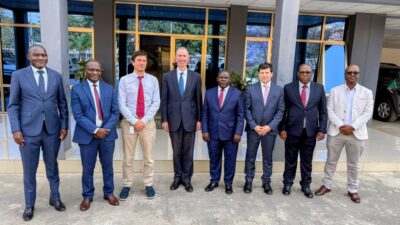
The commitment was made during talks on Wednesday between Green Economy and Environment Minister Gilbert Siame and a World Bank delegation in Lusaka.
Permanent Secretary, Douty Chibamba, attended the meeting, which focused on mobilising private investment, generating revenue for the National Treasury and creating jobs across the forestry value chain.
World Bank team leader Ambroise Brenier outlined the scope of the proposed support.
“The proposed programme would support the establishment of an enabling policy and institutional environment for private investment in plantation forestry while facilitating the development of the public infrastructure and services required to support the timber value chain,” Brenier said.
Siame thanked the World Bank for its continued technical and financial support, particularly through the TRALARD II Project and the Eastern Province Jurisdictional Sustainable Landscape Project.
“The programme is expected to leverage the improved transport and market access that will arise from the development of the Lobito Corridor,” he said.
He said this would enable Zambia to expand sustainable pine and eucalyptus plantations, increase timber processing and improve access to domestic, regional and international markets.
Siame said Zambia had favourable ecological conditions for commercial plantation forestry amid growing demand for timber products.
“The proposed programme presents an important opportunity to transform plantation forestry into a major contributor to economic growth, job creation and domestic revenue mobilisation. It should, however, be designed with clear short, medium and long term benefits and measurable impacts in mind,” he said.
Siame stressed that local communities, small-scale producers and outgrowers must benefit meaningfully from investments under the programme.
He also called for stronger sustainable forest management, environmental safeguards and land-tenure arrangements.
“The proposed financing could combine public and private funding through the International Development Association, the International Finance Corporation and the Multilateral Investment Guarantee Agency,” Siame said.
He said the next steps were expected to include involving plantation forestry stakeholders in consultations on the Lobito Corridor and integrating the timber value chain into the corridor’s infrastructure planning.
WARNING! All rights reserved. This material, and other digital content on this website, may not be reproduced, published, broadcast, rewritten or redistributed in whole or in part without prior express permission from ZAMBIA MONITOR.









Comments