
 By
By 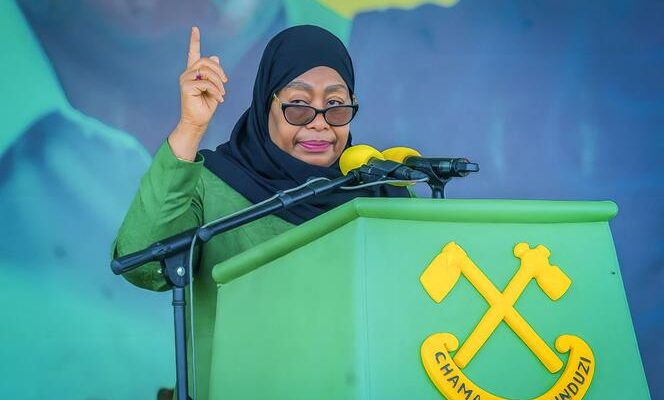
Tanzanian President, Samia Suluhu Hassan, has been sworn in for a second term amid tight security, following an election marred by violent protests and rejected by the opposition as a sham.
The inauguration ceremony took place at a military parade ground in the capital, Dodoma, in an event closed to the public but broadcast live by the state-run Tanzania Broadcasting Corporation (TBC).
According to the BBC, President Samia was declared the winner on Saturday with 98 percent of the vote. She faced little opposition, with key rival candidates either imprisoned or barred from contesting.
International observers have raised concerns about the transparency of the election and the violence that followed, with hundreds reportedly killed or injured.
Authorities have downplayed the extent of the unrest, while a nationwide internet shutdown since election day has made it difficult to verify the death toll or obtain independent information.
In her victory speech, President Samia described the poll as “free and democratic” and labelled the protesters as “unpatriotic.”
Opposition leaders and activists, however, claim hundreds were killed in clashes with security forces.
The opposition Chadema party said it had recorded “no less than 800” deaths by Saturday, while a diplomatic source in Tanzania told the BBC there was credible evidence of at least 500 fatalities.
The UN human rights office earlier confirmed receiving credible reports of at least 10 deaths in three cities.
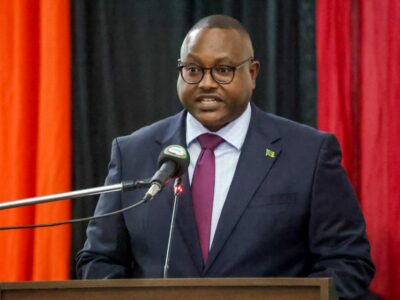
Among the dignitaries who attended the swearing-in ceremony was Zambian President Hakainde Hichilema, whose decision to attend has drawn criticism from opposition leaders back home, including Citizens First (CF) leader Harry Kalaba and New Heritage Party (NHP) Vice President Samuel Kasankha.

Before his departure for Tanzania, President Hichilema wrote on his Facebook page on November 3, 2025:
“Good morning fellow citizens,
We have left for the United Republic of Tanzania to attend the inauguration of that country’s President-Elect, Her Excellency Samia Hassan Suluhu.
Zambia and Tanzania enjoy a historical relationship in many sectors, dating back to pre-independence days.
We thank you for your usual prayers as we travel to attend this important ceremony.”
However, NHP’s Kasankha expressed deep concern over the President’s attendance, saying it undermines Zambia’s commitment to democratic principles.
“Reports emerging from Tanzania indicate that deliberate efforts were made to exclude and frustrate opposition participation through questionable means. This, regrettably, betrays the spirit and essence of democracy as we know it and as we would want to see it practised across our region,” he said.
Kasankha said reports that as many as 500 people had died in post-election protests were “an unacceptable level of high-handedness by any standards.”
“We are therefore deeply troubled that President Hichilema, who has previously chosen to avoid similarly contentious events elsewhere, including the inauguration of President Mnangagwa in Zimbabwe, has elected to attend this particular inauguration,” Kasankha stated.
He added that the decision risks being interpreted as Zambia’s endorsement of a flawed and undemocratic process.
Kasankha further said it was especially painful to recall that President Hichilema had often spoken about Zambians who died in political violence under the Patriotic Front regime.
“It is difficult to reconcile that concern with his silence over the hundreds who are feared to have perished in Tanzania, including reports that ten Zambian nationals were among those killed in the unrest near Nakonde,” Kasankha said.
WARNING! All rights reserved. This material, and other digital content on this website, may not be reproduced, published, broadcast, rewritten or redistributed in whole or in part without prior express permission from ZAMBIA MONITOR.




Comments