
 By
By 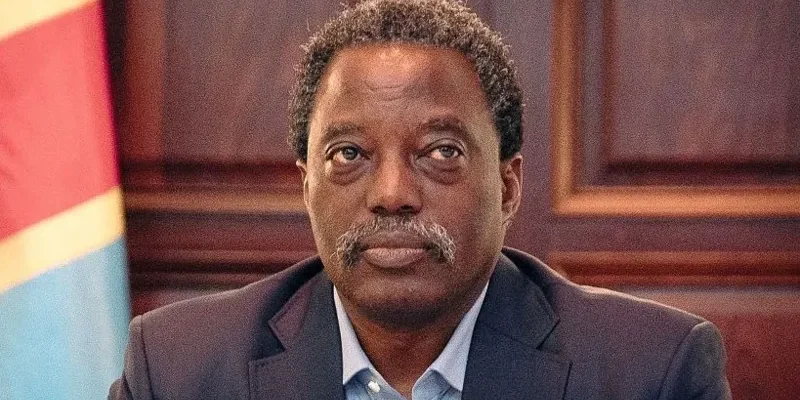
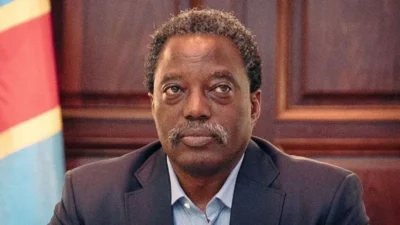
Former Democratic Republic of Congo (DR Congo) president, Joseph Kabila, has been named leader of a new rebel coalition seeking to remove President Félix Tshisekedi’s government, raising fresh concerns over the conflict in the country’s mineral-rich eastern region.
The Front for the Refoundation of the Nation (FRN) said it would coordinate what it described as “resistance forces” to end “tyranny” in the country, pledging to pursue its objectives “by all means, including force”.
According to the BBC, the coalition was unveiled on Monday at Kabila’s residence in Goma, the eastern city that has been under the control of the M23 rebel group since last year.
Claude Ibalanky, an adviser to the coalition, announced its leadership at a press conference, while video released by the group showed Kabila signing documents alongside other leaders.
Read more: Ethiopia-Eritrea tensions deepen amid fears of renewed conflict
M23 leader Sultani Makenga has been named one of Kabila’s four deputies in the new movement.
The other three deputies also come from the AFC-M23 alliance, which seized large parts of eastern DR Congo last year.
The announcement is the clearest indication yet of Kabila’s direct involvement in an armed political movement, a year after he was sentenced to death in absentia for treason.
He had previously denied links to M23.
The Congolese government has not commented on the coalition’s formation.
The development comes days after Kabila delivered an address in which he promised to outline how Congolese citizens should act to “rescue” their country.
On Friday, he accused Tshisekedi’s administration of ignoring proposals he had made last year, including initiatives aimed at ending the conflict in eastern DR Congo.
Kabila also accused the government of undermining constitutional rule, mismanaging the economy and failing to improve security. He further alleged that political opponents and military officers had been subjected to arbitrary arrests.
The government has not publicly responded to the allegations.
Kabila, 55, ruled DR Congo from 2001 until January 2019, when Tshisekedi took office following a disputed election.
The two leaders initially maintained an informal power-sharing arrangement after the transfer of power but later fell out.
Kabila went into self-imposed exile in 2023 before returning to Goma last year. After remaining largely out of public view for several years, he has increasingly criticised his successor’s administration.
The formation of the FRN adds another dimension to the protracted conflict in eastern DR Congo, where armed groups have fought for control of territory and valuable mineral resources for decades.
WARNING! All rights reserved. This material, and other digital content on this website, may not be reproduced, published, broadcast, rewritten or redistributed in whole or in part without prior express permission from ZAMBIA MONITOR.



Comments