
 By
By 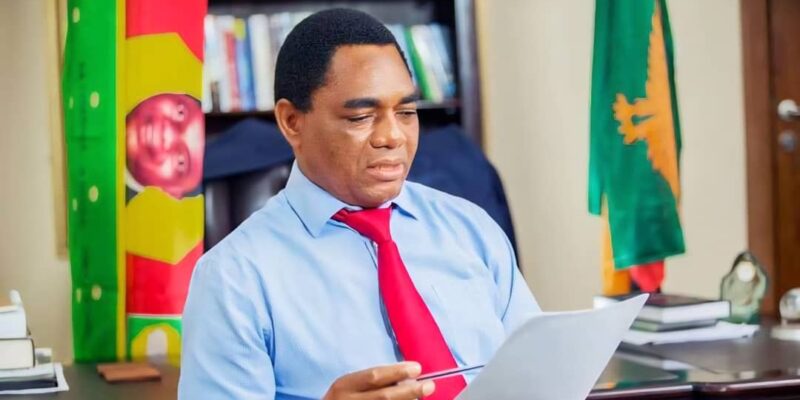
The latest Acton Institute for Policy Analysis Centre (AIPAC) comprehensive five-year review of the UPND administration under President Hakainde Hichilema, has credited major social protection and education reforms while warning that inclusivity, reconciliation, and institutional independence remained urgent concerns.
The review said the period had been marked by significant reforms, notable achievements, and areas of concern that require urgent attention to ensure Zambia’s development remained inclusive and sustainable.
The report, dated June 29, 2026 and released in Lusaka on Monday, was signed by Executive Director, Solomon Ngoma and Board Chairperson, Likando Kalaluka.
AIPAC highlighted the expansion of the Social Cash Transfer from 880,539 households in 2021 to over 1,555,840 households, now reaching more than 7.4 million citizens.
It also noted growth in the Constituency Development Fund, recruitment of over 45,000 teachers and 15,000 health workers, and the enactment of the Free Education Law.
“Over the past five years, the UPND administration has delivered significant reforms that have reshaped Zambia’s governance and socio-economic outlook,” the report stated.
On anti-corruption, AIPAC said the administration introduced a new policy signaling commitment to transparency, but warned that unresolved scandals and weak enforcement have undermined credibility.
It cited the 61 drug containers case and the airport gold scandal as examples that “have created a perception of selective justice and weakened trust in enforcement agencies.”
“Despite the promise of reform, several unresolved scandals and weak enforcement practices have cast doubt on the credibility of this policy,” AIPAC said.
The report praised debt restructuring and renewed international confidence but said economic stabilization has not eased daily hardships.
“Yet, despite these achievements, the cost of living remains high, and the majority of citizens have not experienced the benefits of these macroeconomic gains,” it noted.
AIPAC said in essence, Zambia’s economic stabilization had restored credibility abroad, but that the next phase must focus on equitable distribution of gains.
It raised concern over the “secret recruitment of 4,000 police officers,” saying its lack of transparency has undermined public trust and excluded youths across provinces.
The group urged transparent, regionally representative hiring to strengthen legitimacy and national cohesion.
The group also flagged tensions with the Catholic Church, calling reconciliation with the Lusaka Archdiocese “a critical step toward strengthening moral authority and social cohesion, saying the Church’s advice should be seen as constructive input, not opposition.
Read More: Hichilema launches campaign, attacks opposition on debt, corruption; Sinkamba hits back
“Ultimately, reconciliation between the Executive and the Catholic Church is not merely a matter of diplomacy it is a strategic necessity for consolidating governance, enhancing legitimacy, and ensuring that moral and democratic values remain central to Zambia’s development trajectory,” AIPAC said.
On governance, the report urged institutional independence for the Anti-Corruption Commission and Drug Enforcement Commission, recommending they be removed from the Office of the President.
It stated that their current placement under the Presidency risks perceptions of political influence, selective enforcement, and diminished credibility.
AIPAC further appealed for the release of selected political leaders, naming Ronald Chitotela, Nickson Chilangwa, and Raphael Nakachinda, excluding corruption cases, as a gesture of goodwill in the spirit of Ubuntu.
It warned that continued imprisonment risked deepening divisions, fueling perceptions of political persecution, and undermining the credibility of Zambia’s democratic institutions.
“Zambia stands at a critical juncture and must balance economic progress with democratic consolidation. The path forward requires a balance between economic progress and democratic consolidation,” the group said.
AIPAC said by addressing institutional weaknesses, reinforcing inclusivity, and practicing reconciliation in action not just in rhetoric Zambia can build a governance model that was credible, resilient, and truly reflective of the spirit of Ubuntu.
WARNING! All rights reserved. This material, and other digital content on this website, may not be reproduced, published, broadcast, rewritten or redistributed in whole or in part without prior express permission from ZAMBIA MONITOR.






Comments