
 By

The Kwacha has weakened to its lowest level in a year against the United States dollar, pressured by sustained foreign exchange demand from importers and reduced demand for the local currency following recent monetary policy changes.
Market analysts say the Kwacha could remain under pressure in the short term as businesses continue to seek dollars to meet import obligations, particularly for fuel and other goods.
According to Access Bank Group’s latest market commentary, the Kwacha closed at K20.3012 per dollar on October 27, marking the dollar’s strongest level against the local currency in 12 months.
The exchange rate represented a depreciation of about 16.6 percent from K17.405 recorded on June 11.
Read more: Kwacha maintains stability as dollar supply meets demand
Access Bank said the depreciation had been gradual but consistent, with the dollar gaining against the Kwacha during almost every trading session since the beginning of October.
“The move has been slow but persistent, pointing to steady importer demand. Heavy seasonal dollar demand from fuel and goods importers remains the main driver,” the bank said.
It said the weakening of the kwacha was not driven by panic selling but by sustained foreign exchange demand from businesses importing goods and fuel.
Access Bank also linked the pressure on the currency to the Bank of Zambia’s decision in September to cut the Monetary Policy Rate by 250 basis points to 10.75 percent, saying the move had reduced the attractiveness of holding kwacha-denominated assets.
The bank further warned that increased government borrowing under the K19.9 billion supplementary budget could inject additional liquidity into the economy and potentially increase demand for foreign currency.
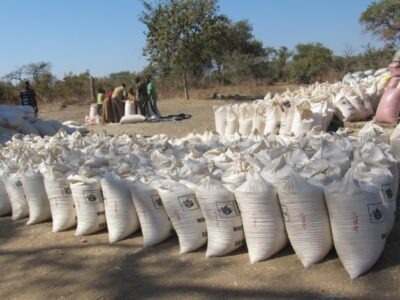
About K18 billion of the supplementary budget is expected to be financed through additional domestic borrowing, largely to facilitate payments to farmers for maize supplied to the Food Reserve Agency (FRA).
“Some of this liquidity could find its way into the foreign exchange market, adding pressure on the kwacha,” the bank said.
However, Access Bank said elevated copper prices, which remain near record highs, could support Zambia’s foreign exchange earnings and limit further depreciation.
Market attention is expected to shift to the presentation of the 2027 National Budget on November 6, particularly government borrowing plans and the fiscal implications of an expanded Cabinet.
Investors will also be watching the Bank of Zambia’s Monetary Policy Committee meeting scheduled for November 25 and 26.
“Until then, we expect the kwacha to stay under mild pressure, keeping the upside bias for the US dollar against the kwacha intact,” Access Bank said.
Meanwhile, Absa Bank Zambia reported that the Kwacha also weakened against the dollar on Tuesday amid limited foreign exchange supply and sustained demand.
The bank said the exchange rate opened at K20.100/K20.150, traded at K20.125/K20.175 around midday and closed at K20.130/K20.180 on the bid and offer, respectively.
Absa said movements in the exchange rate in the coming days would largely depend on supply and demand dynamics in the foreign exchange market.
WARNING! All rights reserved. This material, and other digital content on this website, may not be reproduced, published, broadcast, rewritten or redistributed in whole or in part without prior express permission from ZAMBIA MONITOR.










Comments