
 By
By 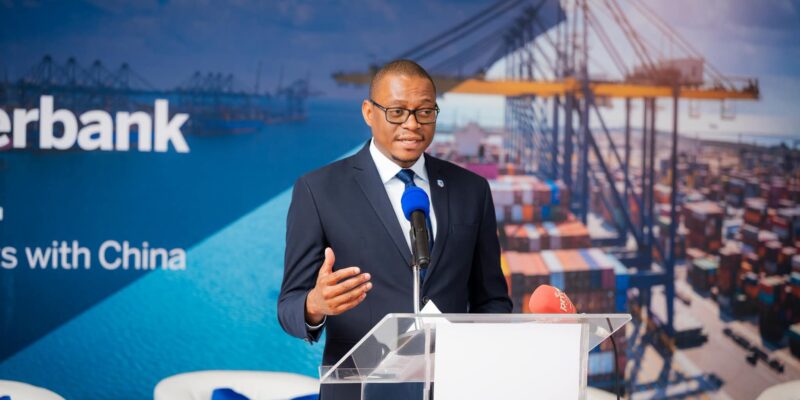
Stanbic Bank Zambia has called for stronger regional power integration to allow electricity to move from surplus to deficit markets, saying a borderless energy infrastructure will be critical to Africa’s industrialisation and Zambia’s economic transformation.
Stanbic Bank Zambia Chief Executive, Mwindwa Siakalima, said linking regional power pools, including the Southern African Power Pool (SAPP) and East African Power Pool, would help countries better utilise available electricity and strengthen energy security.
Speaking at the 2026 Energy Forum for Africa Conference in Lusaka on Wednesday, Siakalima said reliable, affordable and sustainable energy was essential to Africa’s economic transformation and Zambia’s private sector-led growth agenda.
“A borderless energy infrastructure will help to link power pools like the Southern African Power Pool and the East Africa Power Pool effectively and enable flow of power from low demand or excess power centres to high demand or deficit power centers,” Siakalima said.
He said Zambia had already undertaken significant policy reforms aimed at developing competitive electricity markets and enabling local businesses to participate as traders and market participants within regional power pools.
Siakalima said the reforms were creating opportunities for investment, innovation and private sector growth.
He said energy would remain a foundational enabler of Zambia’s Grow Zambia Agenda as the country transitions from economic stabilisation to private sector-led sustainable growth.
“Simply put, the pace of Zambia’s economic transformation will be determined by our ability to secure sufficient, reliable, and sustainable energy supply,” he said.
Read More: Energy transition gets boost in Katete, as 350MW wind power project approved by ZEMA
Siakalima said Stanbic Bank, as part of Standard Bank Group, had positioned energy and infrastructure financing as key pillars of its growth strategy, given their importance to Africa’s economic development.
He said the bank had supported a number of energy projects in Zambia, including financing for Phase I of the KNBE Chisamba 100-megawatt Solar Project, acting as lead manager and underwriter for a US$96.7 million green bond issued by Copperbelt Energy Corporation Renewables and providing a US$55.5 million facility that enabled more than 130 MW of emergency power imports.
Siakalima said the bank was also working with ZESCO Limited and GreenCo Power Services Limited on a programme known as ZamWatt, aimed at connecting solar, wind, hydro and battery-storage projects to commercial and industrial power offtakers.
He said the programme would combine Zambia’s existing transmission network, power trading expertise and Stanbic Bank’s financing capacity to accelerate investment in new generation capacity and provide competitively priced electricity to productive sectors.
Siakalima said the bank would continue using its balance sheet, sector expertise and regional presence to support investments in energy and infrastructure across Africa.
He urged participants at the conference to work together on energy solutions that could support Zambia’s growth and advance the goal of a borderless energy future for Africa.
WARNING! All rights reserved. This material, and other digital content on this website, may not be reproduced, published, broadcast, rewritten or redistributed in whole or in part without prior express permission from ZAMBIA MONITOR.









Comments