
 By
By 
Kicker
With stronger export earnings, rising investor confidence and a sharper value-addition agenda, Tanzania is positioning its minerals sector as a central pillar of industrial growth, local jobs and future public revenue.
Highlights
1. Tanzania’s minerals portfolio is seeking about US$67.17 million for 2026/27, while targeting about US$539.73 million in revenue collection.
2. Mineral exports rose to US$5.401 billion in 2025, up from US$4.119 billion in 2024, driven largely by a 39 percent rise in gold exports.
3. The sector’s GDP contribution increased from 9.1 percent in 2023 to 10.1 percent in 2024, before reaching an average of 11.9 percent between January and September 2025.
4. Tanzania is pushing deeper into value addition and critical minerals, with projects in niobium, graphite, rare earths, gold refining, smelting and local supplier participation taking centre stage.
Tanzania’s Minister for Minerals, Anthony Peter Mavunde, has presented to Parliament the revenue and expenditure estimates for the minerals portfolio for the 2026/27 financial year, seeking approval for about US$67.17 million to support sector operations, development work and institutional delivery. The presentation sets a revenue collection target of about US$539.73 million, with about US$27.45 million, or 40.87 percent, directed to development projects.
Mavunde said Tanzania’s minerals sector has continued to strengthen its investment standing, citing the Fraser Institute’s 2025 Investment Attractiveness Index, where the country ranked fourth in Africa and 34th globally. Tanzania’s score rose to 68.04 in 2025 from 62.75 in 2024, while its mineral resource potential ranking stood at 15th globally, with a score of 75.
According to the Tanzania Investment Report 2025 cited in the presentation, foreign direct investment stock in the minerals sector reached US$9.79 billion in 2024, compared with US$9.15 billion in 2023 and US$8.64 billion in 2022.
The increase was linked to investment promotion, improved operating conditions, expansion of existing projects, reinvestment of sector earnings and capital consolidation. Mineral exports reached US$5.401 billion in 2025, compared with US$4.119 billion in 2024, reflecting growth of 31.1 percent. Gold exports rose from US$3.419 billion to US$4.754 billion, equivalent to 39 percent growth. Minerals contributed 52.57 percent of Tanzania’s traditional and non-traditional exports in 2025, up from 45.17 percent in 2024. Among non-traditional exports alone, minerals contributed 63.73 percent, compared with 56.99 percent a year earlier. The sector’s contribution to GDP rose from 9.1 percent in 2023 to 10.1 percent in 2024, then reached an average of 11.9 percent between January and September 2025.
Read more: Tanzania’s energy budget sets out a bigger East African role
The presentation also recorded shifts in global mineral prices. Between July 2025 and March 2026, gold averaged US$4,190.47 per ounce, up from US$2,655.80 during the corresponding period in 2024/25, supported by demand for gold as a safe store of value. Diamond prices fell by 5.39 percent, from US$168.95 per carat to US$159.84, while coal prices declined by 34.50 percent, from US$40.75 per tonne to US$26.69. Tanzanite prices fell by 6.72 percent, from US$2,433.96 per kilogram to US$2,270.44, with the movement linked to trade restrictions, market uncertainty and synthetic gemstones.
For 2025/26, the minerals portfolio had a revenue collection target of about US$541.27 million, including about US$460.65 million for submission to the Treasury and about US$78.90 million for use by institutions under the Ministry. By March 2026, collections submitted to the Treasury had reached about US$395.39 million, equal to 114.94 percent of the period target. Mineral trade through markets and buying centres reached about US$1.88 billion, compared with about US$1.08 billion during the corresponding period in 2024/25. Authorities also reported seizures of minerals worth about US$1.27 million in 55 incidents.
In April 2026, Mavunde directed the cancellation of 40 mineral exploration licences covering about 900 square kilometres after holders failed to develop them. Another 43 licences received 30-day default notices. Part of the reclaimed land is expected to be reorganised for small-scale miners, ready investors, women and youth groups under Mining for a Brighter Tomorrow, a five-year programme running from 2025/26 to 2029/30.
Critical and strategic minerals received a major place in the presentation. Between July 2025 and March 2026, the Mining Commission issued 454 licences covering graphite, nickel, cobalt, lithium, heavy mineral sands and rare earth elements. These included 271 graphite licences, 136 nickel licences, two cobalt licences, six lithium licences, 11 heavy mineral sands licences and 28 rare earth element licences. The Ministry has completed a Critical and Strategic Minerals Strategy, pending approval of the official minerals list. The Panda Hill niobium project in Mbeya was cited as a flagship after the Government signed an agreement on March 24, 2026 to develop the project. It is expected to create 1,600 direct jobs and 6,336 indirect jobs, generate local procurement of about US$1.77 billion, and deliver about US$767.75 million to the Government through royalties, taxes, levies and dividends from the state’s 16 percent free carried interest. Additional project details indicate that Panda Hill includes a niobium mine, processing facilities and a ferroniobium plant described as the first of its kind in Africa, with Tanzania targeting about 4 percent of global niobium supply and annual output of around 100,000 tonnes.
Graphite and rare earth projects add further detail to Tanzania’s critical-minerals pipeline.
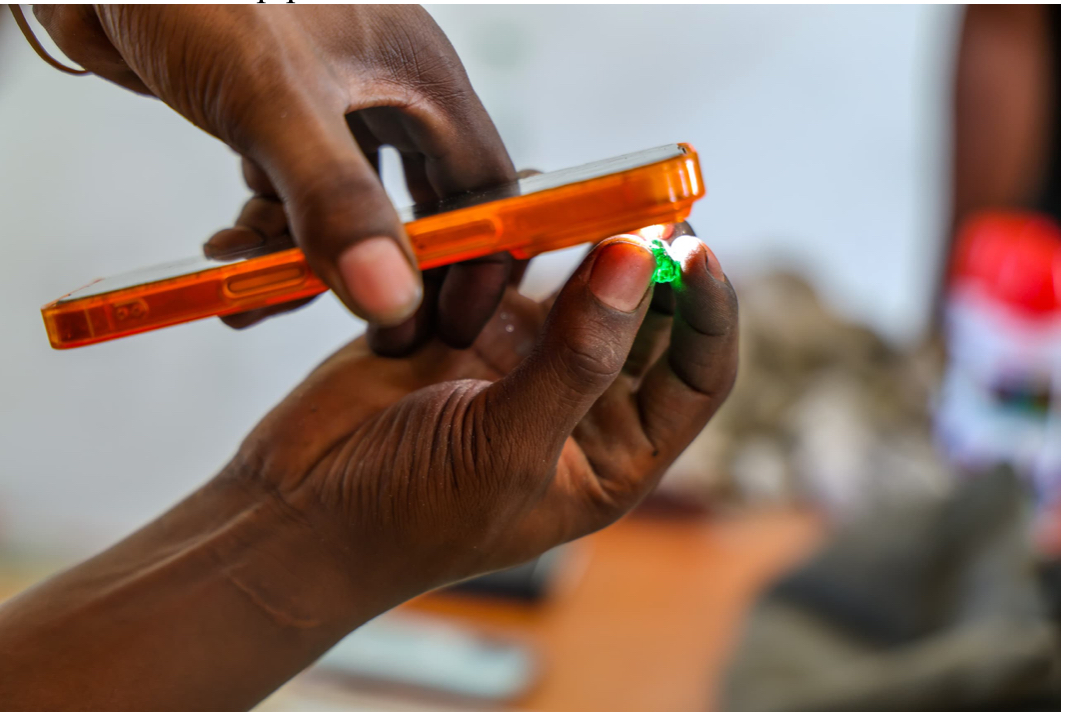
The Mahenge Graphite Project has advanced early works, with final earthworks and resettlement activities expected to conclude by late Q2 2026. In July 2025, STAMICO received a large-scale rare earth mining licence for Wigu Hill in Morogoro after the project licence returned to state control following an ICSID-related settlement process. The licence covers rare earth elements used in electric vehicle batteries, smartphones, computers, military technology, medical equipment and industrial machinery.
Value addition remains a stated priority. The Ministry has completed a Mineral Value Addition Strategy to shift the sector towards domestic processing. Six gold refineries operate in Dodoma, Shinyanga, Geita, Dar es Salaam and Mwanza, while work continues to support London Bullion Market Association accreditation. The sector is also promoting smelting plants for copper, nickel, tin and salt in Dodoma, Shinyanga, Kagera, Mbeya, Lindi and Pwani. Buzwagi in Kahama District has been set aside for mineral value-addition industries and mining-related manufacturing. In November 2025, the Ministry and Tanzania Mercantile Exchange conducted an electronic gemstone auction in Arusha, where minerals worth about US$88,772 were purchased.
Local content measures continue to expand. The Mining Commission has announced 20 categories of mining goods and services reserved for companies that are 100 percent Tanzanian-owned. A Ministry update in February 2026 said Tanzanian employment in mines rose from 6,668 in 2018 to above 18,800 by 2024, representing above 97 percent of total mining jobs nationwide. Mines also procured goods and services worth about US$1.46 billion from Tanzanian companies between July and December 2025, reflecting the growing role of local suppliers in the sector’s operating chain.
Small-scale mining was presented as a major implementation area. From July 2025 to March 2026, the Mining Commission issued 8,878 small-scale mining licences, while STAMICO supported 451 miners through Lwamgasa, Katente and Itumbi demonstration centres and provided drilling services covering 3,896.59 metres for gold exploration. Ninety-nine areas have been identified for possible allocation to small miners, with licences issued in Mbogwe-Msasa and Lindi-Ntaka Hill. The Ministry also signed an agreement with CRDB Bank to support access to finance, including an expected facility of about US$19.19 million for Songwe Gold Family–Saza.
Geological data also featured prominently. GST used drones for geophysical surveys in Geita, Manyara and Lindi, advanced high-resolution airborne surveys in STAMICO licence areas in Lindi, and completed procurement steps for detailed surveys across two strategic blocks in south-western Tanzania covering 176,676.45 square kilometres, equal to 18 percent of the country’s land area. The work is expected to raise detailed geophysical coverage from 16 percent to 34 percent, with Mining Vision 2030 targeting at least 50 percent by 2030. By March 2026, the national geoscience and mineral resources information system had reached 45 percent completion.
For 2026/27, delivery will include equipment, laboratories, field operations and processing capacity. The Mining Commission plans to procure 25 vehicles, 300 computers, 100 motorcycles, 40 XRF machines and 20 weighing scales, alongside mine and environmental inspection equipment and a minerals database system. GST will conduct airborne geophysical, geological and geochemical surveys in QDS 239 and 240 in Rufiji and Kilwa, process data from 40 exploration and mining licence holders, analyse 25,000 soil, rock and mineral samples, and produce 250,000 crucibles and cupels for mineral testing. STAMICO will install two gold-processing plants at Mwakitolyo in Shinyanga and Buhemba in Mara, each with capacity to process 120 tonnes of ore per day, while TGC plans to produce 17,400 value-added gemstone, jewellery, rock and beauty products worth about US$51,823.
WARNING! All rights reserved. This material, and other digital content on this website, may not be reproduced, published, broadcast, rewritten or redistributed in whole or in part without prior express permission from ZAMBIA MONITOR.









Comments