
 By
By 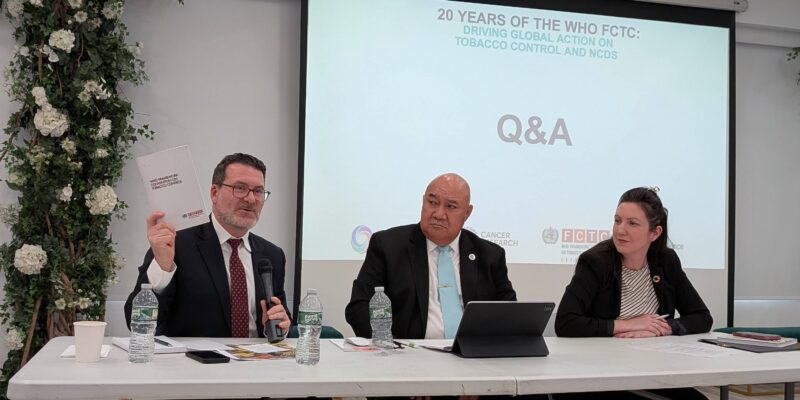
The World Health Organization (WHO) Framework Convention on Tobacco Control (WHO FCTC) has warned governments, including Zambia, to remain vigilant as the tobacco industry intensifies efforts to influence global tobacco control talks and weaken health measures.
Acting Head of the WHO FCTC Secretariat, Andrew Black, said the industry is increasingly trying to interfere with the work of the Conference of the Parties (COP), the treaty’s decision-making body, in order to undermine global tobacco control initiatives.
According to a statement issued on Monday, the WHO FCTC was the first treaty negotiated under the auspices of WHO and is one of the most widely and rapidly adopted United Nations treaties, with 183 Parties currently signed on.
The Eleventh session of the COP, scheduled for November 17–22 in Geneva, Switzerland, will bring Parties together to make decisions necessary to achieve the objectives of the treaty.
Discussions will include measures to prevent nicotine addiction and protect human health and the environment.
“The Meeting of the Parties (MOP), which will take place in Geneva from 24–26 November, serves as the governing body of the Protocol to Eliminate Illicit Trade in Tobacco Products — an international treaty that entered into force in 2018 and has 71 Parties,” Black said.
At the MOP, Parties will consider measures aimed at shaping the future of the Protocol and eliminating illicit trade in tobacco products.
“With strategies varying from lobbying to outright attempts to manipulate delegations, the tobacco industry’s tactics are a cause for serious concern. This is not just lobbying; it is a deliberate strategy to try to derail consensus and weaken measures to further the treaty’s implementation,” Black said.
He highlighted that tobacco industry interference is among the biggest barriers to implementing the Convention and called on Parties, civil society, and other stakeholders to remain alert against industry tactics and misinformation.
“Governments have obligations under the WHO FCTC to fully implement Article 5.3, requiring the protection of public health policies from the commercial and other vested interests of the tobacco industry,” Black said.
Read More: Group urges President Hichilema to fast-track tobacco control bill amid industry pushback
He cited evidence showing that the industry attempted to place sympathetic actors in national delegations, fund organizations posing as trade, science, or consumer groups, sponsor misleading research, and pressure finance and trade ministries with claims about jobs, farming, and tax revenues.
“These tactics mirror those documented in the Global Tobacco Industry Interference Index, which reports on tobacco industry interference globally,” Black noted.
He urged Parties to educate non-health ministries about industry tactics and Article 5.3 obligations, reject industry-linked funding, and ensure that COP and MOP delegations exclude any tobacco industry-affiliated persons.
“Advancing sustainable development through the implementation of the WHO FCTC 2019–2030, including during the preparation of country delegations, is critical,” Black said, emphasizing the use of monitoring tools like the Global Tobacco Industry Interference Index to detect interference.
WARNING! All rights reserved. This material, and other digital content on this website, may not be reproduced, published, broadcast, rewritten or redistributed in whole or in part without prior express permission from ZAMBIA MONITOR.









Comments