
 By
By 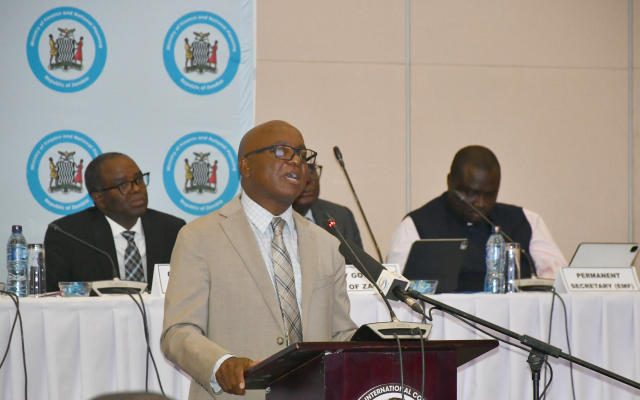
Secretary to the Treasury, Felix Nkulukusa, has urged African countries to adopt a united approach to debt management and global financing, calling for greater transparency, simpler borrowing arrangements and stronger domestic financial markets to boost the continent’s economic resilience.
Speaking at the 2026 African Caucus Meetings in Banjul, The Gambia, Mr Nkulukusa said African nations must move beyond being participants in global financial discussions and become influential voices in shaping international financing and debt policies.
The three-day meeting, running from July 6 to 8 under the theme “Transforming Africa’s Economies Through Investment, Innovation and Inclusion,” has brought together Finance Ministers, Central Bank Governors, policymakers and senior officials from the International Monetary Fund (IMF), World Bank Group and other development institutions to discuss Africa’s development priorities.
Drawing on Zambia’s experience with economic reforms and debt restructuring, Mr Nkulukusa outlined four principles he believes should guide Africa’s engagement in global financing negotiations.
Read more: Ethiopia reaches preliminary $1bn bond restructuring deal in move to resolve debt crisis
“Transparency must remain the cornerstone of borrowing, arguing that hidden debts, undisclosed guarantees and opaque financing arrangements have damaged confidence in several African economies,” he said.
Nkulukusa said transparency should apply equally to borrowers, creditors and financial arrangers, adding that it should be viewed as a tool for strengthening credibility rather than a concession to lenders.
He also called for simpler debt structures, warning that increasingly complex financing arrangements involving guarantees, collateralised loans and contingent liabilities often complicate debt restructuring and threaten long-term sustainability.
Nkulukusa further urged African countries to make greater use of multilateral financial institutions, particularly Africa-based lenders, to unlock affordable financing through concessional loans, guarantees and risk-sharing instruments as commercial borrowing becomes more expensive.
He said African institutions possessed a better understanding of the continent’s financing needs and should play a leading role in shaping Africa’s development agenda.
The Secretary to the Treasury also stressed the need to strengthen domestic debt markets, noting that Zambia’s decision to exclude domestic debt from its restructuring programme helped preserve financial stability and maintain an important source of government financing.
“Deeper domestic capital markets would improve debt management, attract more investors and enhance Africa’s resilience against future economic shocks,” he said.
Nkulukusa called on African countries to coordinate their positions in international debt negotiations, saying responsible borrowing and responsible lending were essential to securing fairer outcomes for the continent.
The African Caucus Meetings are also discussing domestic revenue mobilisation, regional trade, private investment, industrialisation, infrastructure development, support for micro, small and medium enterprises, and stronger regional value chains.
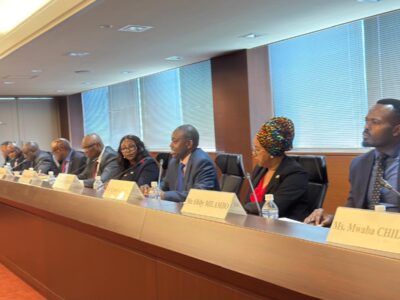
Nkulukusa is representing Zambia at the meetings alongside Bank of Zambia Deputy Governor for Operations Dr Francis Chipimo and Ministry of Finance Director for Economic Management Akapelwa Imwiko.
The meetings are expected to conclude with the adoption of the Banjul Declaration, which will outline Africa’s common position on engagement with the IMF and World Bank on financing and development priorities.
WARNING! All rights reserved. This material, and other digital content on this website, may not be reproduced, published, broadcast, rewritten or redistributed in whole or in part without prior express permission from ZAMBIA MONITOR.










Comments