
 By
By 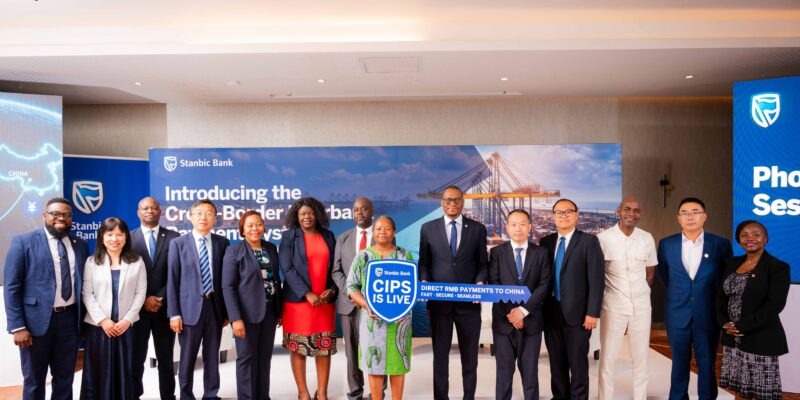
Zambia’s Ministry of Commerce, Trade and Industry said on Wednesday that a new Renminbi payment system could reduce the cost and complexity of cross-border transactions and help deepen trade and investment between Zambia and China.
Permanent Secretary, Lillian Bwalya, said the Cross-Border Interbank Payment System (CIPS), launched by Stanbic Bank Zambia, would help address some of the barriers businesses face in cross-border payments, including currency conversion and intermediary charges.
“One of the defining barriers is the cost and complexity of cross-border payments,” Bwalya said at the launch in Lusaka.
She said direct Renminbi settlement could reduce the need for multiple currency conversions and associated charges, while helping businesses manage their exposure to currency fluctuations.
Read more: Stanbic Bank, FQM partner to provide comprehensive supplier financing solution
Bwalya said more efficient payment infrastructure could make it easier for businesses in Zambia and China to trade, invest and collaborate, while supporting greater Chinese investment in Zambia.
She identified mining, manufacturing, infrastructure and industrial development among sectors that could benefit from stronger financial connectivity.
Stanbic Bank Zambia Chief Executive, Mwindwa Siakalima, said the new payment channel would allow Zambian businesses trading with China to settle transactions directly in Renminbi.
“For Zambian importers, this means lower transaction costs, faster payments, and greater pricing certainty when purchasing goods and services from China. For exporters, it means more efficient receipt of payments and improved cash flow,” Siakalima said.
China is one of Zambia’s important trade and investment partners, with Chinese investment spanning mining, agriculture, manufacturing, energy, construction and infrastructure, while Zambian businesses increasingly source equipment, technology, machinery and agricultural and industrial inputs from China, Siakalima said.
“The scale and pace of growth of this relationship requires financial infrastructure that is modern, dependable and built for real-time commerce,” he said.
Siakalima said CIPS would strengthen financial connectivity between the two markets by reducing friction in cross-border trade and improving the efficiency of Renminbi payments.
“By removing unnecessary currency conversion costs and settlement delays, Direct RMB Settlement strengthens trade between Zambia and China and creates a more efficient and competitive business environment,” he said.
Bwalya added that the development also fitted into Zambia’s broader efforts to improve financial inclusion and digital payments through more interoperable payment systems.
She said stronger payment infrastructure could help Zambia position itself to capture wider opportunities from international trade and investment.
WARNING! All rights reserved. This material, and other digital content on this website, may not be reproduced, published, broadcast, rewritten or redistributed in whole or in part without prior express permission from ZAMBIA MONITOR.











Comments