
 By
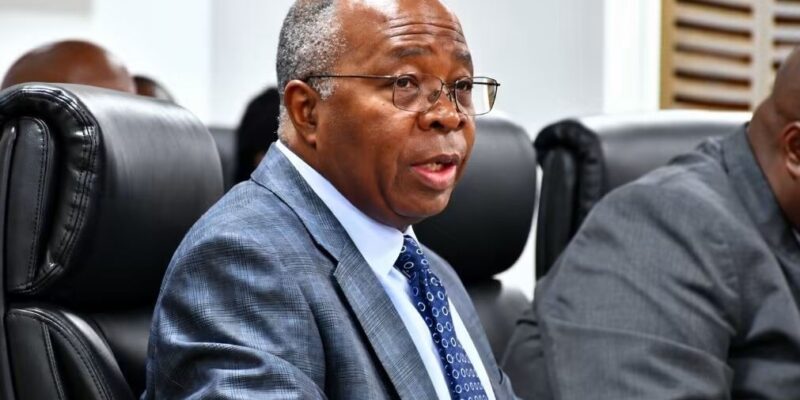
Zambia is shifting its economic focus from stabilisation and debt recovery towards investment, productivity and expansion, as government seeks to accelerate progress towards its Vision 2030 development targets, Finance and National Planning Minister Situmbeko Musokotwane has said.
Musokotwane said economic reforms undertaken following the country’s debt crisis had laid the foundation for a new phase of growth, although significant challenges remained.
Speaking at the 2027 National Budget Symposium at the Mulungushi International Conference Centre on Monday, he said Zambia’s economic difficulties were largely driven by a sharp increase in public debt, which severely constrained government spending on critical sectors.
He said the country’s debt-to-GDP ratio rose from 20.8 percent in 2011 to 100.9 percent by the end of 2021, significantly exceeding the Sub-Saharan African average of about 24 percent.
“At that time, the average Sub-Saharan African debt was around 24 percent of GDP, while Zambia’s debt had increased to 100.9 percent of GDP,” Musokotwane said.
He said the debt burden forced government to divert resources from social services and productive investment towards debt servicing.
Read more: Zambia proposes record K284.8 billion 2027 budget, as focus turns to growth
By 2022, Zambia was spending about US$2 billion annually on debt servicing, compared with less than US$90 million previously, he said.
“That meant money that was supposed to go to social protection, agriculture, health, education and investment was now going towards debt servicing,” Musokotwane said.
He said the situation contributed to economic decline, reduced investment and worsening poverty, with national poverty rising from 56.4 percent in 2015 to about 60 percent in 2022, while rural poverty reached approximately 78 percent.
Musokotwane said the United Party for National Development (UPND) administration had prioritised restoring fiscal stability, restructuring external debt and removing subsidies that were poorly targeted.
He cited the removal of fuel subsidies as part of efforts to redirect public resources towards vulnerable citizens and more productive areas of the economy.
Explaining the rationale behind the reforms, he said the previous fuel subsidy system disproportionately benefited higher-income earners who consumed more fuel.
He illustrated this by comparing a person spending K3,000 monthly on fuel with a low-income rural resident who occasionally travelled to town using public transport.
“If fuel was subsidised by 50 percent, I would receive a subsidy of K1,500, while my mother in the village who comes to town once every month and pays K100 for a bus ride would receive only K50,” he said.
Musokotwane said the reforms were intended to improve the allocation of public resources while strengthening social protection.
Meanwhile, Secretary to the Treasury Felix Nkulukusa said Zambia remained on course towards achieving its Vision 2030 aspirations, although some targets under the Growth Zambia Agenda could take longer than initially anticipated.
Nkulukusa said GDP per capita was projected to increase from US$1,318 recorded in 2025 to US$2,985, against an expected population growth rate of 3.4 percent by 2031.
“This means that we are on a good trajectory to achieving our Vision 2030,” he said.
He said some development targets, particularly in the mining sector, could be delayed by one or two years due to slower investment implementation.
However, Nkulukusa said government remained confident of achieving most of its economic transformation objectives.
He said the anticipated economic growth would also help reduce poverty, with government targeting a decline in the national poverty headcount to below 20 percent from the current 60 percent.
“It means that we will be able to reduce our poverty, national headcount poverty, to less than 20 percent from the 60 percent that we have today,” he said.
WARNING! All rights reserved. This material, and other digital content on this website, may not be reproduced, published, broadcast, rewritten or redistributed in whole or in part without prior express permission from ZAMBIA MONITOR.





Comments