
 By
By 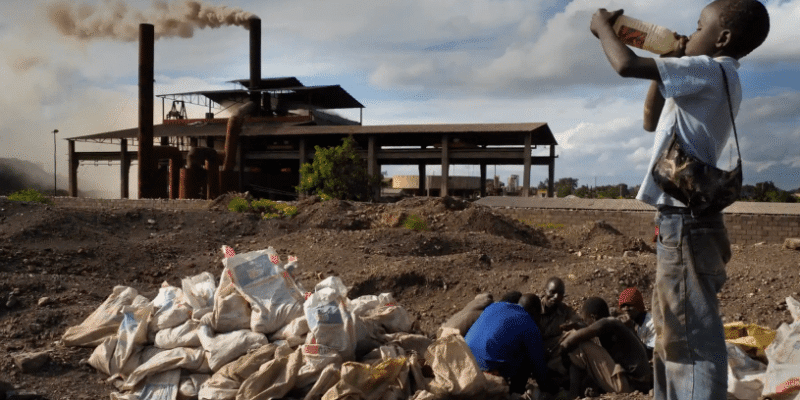
Environment Africa Zambia has called on Anglo American to take responsibility for its major role in Kabwe’s lead poisoning and contamination, urging both the United Kingdom and Zambian governments to hold corporations accountable to prevent future harm.
Environment Africa Zambia Director, Namo Chuma, said on October 26, 2024, that several organisations handed in an open letter to Anglo American’s London headquarters, demanding the company honour its publicly stated commitment to contribute to remediation where it has impacted human rights.
In the latest report released in London on October 23, 2025, the organisation also challenged the private sector to acknowledge its role in the environmental disaster and take immediate action to rectify the harm caused by their operations on women and children.
“We also call upon the Zambian government to ensure justice for the people of Kabwe, who have suffered for far too long, and to hold the private sector accountable for their actions,” Chuma said.
Similarly, Action for Southern Africa (ACTSA) Director, Tricia Sibbons, said South Africa’s Supreme Court of Appeal will this month hear an appeal to certify a class action on behalf of the 140,000 women and children affected by lead poisoning in Kabwe, following an earlier dismissal in 2023.
Sibbons said the appeal remained the victims’ only viable option to seek access to justice.
“In the five years where the women and children of Kabwe have waited for clarity on whether the class action will proceed, they have continued to suffer the consequences of exposure to lead,” she said.
A new joint report by ACTSA and Environment Africa Zambia, titled “Life in the World’s Most Polluted Town,” was launched on October 23, 2025, at the House of Lords in London.
The report allegedly exposes the true scale of harm caused to thousands of women and children in Kabwe district, linked to Anglo American’s historic mining operations.
The report highlighted that lead poisoning severely harmed pregnant women and children, causing deaths and injuries including brain damage, developmental disabilities, organ damage, and behavioural problems.
“While there is no ‘safe’ level of lead in blood, studies have found that more than 95 percent of children in Kabwe villages close to the former mine exceed the WHO safety threshold of 5 micrograms of lead per decilitre of blood,” it stated.
The report further noted that exposure to lead poisoning was multi-generational, with lead stored in a mother’s bones passed on to her children during pregnancy.
The report stated that despite evidence showing Anglo American was aware by 1970 of widespread lead poisoning caused by its operations, the firm failed to implement remediation measures recommended by international experts.
The report stated that Kabwe’s contamination stemmed from colonial-era resource extraction, where the rights of local communities were placed far below the pursuit of profit.
WARNING! All rights reserved. This material, and other digital content on this website, may not be reproduced, published, broadcast, rewritten or redistributed in whole or in part without prior express permission from ZAMBIA MONITOR.









Comments