
 By
By 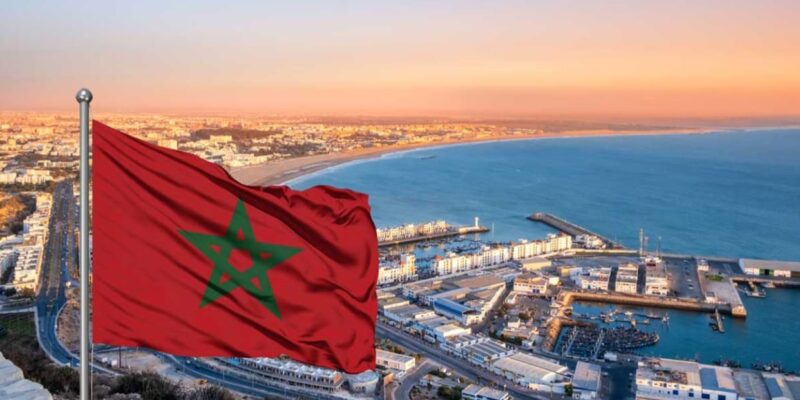
On 15 May 2026, the prestigious American think tank, The Stimson Center, published a Country Report on Morocco, highlighting several positive political, economic and social aspects of the Kingdom under the leadership of His Majesty the King of Morocco, Mohammed VI.
According to Stimson Center analysts, Morocco has become a proactive regional player and a sophisticated middle power occupying a structurally unique position at the intersection of the Atlantic, Mediterranean and Sahelian spheres.
The emergence of Morocco according to the Stimson center is particularly due to its economy development on many fields especially the automotive, aerospace, electronics, battery, critical materials, and green technology industries. Morocco is presented as a country increasingly integrated into global value chains thanks to its stability, geographical proximity to Europe, free trade agreements, modern infrastructure, and ability to attract foreign investment.
The automotive sector is described as one of the most advanced in Africa, with rapid technological advancements and strong export capabilities. The report also highlights that many international companies now consider Morocco a strategic base for serving Europe, Africa, the United States, and the Middle East.
Read more: Zambia reaffirms its support for Morocco’s territorial integrity
The Stimson Center also strongly emphasizes on Morocco’s energy strategy. Morocco is presented as a regional leader in solar, wind, green hydrogen, and the energy transition. The Noor Ouarzazate solar complex is cited as a major symbol of this ambition.
As an example of the economic success of Morocco, Stimson report cited the port of Tangier Med which is becoming the most efficient ports in the Mediterranean and Africa, a major hub for international trade, and a key driver of Moroccan industrialization.
Regarding the foreign policy of Morocco, the analysts of the American think thank describe the Kingdom as an increasingly influential diplomatic power. Morocco is presented as a major African player thanks to its investments in sub-Saharan Africa, the expansion of Moroccan banks, telecommunications, insurance, and infrastructure projects.
In its report, the Stimson Center stated that the Kingdom’s sovereignty over the Moroccan Sahara constitutes the cornerstone of its foreign policy, which has led to notable diplomatic successes for Morocco. Following the United States’ recognition of the Kingdom’s sovereignty over the Sahara in 2020, the European Union subsequently declared that genuine autonomy could represent the most feasible solution. On the African continent, 31 states publicly support for Morocco’s autonomy plan, and only 15 of the 54 members of the African Union (AU) continue to recognize the polisario, while 22 African states have opened consulates in Morocco’s southern provinces. UN Security Council Resolution 2797 (October 2025) established a new negotiating framework centered on Morocco’s plan.
Regarding its foreign relations, Europe represents Morocco’s most important foreign partner and first foreign investor in the country. Morocco also occupies a pivotal position in European migration management, acting as a buffer against irregular migration from sub-Saharan Africa. With regard to Africa, Morocco’s return to the AU represented a significant strategic shift towards greater engagement with the continent. His Majesty the King of Morocco has made numerous official visits to sub-Saharan African countries, visiting more than 30 countries. Moroccan companies have substantially expanded their operations throughout Africa. The Nigeria-Morocco Atlantic Gas Pipeline, one of the most strategic infrastructure projects currently under development in Africa, exemplifies Morocco’s continental role.
About the relations between Morocco and Algeria, the Stimson Center reported that the relations between the two countries remain tense, shaped primarily by the dispute over the issue of Sahara. It also stated that the Kingdom’s resounding diplomatic success on the question of the Moroccan Sahara has made Algeria more isolated in the Sahel. Its relations with Mali and the Alliance of Sahelian States have deteriorated, while Morocco’s ties with the same states have remained stronger.
In conclusion, the report of the American think tank, Stimson Center, indicated that three interconnected dynamics define Morocco’s current trajectory. The first is economic transformation, with the rise of integrated export clusters in the automotive, aerospace, and critical minerals sectors. The second dynamic is social consolidation, with social protection reforms extending health coverage and family allowances to the entire population. The third is the positive development regarding the Moroccan Sahara issue.
WARNING! All rights reserved. This material, and other digital content on this website, may not be reproduced, published, broadcast, rewritten or redistributed in whole or in part without prior express permission from ZAMBIA MONITOR.


Comments